-
Estimated level
- 10–40%
-
Confidence
- Moderate — INCI order above the 1% line
-
Roles
-
Plant extract
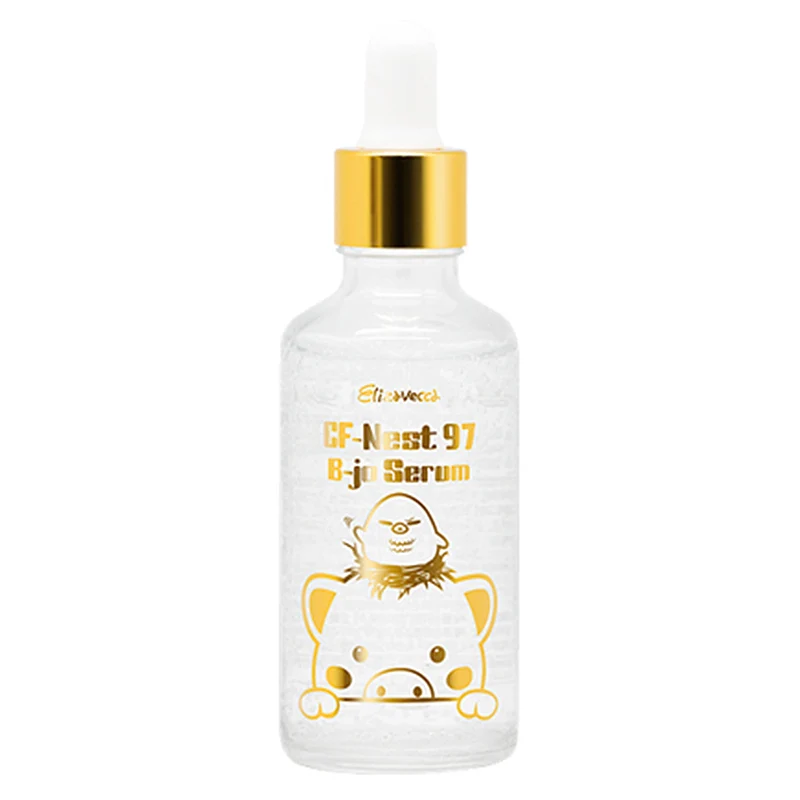
1st on the list, which puts it at an estimated 10–40% of the formula.
Swiftlet Nest Extract is an extract from the nest of the Swiftlet, Aerodramus Fuciphagus, Collocalia Esculenta, Collocalia Vestira or Collocalia Inexpectra
-
Estimated level
- 5–20%
-
Confidence
- Moderate — INCI order above the 1% line
-
Roles
-
Active
2nd on the list, which puts it at an estimated 5–20% of the formula.
Niacinamide (vitamin B3) is a gentle skincare active that repairs the skin barrier, calms redness, controls oil and evens tone at 2–5%. Official IUPAC name: **3-Pyridinecarboxamide**
Soothing
Anti-Aging
Pore Minimizer
15 scientific references
- International Journal of Dermatology, February 2021, pages 166-173
- Biomolecules & Therapeutics, July 2019, pages 562-569
- Experimental Dermatology, February 2019, pages 15-22
- Dermatologic Therapy, September 2017, ePublication
- Journal of Investigative Dermatology, May 2017, page S116
- International Journal of Pharmaceutics, March 2017, pages 158-162
- Facial Plastic Surgery Clinics of North America, May 2016, pages 145-152
- Clinical, Cosmetic, and Investigational Dermatology, July 2015, pages 405-412
- Skin Pharmacology and Physiology, June 2014, pages 311-315
- International Journal of Pharmacy, January 2013, pages 192-201
- Dermatoendrocrinology, July 2012, pages 308-319
- International Journal of Toxicology, September 2005, pages 1-31
- Dermatologic Surgery, July 2005, pages 860-865
- International Journal of Cosmetic Science, October 2004, pages 231-238
- Journal of Cosmetic Dermatology, April 2004, pages 88-93
-
Estimated level
- 5–20%
-
Confidence
- Moderate — INCI order above the 1% line
-
Roles
-
Humectant, Texture agent, Solvent
3rd on the list, which puts it at an estimated 5–20% of the formula.
Propane-1,2-diol
Hydration
5 scientific references
- CosmeticsInfoorg, Accessed April 2021, ePublication
- Archives of Dermatological Research, November 2019, pages 337-352
- Critical Reviews in Toxicology, April 2013, pages 363-390
- International Journal of Toxicology, September-October 2012, pages 245S-260S
- Skin Pharmacology and Applied Physiology, 2001, pages 72-81
-
Estimated level
- 2–10%
-
Confidence
- Moderate — INCI order above the 1% line
-
Roles
-
Solvent
4th on the list, which puts it at an estimated 2–10% of the formula.
-
Estimated level
- 2–10%
-
Confidence
- Moderate — INCI order above the 1% line
-
Roles
-
Surfactant
5th on the list, which puts it at an estimated 2–10% of the formula.
Castor oil (Ricinus communis), hydrogenated, ethoxylated (60 mol EO average molar ratio)
Hydration
-
Estimated level
- under 1%
-
Confidence
- Moderate — listed below the 1% line
-
Roles
-
Texture agent
6th on the list, below the 1% line — present at under 1%, which for most ingredients is the level they work at.
2-Propenoic acid, polymer with 2,2-bis(hydroxymethyl)propane-1,3-diol 2-propenyl ether
Synthetic polymer
-
Estimated level
- under 1%
-
Confidence
- Moderate — listed below the 1% line
7th on the list, below the 1% line — present at under 1%, which for most ingredients is the level they work at.
L-Arginine
Hydration
Anti-Aging
6 scientific references
- Biobased Surfactants (Second Edition), 2019, pages 413-445
- Scientific Reports, February 2016, pages 1-10
- Cosmetic Ingredient Review, October 2012, pages 1-35
- Journal of Advanced Research, July 2010, pages 169–177
- International Journal of Cosmetic Science, April 2005, page 139
- Wound Repair and Regeneration, November-December 2003, pages 419-423
-
Estimated level
- under 1%
-
Confidence
- Moderate — listed below the 1% line
-
Roles
-
Occlusive, Soothing
8th on the list, below the 1% line — present at under 1%, which for most ingredients is the level they work at.
Urea, (2,5-dioxo-4-imidazolidinyl)-
Soothing
8 scientific references
- Chemistry Series, March 2020, pages 7-21
- Molecules, June 2019, pages 1-33
- European Journal of Pharmacology, February 2018, pages 68-78
- Journal of the American Academy of Dermatology, June 2017, Volume 76, Issue 2, Supplement 1
- Pharmacognosy Review, Volume 5, July-December 2011
- International Journal of Toxicology, May 2010, Supplement, pages 84S-97S
- Journal of Occupational Medicine and Toxicology, October 2008, ePublication
- https://wwwaccessdatafdagov/scripts/cdrh/cfdocs/cfcfr/CFRSearchcfm?CFRPart=347&showFR=1
-
Estimated level
- under 1%
-
Confidence
- Moderate — listed below the 1% line
9th on the list, below the 1% line — present at under 1%, which for most ingredients is the level they work at.
6-Amino-9-beta-D-ribofuranosyl-9H-purine
Soothing
8 scientific references
- PubChem, Accessed May 2021, ePublication
- Cosmetic Ingredient Review, September 2020, pages 1-38
- Experimental Dermatology, August 2014, pages 553-554
- Journal of Investigative Dermatology, August 2011, pages 526-546
- International Journal of Cosmetic Science, December 2006, pages 447-451
- British Journal of Pharmacology, October 2008, issue 4, pages 475-486
- PloS One, May 2008 (ePublication)
- >International Journal of Cosmetic Science, August 2006, pages 447-451
-
Estimated level
- under 1%
-
Confidence
- Moderate — listed below the 1% line
-
Roles
-
Fragrance / colour
10th on the list, below the 1% line — present at under 1%, which for most ingredients is the level they work at.
Parfum is a term for ingredient labelling used to identify that a product contains a material or a combination of materials normally added to a cosmetic to produce or to mask a particular odour. According to Article 19 of the Cosmetics Regulation, 'Perfume and aromatic compositions and their raw materials shall be referred to by the terms ‘parfum’ or ‘aroma’. '