1st on the list, which puts it at an estimated 10–40% of the formula.
Silicon dioxide
Oil Control
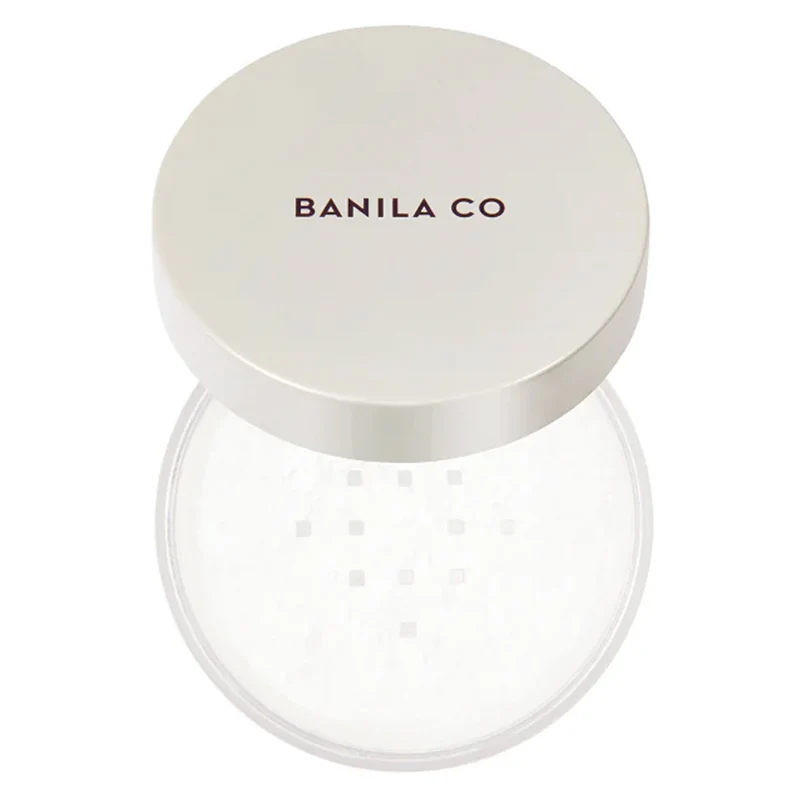
BANILA CO
Prime Primer Finish Powder
face setting powder
BANILA CO
face setting powder
Added Last edited
Fit by skin type
General, ingredient-based — not your personalized match.

See how this fits your skin
Take the skin test and I'll show you how suitable this product is for you.
Take the skin testThe BANILA CO Prime Primer Finish Powder is an ultra-fine setting powder effortlessly absorbs excess sebum, delivering a smooth, matte finish that keeps shine at bay. Designed to enhance the look of your makeup base, it minimizes the appearance of pores and blurs uneven skin texture, all without leaving a heavy or cakey feel.
Prime Primer Finish Powder is a cushioning setting powder from BANILA CO. The formula is built mainly around hydration. The ingredient list runs to 36 ingredients, each broken down in full below.
By its ingredient list the formula reads as moderately cushioned — emollient enough to feel like a cream, without the heaviest occlusives near the top. It contains both silicones and oils, a combination that usually finishes smooth and slightly satin and sits well under makeup. Hydration is handled by Centaurea Cyanus Flower Extract, Ethylhexylglycerin and Butylene Glycol, humectants that pull water into the upper layers of skin rather than sealing it there.
Hydration: High. Ingredients that pull and hold water in the upper layers of skin, and here that comes from Centaurea Cyanus Flower Extract, Ethylhexylglycerin, Butylene Glycol and Dimethicone.
Oil control: Moderate. Ingredients that moderate sebum or absorb shine, and here that comes from Silica and Montmorillonite.
On richness alone it suits Balanced skin best, and is the least natural fit for Combination (oily) and Oily skin. A few ingredients carry irritation flags, so reactive skin should patch test before using it on the whole face.
The formula contributes little or nothing on barrier support, antioxidant protection, brightening and tone and cell renewal. That is not a fault — most products are not meant to do everything — but if one of those is your priority, this is not the product that will address it.
Reading the full list, the formula is no drying alcohol, paraben-free, sulfate-free and no animal-derived ingredients. Those claims come from the ingredient list itself, not from the packaging. It does contain fragrance and essential oils, worth knowing if your skin reacts to any of them.
Use it in the morning. In a routine it goes taken with food. Follow the dose on the pack and check interactions with anything you already take.
This summary is generated from the product's ingredient list. It is not a review, it is not the brand's own marketing claims, and it does not replace advice from a dermatologist.
Drawn purely from the ingredient list
Scored on how rich or light the formula reads from its INCI order.
A few ingredients here carry irritation flags. Reactive skin should patch test on the jawline for a few days before using it on the whole face.
Based on the curated benefits documented for this product's ingredients.
Attracts and locks in moisture to keep skin plump and dewy
Calms redness, irritation, and inflammation for sensitive skin
Boosts collagen and cell turnover to reduce fine lines and wrinkles
Regulates sebum production to reduce shine and greasiness
None of the ingredients in this formula are associated with these benefits. This is not unusual, as most products are designed to target a limited number of concerns.
The actives, UV filters and benefit-carrying ingredients in this formula, in the order they are listed.
1st on the list, which puts it at an estimated 10–40% of the formula.
Silicon dioxide
3rd on the list, which puts it at an estimated 5–20% of the formula.
Dimethicone
7th on the list, which puts it at an estimated 1–5% of the formula.
1,1,5,5,5-Hexamethyl-3-phenyl-3-[(trimethylsilyl)oxy]trisiloxane
9th on the list, which puts it at an estimated 1–5% of the formula.
Bis(16-methylheptadecyl) malate
12th on the list, which puts it at an estimated 1–3% of the formula.
Lonicera Japonica Flower Extract is an extract of the flowers of the Japanese Caprofilia (honeysuckle), Lonicera japonica, Caprifoliaceae
14th on the list, which puts it at an estimated 1–3% of the formula.
Aspalathus Linearis Extract is an extract of the whole plant, Aspalatus linearis, Leguminosae
18th on the list, which puts it at an estimated 1–3% of the formula.
Borago Officinalis Extract is an extract of the herb, Borago officinalis L., Boraginaceae
20th on the list, below the 1% line — present at under 1%, which for most ingredients is the level they work at.
1,2-Propanediol, 3-(2-ethylhexyloxy)
21st on the list, below the 1% line — present at under 1%, which for most ingredients is the level they work at.
N6-(1-Oxododecyl)-L-lysine
22nd on the list, below the 1% line — present at under 1%, which for most ingredients is the level they work at.
Dimethicone/PEG-10/15 Crosspolymer is a copolymer of dimethicone crosslinked with a mixture of PEG-10 and PEG-15 diallyl ethers
23rd on the list, below the 1% line — present at under 1%, which for most ingredients is the level they work at.
Octanoic acid, monoester with glycerol
25th on the list, below the 1% line — present at under 1%, which for most ingredients is the level they work at.
Aqua (EU),Deionized Water,Distilled Water,Micromatrix Fractile AN,Onsen-Sui (JPN),Purified Water
Each axis is scored from the ingredients present and how high up the list they sit.
Ingredients that pull and hold water in the upper layers of skin
Lipids and repair signals that support skin barrier integrity
Ingredients that mop up free radicals from UV and pollution
Ingredients that moderate sebum or absorb shine
Ingredients that act on uneven tone and post-inflammatory marks
Ingredients aimed at visible redness and reactivity
Retinoids, acids and enzymes that speed surface turnover
Peptides and growth factors that signal for collagen support
Read from the full ingredient list. A brand's own claim may differ.
Parfum, Limonene, Butylphenyl Methylpropional, Hexyl Cinnamal
Limonene, Butylphenyl Methylpropional, Hexyl Cinnamal
Dimethicone, Dimethicone/vinyl Dimethicone Crosspolymer, Phenyl Trimethicone, Vinyl Dimethicone/methicone Silsesquioxane Crosspolymer, Dimethicone/peg-10/15 Crosspolymer
Vinyl Dimethicone/methicone Silsesquioxane Crosspolymer
Mica
Macadamia Ternifolia Seed Oil Phytosterol Esters
Judged by the same curated rules our routine checker uses. It reads the ingredients, not the label.
Nothing in this formula belongs to a group our rules can put in conflict, so it layers freely. Order still matters — thinnest texture first.
Flags to check, not verdicts. None of this is medical advice — if you are pregnant, breastfeeding or treating a skin condition, ask a doctor.
Most ingredients do more than one job, so these counts add up to more than the 36 ingredients on the label.
Sets the thickness, spread and stability of the formula
Botanical material, usually for antioxidants or scent
Softens and smooths by filling gaps between skin cells
Changes how the product smells or looks
Forms a film that slows water loss
Dissolves and carries everything else
Lifts oil and dirt, or holds oil and water together
Draws water into the upper layers of skin
Loosens or dissolves dead surface cells
Keeps the product free of microbial growth
Every ingredient on the label, in order, with what it does and roughly how much of it is likely to be there.
1st on the list, which puts it at an estimated 10–40% of the formula.
Silicon dioxide
2nd on the list, which puts it at an estimated 5–20% of the formula.
Mica is a series of silicate minerals of varying chemical composition but with similar physical properties. Mica may have well-defined cleavage and split into very thin sheets.
3rd on the list, which puts it at an estimated 5–20% of the formula.
Dimethicone
4th on the list, which puts it at an estimated 2–10% of the formula.
Boron nitride
5th on the list, which puts it at an estimated 2–10% of the formula.
Macadamia Ternifolia Seed Oil Phytosterol Esters is the complex mixture of esters formed by the reaction of Macadamia Ternifolia Seed Oil with Phytosterols.
6th on the list, which puts it at an estimated 2–10% of the formula.
Dimethicone/Vinyl Dimethicone Crosspolymer is a crosslinked dimethyl siloxane polymer (silicone elastomer) that is formed by the reaction between Hydrogen Dimethicone or Bis-Hydrogen Dimethicone, and Vinyl Dimethicone or Bis-Vinyldimethicone.
7th on the list, which puts it at an estimated 1–5% of the formula.
1,1,5,5,5-Hexamethyl-3-phenyl-3-[(trimethylsilyl)oxy]trisiloxane
8th on the list, which puts it at an estimated 1–5% of the formula.
Vinyl Dimethicone/Methicone Silsesquioxane Crosspolymer
9th on the list, which puts it at an estimated 1–5% of the formula.
Bis(16-methylheptadecyl) malate
10th on the list, which puts it at an estimated 1–5% of the formula.
Hydrolyzed Aloe Barbadensis Leaf Extract is the hydrolysate of Aloe Barbadensis Leaf Extract derived by acid, enzyme or other method of hydrolysis
11th on the list, which puts it at an estimated 1–3% of the formula.
Rosa Centifolia Flower Water is an aqueous solution of the steam distillate obtained from the flowers of the Cabbage Rose, Rosa centifolia (L.), Rosaceae
12th on the list, which puts it at an estimated 1–3% of the formula.
Lonicera Japonica Flower Extract is an extract of the flowers of the Japanese Caprofilia (honeysuckle), Lonicera japonica, Caprifoliaceae
13th on the list, which puts it at an estimated 1–3% of the formula.
Chamomilla Recutita (Matricaria) Flower Juice is the extract of the juice of the flowers of Chamomilla recutita; Asteraceae.
14th on the list, which puts it at an estimated 1–3% of the formula.
Aspalathus Linearis Extract is an extract of the whole plant, Aspalatus linearis, Leguminosae
15th on the list, which puts it at an estimated 1–3% of the formula.
Cucumis Sativus Fruit Extract is an extract of the fruit of the Cucumber, Cucumis sativus L., Cucurbitaceae
16th on the list, which puts it at an estimated 1–3% of the formula.
Lilium Candidum Flower Extract is an extract of the flowers of the White Lily, Lilium candidum L., Liliaceae
17th on the list, which puts it at an estimated 1–3% of the formula.
Salvia Officinalis Leaf Extract is an extract of the leaves of the Sage, Salvia officinalis L., Lamiaceae
18th on the list, which puts it at an estimated 1–3% of the formula.
Borago Officinalis Extract is an extract of the herb, Borago officinalis L., Boraginaceae
19th on the list, which puts it at an estimated 1–3% of the formula.
Centaurea Cyanus Flower Extract is an extract of the flowers of the Cornflower, Centaurea cyanus L., Compositae
20th on the list, below the 1% line — present at under 1%, which for most ingredients is the level they work at.
1,2-Propanediol, 3-(2-ethylhexyloxy)
21st on the list, below the 1% line — present at under 1%, which for most ingredients is the level they work at.
N6-(1-Oxododecyl)-L-lysine
22nd on the list, below the 1% line — present at under 1%, which for most ingredients is the level they work at.
Dimethicone/PEG-10/15 Crosspolymer is a copolymer of dimethicone crosslinked with a mixture of PEG-10 and PEG-15 diallyl ethers
23rd on the list, below the 1% line — present at under 1%, which for most ingredients is the level they work at.
Octanoic acid, monoester with glycerol
24th on the list, below the 1% line — present at under 1%, which for most ingredients is the level they work at.
Silane, triethoxyoctyl-
25th on the list, below the 1% line — present at under 1%, which for most ingredients is the level they work at.
Aqua (EU),Deionized Water,Distilled Water,Micromatrix Fractile AN,Onsen-Sui (JPN),Purified Water
26th on the list, below the 1% line — present at under 1%, which for most ingredients is the level they work at.
Montmorillonite
27th on the list, below the 1% line — present at under 1%, which for most ingredients is the level they work at.
Poly[oxy(methylsilylene)]
28th on the list, below the 1% line — present at under 1%, which for most ingredients is the level they work at.
Butane-1,3-diol (CAS No. 107-88-0/ EC No. 203-529-7) (R)-(-)-butane-1,3-diol” (CAS No. 6290-03-5/ EC No. 228-532-0)
29th on the list, below the 1% line — present at under 1%, which for most ingredients is the level they work at.
Octane-1,2-diol
30th on the list, below the 1% line — present at under 1%, which for most ingredients is the level they work at.
2-Phenoxyethanol
31st on the list, below the 1% line — present at under 1%, which for most ingredients is the level they work at.
Parfum is a term for ingredient labelling used to identify that a product contains a material or a combination of materials normally added to a cosmetic to produce or to mask a particular odour. According to Article 19 of the Cosmetics Regulation, 'Perfume and aromatic compositions and their raw materials shall be referred to by the terms ‘parfum’ or ‘aroma’. '
32nd on the list, below the 1% line — present at under 1%, which for most ingredients is the level they work at.
1-Methyl-4-Isopropenylcyclohexene; dipentene
33rd on the list, below the 1% line — present at under 1%, which for most ingredients is the level they work at.
2-(4-tert-Butylbenzyl)propionaldehyde; BMHCA
34th on the list, below the 1% line — present at under 1%, which for most ingredients is the level they work at.
2-Phenylmethyleneoctanal; alpha-Hexylcinnamaldehyde; 2-Benzylideneoctanal; alpha-n-hexyl-beta-phenylacrolein
35th on the list, below the 1% line — present at under 1%, which for most ingredients is the level they work at.
Ultramarines (blue, green, pink, red and violet) are synthetic pigments composed of complex sodium aluminum sulfosilicates having a typical formula Na(AlSiO)S with proportions of each element varying with each colour. To identify the colorant allowed for use in the European Union (EU), the INCI Name CI 77007 must be used.
36th on the list, below the 1% line — present at under 1%, which for most ingredients is the level they work at.
Iron Powder is the element consisting of powdered metallic iron
Products in the same category that share this formula's distinguishing ingredients.
innisfree
Shares 4 key ingredients with Prime Primer Finish Powder: Silica, Ethylhexylglycerin, Dimethicone, Glyceryl Caprylate
innisfree
Shares 4 key ingredients with Prime Primer Finish Powder: Silica, Ethylhexylglycerin, Glyceryl Caprylate, Water
innisfree
Shares 4 key ingredients with Prime Primer Finish Powder: Silica, Ethylhexylglycerin, Dimethicone, Glyceryl Caprylate
VT Cosmetics
Shares 3 key ingredients with Prime Primer Finish Powder: Silica, Ethylhexylglycerin, Water
Numbuzin
Shares 3 key ingredients with Prime Primer Finish Powder: Silica, Dimethicone, Ethylhexylglycerin
ETUDE
Shares 2 key ingredients with Prime Primer Finish Powder: Silica, Glyceryl Caprylate
SILICA, MICA, DIMETHICONE, BORON NITRIDE, MACADAMIA TERNIFOLIA SEED OIL PHYTOSTEROL ESTERS, DIMETHICONE/VINYL DIMETHICONE CROSSPOLYMER, PHENYL TRIMETHICONE, VINYL DIMETHICONE/METHICONE SILSESQUIOXANE CROSSPOLYMER, DIISOSTEARYL MALATE, HYDROLYZED ALOE BARBADENSIS LEAF EXTRACT, ROSA CENTIFOLIA FLOWER WATER, LONICERA JAPONICA FLOWER EXTRACT, CHAMOMILLA RECUTITA (MATRICARIA) FLOWER JUICE, ASPALATHUS LINEARIS EXTRACT, CUCUMIS SATIVUS FRUIT EXTRACT, LILIUM CANDIDUM FLOWER EXTRACT, SALVIA OFFICINALIS LEAF EXTRACT, BORAGO OFFICINALIS EXTRACT, CENTAUREA CYANUS FLOWER EXTRACT, ETHYLHEXYLGLYCERIN, LAUROYL LYSINE, DIMETHICONE/PEG-10/15 CROSSPOLYMER, GLYCERYL CAPRYLATE, TRIETHOXYCAPRYLYLSILANE, WATER, MONTMORILLONITE, METHICONE, BUTYLENE GLYCOL, CAPRYLYL GLYCOL, PHENOXYETHANOL, PARFUM, LIMONENE, BUTYLPHENYL METHYLPROPIONAL, HEXYL CINNAMAL, ULTRAMARINES, IRON POWDER.
After completing your makeup, use a puff or brush to gently apply a light layer of the powder evenly across your entire face. For areas prone to excess oil, such as the T-zone, apply an additional layer for extra shine control.
Judged on how rich the formula reads from its ingredient list, it suits Balanced skin best. It is the least natural fit for Combination (oily), Oily skin.
Some ingredients here carry irritation flags, so sensitive skin should patch test on the jawline for a few days before applying it to the whole face.
2 ingredients could feed malassezia: Macadamia Ternifolia Seed Oil Phytosterol Esters, Glyceryl Caprylate. That describes the yeast's food supply, not a prediction that they will cause a breakout.
Nothing in this formula is on the standard pregnancy-caution list. That is not medical clearance — check anything you use daily with your doctor or midwife.
No — it contains Parfum, Limonene, Butylphenyl Methylpropional, Hexyl Cinnamal.
No. Reading the full ingredient list, this formula is no drying alcohol.
No — it contains Dimethicone, Dimethicone/vinyl Dimethicone Crosspolymer, Phenyl Trimethicone, Vinyl Dimethicone/methicone Silsesquioxane Crosspolymer, Dimethicone/peg-10/15 Crosspolymer.
Yes — it contains Limonene, Butylphenyl Methylpropional, Hexyl Cinnamal.
Yes. Reading the full ingredient list, this formula is paraben-free.
It layers well with Vitamin C (L-ascorbic acid), Retinoids (retinol, retinal), AHAs (glycolic, lactic), BHA (salicylic acid), PHAs (gluconolactone), Benzoyl peroxide.
Use it in the morning, taken with food.
It lists 36 ingredients, of which 0 are recorded as actives.
BANILA CO.
We can't find the internet
Attempting to reconnect
Something went wrong!
Attempting to reconnect