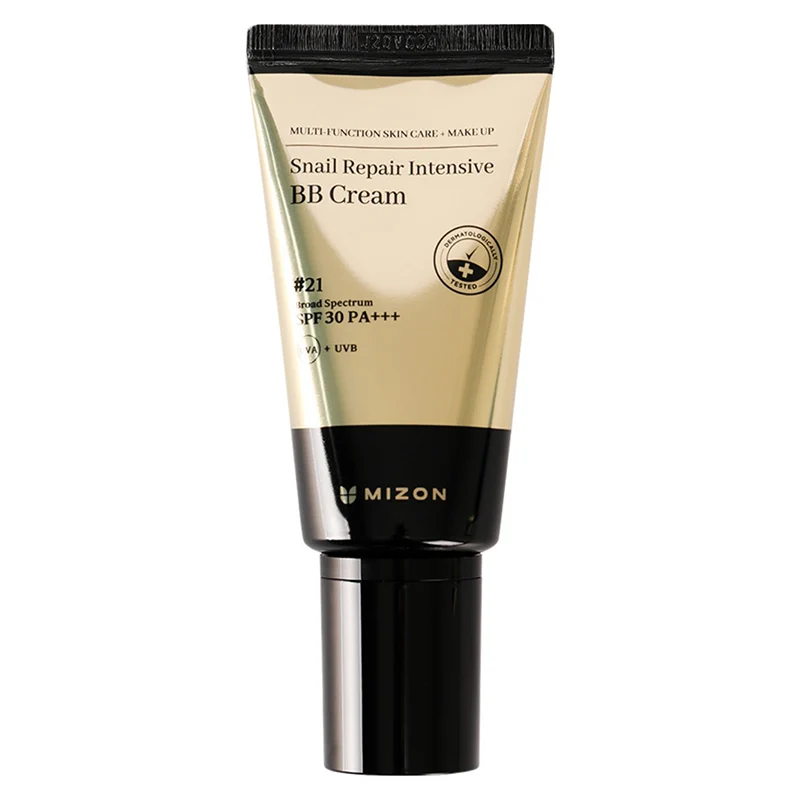
Mizon Snail Repair Intensive BB Cream

Mizon

Snail Repair Intensive BB Cream

face tinted bb cream/cc cream

Added Last edited

Fit by skin type

General, ingredient-based — not your personalized match.

Dry
64%
Combination (dry)
64%
Balanced
94%
Combination (oily)
76%
Oily
76%

See how this fits your skin

Take the skin test and I'll show you how suitable this product is for you.

Take the skin test
37
Ingredients
6
Benefits
2
Actives
Find Dupes

The Mizon Snail Repair Intensive BB Cream is the BB Cream that your skin always wanted. This BB Cream is a high-performing, multi-functional BB cream that uses 45% of snail extract to improve the condition of damaged skin. Snail extract’s anti-inflammatory and healing properties actively reduce blemishes. While cell regeneration effects increase collagen production and decrease the appearance of scars. Adenosine and peptides certified for anti-aging give an effective skin firming effect. Also, arbutin helps to create brighter, clearer skin by controlling pigmentation and blemishes. It also provides base coverage, blending into your natural skin tone. Sunblock SPF50 PA+++ is effective for skin brightening and prevents skin damage by blocking harmful UV rays. Snail extract gives it a high silky texture, which revitalizes skin instantly. Recommended for: All skin types.

Key Insights

Benefits

6
Anti-Aging
Evens Skin Tone
Hydration
Oil Control
Pore Minimizer
Soothing

Active Ingredients

2
Hyaluronic acid Vitamin B3 (niacinamide)

Risks

1
Silicone

About Snail Repair Intensive BB Cream

Overview

Snail Repair Intensive BB Cream is a lightweight tinted bb cream / cc cream from Mizon. Its job is UV protection, with the rest of the formula working on hydration. The ingredient list runs to 37 ingredients, each broken down in full below.

Texture and finish

By its ingredient list the formula reads as light: water and humectants lead, with emollients kept lower in the order. Silicones in the formula tend to give a smooth, blurred finish and help it grip under makeup. Hydration is handled by Butylene Glycol, Propanediol and Ethylhexylglycerin, humectants that pull water into the upper layers of skin rather than sealing it there.

UV filter system

It uses a hybrid filter system — Zinc Oxide, Octisalate, Titanium Dioxide and Octocrylene — combining mineral and organic filters. Between them those filters cover UVB, UVA II and UVA I, so the formula is broad-spectrum in the meaningful sense: it reaches past 340 nm, where the ageing wavelengths sit. Every filter in the formula is photostable, so its protection does not fall away over the first hour in the sun — reapplication is still about sweat, water and rubbing rather than degradation.

What the formula does

Hydration: High. Ingredients that pull and hold water in the upper layers of skin, and here that comes from Butylene Glycol, Propanediol, Ethylhexylglycerin and Hyaluronic Acid.

Soothing: Moderate. Ingredients aimed at visible redness and reactivity, and here that comes from Zinc Oxide, Niacinamide, Aloe Barbadensis Leaf Juice and Adenosine.

Oil control: Moderate. Ingredients that moderate sebum or absorb shine, and here that comes from Zinc Oxide, Niacinamide and Aluminum Hydroxide.

Who it suits

On richness alone it suits Balanced skin best, and is the least natural fit for Dry and Combination (dry) skin. Nothing in the list is flagged as a common irritant, which is a reasonable starting point for reactive skin — though a patch test is still the only way to know.

What it does not target

The formula contributes little or nothing on barrier support, antioxidant protection, cell renewal and firmness signalling. That is not a fault — most products are not meant to do everything — but if one of those is your priority, this is not the product that will address it.

What is not in it

Reading the full list, the formula is fragrance-free, essential-oil-free, no drying alcohol, paraben-free, microplastic-free and sulfate-free. Those claims come from the ingredient list itself, not from the packaging.

Where it fits in a routine

Use it in the morning. In a routine it goes taken with food. Follow the dose on the pack and check interactions with anything you already take. It carries UV filters, so it belongs in your morning routine.

This summary is generated from the product's ingredient list. It is not a review, it is not the brand's own marketing claims, and it does not replace advice from a dermatologist.

Pros and cons

Drawn purely from the ingredient list

Pros

  • Broad-spectrum coverage that reaches into UVA I
  • Every UV filter in it is photostable
  • No fragrance or declared allergens
  • No essential oils
  • No drying alcohol
  • No microplastics
  • Strong humectant content for hydration
  • No common irritants flagged in the list

Things to know

  • 4 ingredients could feed malassezia (fungal acne)

Which skin types it suits

Scored on how rich or light the formula reads from its INCI order.

Suitable for

  • Balanced skin

May suit

  • Combination (oily) skin
  • Oily skin

Less suitable for

  • Dry skin
  • Combination (dry) skin

Sensitive skin

No ingredient in this formula carries a common-irritant flag, making it a reasonable option for reactive skin. A patch test is still recommended, as individual skin reactivity varies.

Skin concerns

Based on the curated benefits documented for this product's ingredients.

Helps with

  • Hydration 16 ingredients

    Attracts and locks in moisture to keep skin plump and dewy

  • Anti-Aging 9 ingredients

    Boosts collagen and cell turnover to reduce fine lines and wrinkles

  • Soothing 6 ingredients

    Calms redness, irritation, and inflammation for sensitive skin

  • Oil Control 2 ingredients

    Regulates sebum production to reduce shine and greasiness

  • Evens Skin Tone 1 ingredient

    Brightens and balances complexion for a more uniform appearance

  • Pore Minimizer 1 ingredient

    Tightens and refines the look of enlarged pores

Does not target

Anti-Acne Blackhead Reducing Dark Spot Fading Smooths Bumpy Skin

None of the ingredients in this formula are associated with these benefits. This is not unusual, as most products are designed to target a limited number of concerns.

UV filters

Hybrid mineral and organic filter system · broad-spectrum through UVA I

Zinc Oxide

zinc oxide
Protects from
UVB (290–320 nm), UVA II (320–340 nm), UVA I (340–400 nm)
Photostable
Yes — photostable
Generation
Mineral (inorganic) filter
Approved in
Approved worldwide
Maximum permitted level
Up to 25% (EU, US, KR)

The only single filter that covers the whole UVB–UVA1 range on its own. Scatters and absorbs rather than purely absorbing, and can leave a white cast at high loads.

Octisalate

ethylhexyl salicylate
Protects from
UVB (290–320 nm)
Photostable
Yes — photostable
Generation
First-generation UVB filter
Approved in
Approved worldwide
Maximum permitted level
Up to 5% (EU, US)

A weak filter used mainly as a solvent — it dissolves the crystalline filters (avobenzone, oxybenzone) so they can be formulated at all.

Titanium Dioxide

titanium dioxide
Protects from
UVB (290–320 nm), UVA II (320–340 nm)
Photostable
Yes — photostable
Generation
Mineral (inorganic) filter
Approved in
Approved worldwide
Maximum permitted level
Up to 25% (EU, US, KR)

Strong UVB and short-UVA protection, but it stops before UVA I — a mineral formula leaning on titanium dioxide alone needs zinc oxide beside it for deep UVA.

Octocrylene

octocrylene
Protects from
UVB (290–320 nm), UVA II (320–340 nm)
Photostable
Yes — photostable
Generation
Second-generation UVB filter
Approved in
Approved worldwide
Maximum permitted level
Up to 10% (EU, US)

Mostly present to stabilise avobenzone rather than for its own modest UVB coverage. Degrades slowly into benzophenone over a product's shelf life.

Key ingredients

The actives, UV filters and benefit-carrying ingredients in this formula, in the order they are listed.

1st on the list, which puts it at an estimated 30–80% of the formula.

Aqua (EU),Deionized Water,Distilled Water,Micromatrix Fractile AN,Onsen-Sui (JPN),Purified Water

Hydration

2nd on the list, which puts it at an estimated 5–20% of the formula.

Zinc oxide (CI 77947)

Anti-Aging Soothing Oil Control

3rd on the list, which puts it at an estimated 5–20% of the formula.

Dimethicone

Hydration

4th on the list, which puts it at an estimated 2–10% of the formula.

Butane-1,3-diol (CAS No. 107-88-0/ EC No. 203-529-7) (R)-(-)-butane-1,3-diol” (CAS No. 6290-03-5/ EC No. 228-532-0)

Hydration

5th on the list, which puts it at an estimated 2–10% of the formula.

Benzoic acid, 2-hydroxy-, 2-butyloctyl ester

Hydration

6th on the list. Regulation caps it at 5%, so it is present at roughly 2–5%.

2-Ethylhexyl salicylate

Anti-Aging

7th on the list, which puts it at an estimated 1–5% of the formula.

1,1,1,3,5,5,5-Heptamethyl-3-(trimethylsilyloxy)trisiloxane

Hydration

9th on the list, which puts it at an estimated 1–5% of the formula.

Titanium dioxide (CI 77891)

Anti-Aging

10th on the list, which puts it at an estimated 1–5% of the formula.

2-Cyano-3,3-Diphenyl Acrylic Acid 2-Ethylhexyl Ester

Anti-Aging
Niacinamide Vitamin B3 (niacinamide)

12th on the list, which puts it at an estimated 1–3% of the formula.

Niacinamide (vitamin B3) is a gentle skincare active that repairs the skin barrier, calms redness, controls oil and evens tone at 2–5%. Official IUPAC name: **3-Pyridinecarboxamide**

Soothing Anti-Aging Pore Minimizer

13th on the list, which puts it at an estimated 1–3% of the formula.

1,1,5,5,5-Hexamethyl-3-phenyl-3-[(trimethylsilyl)oxy]trisiloxane

Hydration

16th on the list, which puts it at an estimated 1–3% of the formula.

1,3-dihydroxypropane

Hydration

Formula analysis

Each axis is scored from the ingredients present and how high up the list they sit.

Hydration High

Ingredients that pull and hold water in the upper layers of skin

Barrier support None

Lipids and repair signals that support skin barrier integrity

Antioxidant support None

Ingredients that mop up free radicals from UV and pollution

Oil control Moderate

Ingredients that moderate sebum or absorb shine

Brightening Low

Ingredients that act on uneven tone and post-inflammatory marks

Soothing Moderate

Ingredients aimed at visible redness and reactivity

Cell renewal None

Retinoids, acids and enzymes that speed surface turnover

Firmness signalling None

Peptides and growth factors that signal for collagen support

Photostability Very high

Every filter in this formula is photostable

Active and supporting ingredients

"Active" here means an ingredient carrying a recorded active type or a recognised UV filter.

Active ingredients (8)

Supporting ingredients (29)

Solvents, emollients, texture agents and preservatives — the formula that carries the actives.

Water Dimethicone Butylene Glycol Butyloctyl Salicylate Methyl Trimethicone Peg/ppg-18/18 Dimethicone Acryloyl Dimethyl Taurate/melamine/peg-6 Methacrylate Crosspolymer Phenyl Trimethicone Dimethicone/vinyl Dimethicone Crosspolymer Sodium Chloride Propanediol Disteardimonium Hectorite Hexyl Laurate Polyglyceryl-4 Isostearate Aluminum Hydroxide Synthetic Beeswax Sorbitan Sesquioleate Triethoxycaprylylsilane Stearic Acid Ethylhexylglycerin Glyceryl Caprylate Trisodium Ethylenediamine Disuccinate Aloe Barbadensis Leaf Juice Hibiscus Esculentus Fruit Extract Adenosine 1,2-hexanediol Snail Secretion Filtrate Pentaerythrityl Tetra-di-t-butyl Hydroxyhydrocinnamate Tocopherol

What is and is not in it

Read from the full ingredient list. A brand's own claim may differ.

Free from

  • Fragrance-free
  • Essential-oil-free
  • No drying alcohol
  • Paraben-free
  • Microplastic-free
  • Sulfate-free
  • Dye-free
  • Oil-free

Contains

  • Silicones

    Dimethicone, Methyl Trimethicone, Peg/ppg-18/18 Dimethicone, Phenyl Trimethicone, Dimethicone/vinyl Dimethicone Crosspolymer

  • Animal-derived ingredients

    Snail Secretion Filtrate

What to layer it with

Judged by the same curated rules our routine checker uses. It reads the ingredients, not the label.

Compatible with

  • Vitamin C (L-ascorbic acid)
  • Retinoids (retinol, retinal)
  • AHAs (glycolic, lactic)
  • BHA (salicylic acid)
  • PHAs (gluconolactone)
  • Benzoyl peroxide
  • Azelaic acid
  • Copper peptides
  • Bakuchiol
  • Niacinamide
  • Hyaluronic acid
  • Ceramides
  • Signal peptides
  • Panthenol
  • Sunscreen

Nothing in this formula belongs to a group our rules can put in conflict, so it layers freely. Order still matters — thinnest texture first.

Where it fits in a routine

Morning
  • Follow the dose on the pack and check interactions with anything you already take.
  • It carries UV filters, so it belongs in your morning routine.

Safety and suitability

Flags to check, not verdicts. None of this is medical advice — if you are pregnant, breastfeeding or treating a skin condition, ask a doctor.

Pregnancy and breastfeeding
Nothing in this formula is on the standard pregnancy-caution list. That is not clearance — ask your doctor about anything you use daily.
Fungal acne (malassezia)
4 ingredients could feed malassezia: Hexyl Laurate, Polyglyceryl-4 Isostearate, Sorbitan Sesquioleate, Glyceryl Caprylate. That is about the yeast's food supply, not a prediction that you will break out.
Sensitive and reactive skin
No ingredient in this formula carries a common-irritant flag, making it a reasonable option for reactive skin. A patch test is still recommended, as individual skin reactivity varies.
Recorded ingredient risks
Silicone

Ingredients by function

Most ingredients do more than one job, so these counts add up to more than the 37 ingredients on the label.

12
Texture agent

Sets the thickness, spread and stability of the formula

6
Solvent

Dissolves and carries everything else

5
Humectant

Draws water into the upper layers of skin

5
Emollient

Softens and smooths by filling gaps between skin cells

5
Surfactant

Lifts oil and dirt, or holds oil and water together

4
Active

Changes how skin behaves rather than how it feels

4
UV filter

Absorbs or scatters ultraviolet light

3
Occlusive

Forms a film that slows water loss

2
Antioxidant

Neutralises free radicals from UV and pollution

2
Plant extract

Botanical material, usually for antioxidants or scent

1
Chelator

Binds trace metals that would otherwise spoil the formula

1
Preservative

Keeps the product free of microbial growth

Ingredient breakdown

Every ingredient on the label, in order, with what it does and roughly how much of it is likely to be there.

1 Water Solvent
Estimated level
30–80%
Confidence
Moderate — INCI order above the 1% line
Roles
Solvent

1st on the list, which puts it at an estimated 30–80% of the formula.

Aqua (EU),Deionized Water,Distilled Water,Micromatrix Fractile AN,Onsen-Sui (JPN),Purified Water

Hydration
3 scientific references
  • Skin Research and Technology, May 2015, pages 131-136
  • Skin Pharmacology and Applied Skin Physiology, November-December 1999, pages 344-351
  • Journal of Cosmetic Science, September-October 1993, pages 249-262
2 Zinc Oxide UV filter
Estimated level
5–20%
Confidence
Moderate — INCI order above the 1% line
Roles
UV filter, Occlusive, Texture agent, Preservative

2nd on the list, which puts it at an estimated 5–20% of the formula.

Zinc oxide (CI 77947)

Anti-Aging Soothing Oil Control
9 scientific references
  • Journal of Investigative Dermatology, February 2019, pages 277-278
  • Nanomaterials, March 2017, pages 27-31
  • Particle and Fibre Toxicology, August 2016, page 44
  • International Journal of Cosmetic Science, June 2014, pages 273-283
  • Indian Journal of Dermatology, September-October 2012, pages 335-342
  • Archives of Toxicology, July 2012, pages 1063-1075
  • Photodermatology, Photoimmunology, & Photomedicine, April 2011, pages 58-67
  • American Journal of Clinical Dermatology, December 2010, pages 413-421
  • https://cosmeticsinfoorg/ingredient/zinc-oxide-0?gclid=CjwKCAjw3_KIBhA2EiwAaAAlipF1YpJBfZrmUbDnK6jm68_2f-GfsdZ770fVI15BFzZJtiFcCJjAWxoC3SkQAvD_BwE
3 Dimethicone Emollient
Estimated level
5–20%
Confidence
Moderate — INCI order above the 1% line
Roles
Emollient, Occlusive

3rd on the list, which puts it at an estimated 5–20% of the formula.

Dimethicone

Hydration Silicone
7 scientific references
  • FDA Code of Federal Regulations, April 2020, ePublication
  • International Journal of Toxicology, May 2014, pages 65S-115S
  • The Journal of Clinical and Aesthetic Dermatology, May 2014, pages 36-44
  • Dermatologic Therapy, May 2012, pages 229-233
  • Clinics in Dermatology, May-June 2012, pages 345-348
  • International Journal of Cosmetic Science, January 2008, pages 19-33
  • Skin Research and Technology, May 2000, pages 77-80
4 Butylene Glycol Humectant
Estimated level
2–10%
Confidence
Moderate — INCI order above the 1% line
Roles
Humectant, Texture agent, Solvent

4th on the list, which puts it at an estimated 2–10% of the formula.

Butane-1,3-diol (CAS No. 107-88-0/ EC No. 203-529-7) (R)-(-)-butane-1,3-diol” (CAS No. 6290-03-5/ EC No. 228-532-0)

Hydration
5 scientific references
  • CosmeticsInfoorg, Accessed March 2021, ePublication
  • US Food and Drug Administration Code of Federal Regulations</em>, Accessed March 2021, ePublication
  • International Journal of Toxicology, May 2011, pages 5S-16S
  • Skin Research and Technology, November 2007, pages 417-24
  • Journal of the American College of Toxicology, September 1985, pages 223-248
Estimated level
2–10%
Confidence
Moderate — INCI order above the 1% line
Roles
Solvent

5th on the list, which puts it at an estimated 2–10% of the formula.

Benzoic acid, 2-hydroxy-, 2-butyloctyl ester

Hydration
4 scientific references
  • Cosmetic Ingredient Review, June 2019, pages 1-60
  • https://onlinepersonalcarecouncilorg/ctfa-static/online/lists/cir-pdfs/FR766pdf
  • International Journal of Toxicology, 2003, pages 1-108
  • https://wwwdeepdyvecom/lp/sage/safety-assessment-of-salicylic-acid-butyloctyl-salicylate-calcium-klHNmxZGsR?articleList=%2Fsearch%3Fquery%3Dbutyloctyl%2Bsalicylate
Estimated level
2–5%
Confidence
High — bounded by a regulatory limit
Roles
UV filter

6th on the list. Regulation caps it at 5%, so it is present at roughly 2–5%.

2-Ethylhexyl salicylate

Anti-Aging
7 scientific references
  • JAMA, January 2020, ePublication
  • Cosmetic Ingredient Review, June 2019, pages 1-60
  • Photochemical & Photobiological Sciences, June 2019, pages 1, 556–1, 564
  • Catalysts, November 2017, ePublication
  • Journal of the American Academy of Dermatology, June 2005, pages 937–956
  • Skin Pharmacology and Applied Physiology, January-February 2003, pages 28–35
  • International Journal of Toxicology, 2003, pages 1–108
Estimated level
1–5%
Confidence
Moderate — INCI order above the 1% line
Roles
Solvent

7th on the list, which puts it at an estimated 1–5% of the formula.

1,1,1,3,5,5,5-Heptamethyl-3-(trimethylsilyloxy)trisiloxane

Hydration Silicone
8 scientific references
  • Supercharged Hydration
  • How Hyaluronic Acid Benefits Skin
  • What is Dehydrated Skin & How to Choose the Best Products
  • What Your Moisturizer Must Contain
  • Moisturizer Myths You Should Stop Believing Now
  • The Benefits of Glycerin in Skin Care
  • The Best Face Oils for Skin
  • How Facial Oils Help Skin
Estimated level
1–5%
Confidence
Moderate — INCI order above the 1% line
Roles
Surfactant

8th on the list, which puts it at an estimated 1–5% of the formula.

Siloxanes and silicones, dimethyl, 3-hydroxypropyl methyl, ethoxylated, propoxylated (18 mol EO, 18 mol PO average molar ratio)

Silicone
9 Titanium Dioxide UV filter
Estimated level
1–5%
Confidence
Moderate — INCI order above the 1% line
Roles
UV filter, Texture agent

9th on the list, which puts it at an estimated 1–5% of the formula.

Titanium dioxide (CI 77891)

Anti-Aging
10 scientific references
  • Journal of Cosmetic Dermatology, February 2021, pages 532-537
  • Frontiers in Bioengineering and Biotechnology, June 2020
  • Journal of Nanoparticle Research, March 2020
  • Journal of the European Academy of Dermatology and Venereology, November 2019, pages 34-46
  • Photodermatology, Photoimmunology and Photomedicine, November 2019, pages 442-446
  • Journal of Cosmetic Science, September 2019, pages 223-234
  • Materials, July 2019, pages 1-24
  • Photodermatology, Photoimmunology, and Photomedicine, April 2011, pages 58-67
  • Skin Therapy Letter, July-August 2008, pages 5-7
  • Environmental and Health Perspectives, July 2008, pages 893
10 Octocrylene UV filter
Estimated level
1–5%
Confidence
Moderate — INCI order above the 1% line
Roles
UV filter

10th on the list, which puts it at an estimated 1–5% of the formula.

2-Cyano-3,3-Diphenyl Acrylic Acid 2-Ethylhexyl Ester

Anti-Aging
5 scientific references
  • Journal of the European Academy of Dermatology and Venereology, Supplement 7, November 2019, pages 25–33
  • Environment International, November 2019, ePublication
  • Pharmaceutics, May 2017, pages 1–24
  • Contact Dermatitis, January 2018, pages 224–225; April 2014, pages 193-204; and January 2003, pages 46-47
  • Quimica Nova, July 2014, ePublication
Estimated level
1–3%
Confidence
Moderate — INCI order above the 1% line
Roles
Texture agent

11th on the list, which puts it at an estimated 1–3% of the formula.

Acryloyl Dimethyl Taurate/Melamine/PEG-6 Methacrylate Crosspolymer is a complex, crosslinked polymer that is made by reacting melamine with Glutaral followed by the reaction with 2-Acrylamido-2-Methylpropane Sulfonic Acid and PEG-6 methacrylate. The resulting polymer is then further reacted with more melamine.

12 Niacinamide Active
Estimated level
1–3%
Confidence
Moderate — INCI order above the 1% line
Roles
Active

12th on the list, which puts it at an estimated 1–3% of the formula.

Niacinamide (vitamin B3) is a gentle skincare active that repairs the skin barrier, calms redness, controls oil and evens tone at 2–5%. Official IUPAC name: **3-Pyridinecarboxamide**

Soothing Anti-Aging Pore Minimizer
15 scientific references
  • International Journal of Dermatology, February 2021, pages 166-173
  • Biomolecules & Therapeutics, July 2019, pages 562-569
  • Experimental Dermatology, February 2019, pages 15-22
  • Dermatologic Therapy, September 2017, ePublication
  • Journal of Investigative Dermatology, May 2017, page S116
  • International Journal of Pharmaceutics, March 2017, pages 158-162
  • Facial Plastic Surgery Clinics of North America, May 2016, pages 145-152
  • Clinical, Cosmetic, and Investigational Dermatology, July 2015, pages 405-412
  • Skin Pharmacology and Physiology, June 2014, pages 311-315
  • International Journal of Pharmacy, January 2013, pages 192-201
  • Dermatoendrocrinology, July 2012, pages 308-319
  • International Journal of Toxicology, September 2005, pages 1-31
  • Dermatologic Surgery, July 2005, pages 860-865
  • International Journal of Cosmetic Science, October 2004, pages 231-238
  • Journal of Cosmetic Dermatology, April 2004, pages 88-93
Estimated level
1–3%
Confidence
Moderate — INCI order above the 1% line

13th on the list, which puts it at an estimated 1–3% of the formula.

1,1,5,5,5-Hexamethyl-3-phenyl-3-[(trimethylsilyl)oxy]trisiloxane

Hydration Silicone
5 scientific references
  • International Journal of Toxicology, 2006, pages 1-89
  • https://onlinepersonalcarecouncilorg/ctfa-static/online/lists/cir-pdfs/PRNS513pdf
  • Journal of Cosmetic Science, June 2003, pages 335-351
  • Silicone Surfactants, 1999, page 190
  • International Journal of Toxicology, 1986, pages 353-371
Estimated level
1–3%
Confidence
Moderate — INCI order above the 1% line
Roles
Texture agent

14th on the list, which puts it at an estimated 1–3% of the formula.

Dimethicone/Vinyl Dimethicone Crosspolymer is a crosslinked dimethyl siloxane polymer (silicone elastomer) that is formed by the reaction between Hydrogen Dimethicone or Bis-Hydrogen Dimethicone, and Vinyl Dimethicone or Bis-Vinyldimethicone.

Silicone
15 Sodium Chloride Texture agent
Estimated level
1–3%
Confidence
Moderate — INCI order above the 1% line
Roles
Texture agent

15th on the list, which puts it at an estimated 1–3% of the formula.

Sodium chloride

16 Propanediol Texture agent
Estimated level
1–3%
Confidence
Moderate — INCI order above the 1% line
Roles
Texture agent, Solvent

16th on the list, which puts it at an estimated 1–3% of the formula.

1,3-dihydroxypropane

Hydration
4 scientific references
  • PubChem Compound Summary, April 2021, ePublication
  • SpecialChem, Accessed April 2021, ePublication
  • Cosmetic Ingredient Review, June 2018, pages 1-73
  • Cosmetics & Toiletries, May 2013, pages 81-86
Estimated level
1–3%
Confidence
Moderate — INCI order above the 1% line
Roles
Texture agent

17th on the list, which puts it at an estimated 1–3% of the formula.

1-Octadecanaminium, N,N-dimethyl-N-octadecyl-, chloride, reaction products with hectorite

18 Hexyl Laurate Emollient
Estimated level
1–3%
Confidence
Moderate — INCI order above the 1% line
Roles
Emollient

18th on the list, which puts it at an estimated 1–3% of the formula.

Hexyl laurate

Hydration
8 scientific references
  • Supercharged Hydration
  • How Hyaluronic Acid Benefits Skin
  • What is Dehydrated Skin & How to Choose the Best Products
  • What Your Moisturizer Must Contain
  • Moisturizer Myths You Should Stop Believing Now
  • The Benefits of Glycerin in Skin Care
  • The Best Face Oils for Skin
  • How Facial Oils Help Skin
Estimated level
1–3%
Confidence
Moderate — INCI order above the 1% line
Roles
Surfactant

19th on the list, which puts it at an estimated 1–3% of the formula.

1,2,3-Propanetriol, homopolymer, isooctadecanoates (1:1) (4 mol glycerol average molar ratio)

Hydration
8 scientific references
  • Supercharged Hydration
  • How Hyaluronic Acid Benefits Skin
  • What is Dehydrated Skin & How to Choose the Best Products
  • What Your Moisturizer Must Contain
  • Moisturizer Myths You Should Stop Believing Now
  • The Benefits of Glycerin in Skin Care
  • The Best Face Oils for Skin
  • How Facial Oils Help Skin
Estimated level
1–3%
Confidence
Moderate — INCI order above the 1% line
Roles
Humectant, Emollient, Occlusive, Texture agent

20th on the list, which puts it at an estimated 1–3% of the formula.

Aluminium hydroxide

Oil Control
8 scientific references
  • Oil-Absorbing Ingredients
  • Help for Oily Skin
  • Salicylic Acid for Skin
  • How BHA Exfoliants Work
  • Which BHA Exfoliant is Right for Me?
  • Niacinamide Benefits: What Does Niacinamide Do for Skin?
  • The Best Toners for Oily Skin
  • The Best Moisturizers for Oily, Acne-Prone Skin
21 Synthetic Beeswax Texture agent
Estimated level
1–3%
Confidence
Moderate — INCI order above the 1% line
Roles
Texture agent

21st on the list, which puts it at an estimated 1–3% of the formula.

Beeswax, synthetic. The complex reaction product of blended acids and blended alcohols which simulates the composition of natural beeswax. It consists primarily of C18-30-alkyl ester of C16-32 fatty acids, C16-32 fatty acids and C22-34 alkanes

Estimated level
1–3%
Confidence
Moderate — INCI order above the 1% line
Roles
Surfactant

22nd on the list, which puts it at an estimated 1–3% of the formula.

Sorbitan, (Z)-9-octadecenoate (2:3)

23 Triethoxycaprylylsilane Texture agent
Estimated level
1–3%
Confidence
Moderate — INCI order above the 1% line
Roles
Texture agent

23rd on the list, which puts it at an estimated 1–3% of the formula.

Silane, triethoxyoctyl-

24 Stearic Acid Emollient
Estimated level
1–3%
Confidence
Moderate — INCI order above the 1% line
Roles
Emollient, Surfactant, Texture agent

24th on the list, which puts it at an estimated 1–3% of the formula.

Stearic acid

Hydration
4 scientific references
  • Cosmetic Ingredient Review, May 2019, pages 1-61
  • International Journal of Cosmetic Science, August 2008, page 310
  • Therapeutics for the Clinician, May 2005, pages 317-324
  • Journal of Cosmetic Science, December 2003, pages 559-568
Estimated level
under 1%
Confidence
Moderate — listed below the 1% line

25th on the list, below the 1% line — present at under 1%, which for most ingredients is the level they work at.

1,2-Propanediol, 3-(2-ethylhexyloxy)

Hydration
5 scientific references
  • PLoS One, October 2016, ePublication
  • Contact Dermatitis, May 2016, pages 281-288
  • International Journal of Toxicology, September 2013, pages 5S-21S
  • Personal Care, 2008, pages 1-4
  • Cosmetic Science Technology, 2006, pages 1-11
Estimated level
under 1%
Confidence
Moderate — listed below the 1% line
Roles
Emollient, Surfactant

26th on the list, below the 1% line — present at under 1%, which for most ingredients is the level they work at.

Octanoic acid, monoester with glycerol

Hydration
Estimated level
under 1%
Confidence
Moderate — listed below the 1% line
Roles
Chelator

27th on the list, below the 1% line — present at under 1%, which for most ingredients is the level they work at.

L-Aspartic acid, N,N'-1,2-ethanediylbis-, trisodium salt

Estimated level
under 1%
Confidence
Moderate — listed below the 1% line
Roles
Plant extract

28th on the list, below the 1% line — present at under 1%, which for most ingredients is the level they work at.

Aloe Barbadensis Leaf Juice is the juice expressed from the leaves of the aloe, Aloe barbadensis, Liliaceae

Soothing Hydration
4 scientific references
  • Journal of Food Science and Technology, April 2021, pages 1, 217–1, 226
  • International Journal of Pharmaceutics, June 2020, pages 1-14
  • Clinical, Cosmetic, and Investigational Dermatology, April 2020, pages 299-308
  • International Journal of Toxicology, 2007, pages 1-50
Estimated level
under 1%
Confidence
Moderate — listed below the 1% line
Roles
Plant extract

29th on the list, below the 1% line — present at under 1%, which for most ingredients is the level they work at.

Hibiscus Esculentus Fruit Extract is an extract of the fruit of the Hibiscus, Hibiscus esculentus L., Malvaceae

Estimated level
under 1%
Confidence
Moderate — listed below the 1% line

30th on the list, below the 1% line — present at under 1%, which for most ingredients is the level they work at.

6-Amino-9-beta-D-ribofuranosyl-9H-purine

Soothing
8 scientific references
  • PubChem, Accessed May 2021, ePublication
  • Cosmetic Ingredient Review, September 2020, pages 1-38
  • Experimental Dermatology, August 2014, pages 553-554
  • Journal of Investigative Dermatology, August 2011, pages 526-546
  • International Journal of Cosmetic Science, December 2006, pages 447-451
  • British Journal of Pharmacology, October 2008, issue 4, pages 475-486
  • PloS One, May 2008 (ePublication)
  • >International Journal of Cosmetic Science, August 2006, pages 447-451
31 1,2-hexanediol Solvent
Estimated level
under 1%
Confidence
Moderate — listed below the 1% line
Roles
Solvent

31st on the list, below the 1% line — present at under 1%, which for most ingredients is the level they work at.

Estimated level
under 1%
Confidence
Moderate — listed below the 1% line

32nd on the list, below the 1% line — present at under 1%, which for most ingredients is the level they work at.

Snail Secretion Filtrate is the product obtained from the filtered secretion of one or more species of snails

Anti-Aging
33 Hyaluronic Acid Humectant
Estimated level
under 1%
Confidence
Moderate — listed below the 1% line
Roles
Humectant, Active

33rd on the list, below the 1% line — present at under 1%, which for most ingredients is the level they work at.

Hyaluronic acid

Anti-Aging Hydration
5 scientific references
  • Journal of Evidence-Based, Complementary and Alternative Medicine, October 2017, pages 816-823
  • Journal of Medicinal Food, October 2016, pages 1, 172-1, 179
  • Nutrition Journal, July 2013, ePublication
  • Journal of Drugs in Dermatology, 2011, issue 9, pages 990-1000
  • Journal of Clinical and Aesthetic Dermatology, March 2009, pages 38-43
Estimated level
under 1%
Confidence
Moderate — listed below the 1% line
Roles
Humectant, Active

34th on the list, below the 1% line — present at under 1%, which for most ingredients is the level they work at.

Hydrolyzed Hyaluronic Acid is the hydrolysate of Hyaluronic Acid derived by acid, enzyme or other method of hydrolysis

Hydration
Estimated level
under 1%
Confidence
Moderate — listed below the 1% line
Roles
Humectant, Active

35th on the list, below the 1% line — present at under 1%, which for most ingredients is the level they work at.

Hyaluronic acid, sodium, salt

Hydration Anti-Aging Soothing
5 scientific references
  • Der Hautarzt; Zeitschrift fur Dermatologie, Venerologie, und Verwandte Gebiete, December 2017, pages 987-993
  • Journal of Cosmetic Dermatology, July 2014, pages 277-287
  • Journal of Clinical and Aesthetic Dermatology, October 2012, pages 20-23
  • DermatoEndocrinology, July-December 2012, pages 253-258
  • Journal of Drugs in Dermatology, September 2011, pages 990-1000
Estimated level
under 1%
Confidence
Moderate — listed below the 1% line
Roles
Antioxidant

36th on the list, below the 1% line — present at under 1%, which for most ingredients is the level they work at.

Benzenepropanoic acid, 3,5-bis(1,1-dimethylethyl)-4-hydroxy-, 2,2-bis[[3-[3,5-bis(1,1-dimethylethyl)-4-hydroxyphenyl]-1-oxopropoxy] methyl]-1,3-propanediyl ester

37 Tocopherol Antioxidant
Estimated level
under 1%
Confidence
Moderate — listed below the 1% line
Roles
Antioxidant

37th on the list, below the 1% line — present at under 1%, which for most ingredients is the level they work at.

3,4-Dihydro-2,5,7,8-tetramethyl-2-(4,8,12-trimethyltridecyl)-2H-benzopyran-6-ol; .alpha.-tocopherol; Vitamin E

Anti-Aging Evens Skin Tone Soothing
4 scientific references
  • Journal or Agricultural and Food Chemistry, June 2010, pages 7013-7020
  • Journal of Investigative Dermatology, November 2001, pages 1212-1217
  • Canadian Family Physician, July 2006, pages 855-856
  • Dermatologic Surgery, April 1999, pages 311-315
People also compare

Products in the same category that share this formula's distinguishing ingredients.

Vegan Kombucha Tea BB SPF30 PA++

Dr. Ceuracle

Shares 8 key ingredients with Snail Repair Intensive BB Cream: Titanium Dioxide, Butyloctyl Salicylate, Dimethicone, Niacinamide, Sodium Hyaluronate

Air Cushion SPF 50+ PA +++

IOPE

Shares 6 key ingredients with Snail Repair Intensive BB Cream: Water, Titanium Dioxide, Propanediol, Niacinamide, Dimethicone

Thin Layer Clear Cushion

BLACK ROUGE

Shares 6 key ingredients with Snail Repair Intensive BB Cream: Water, Titanium Dioxide, Propanediol, Dimethicone, Niacinamide

Thin Layer Clear Cushion

BLACK ROUGE

Shares 6 key ingredients with Snail Repair Intensive BB Cream: Water, Titanium Dioxide, Propanediol, Dimethicone, Niacinamide

Frequently asked questions

What ingredients are in Snail Repair Intensive BB Cream?

WATER, ZINC OXIDE, DIMETHICONE, BUTYLENE GLYCOL, BUTYLOCTYL SALICYLATE, ETHYLHEXYL SALICYLATE, METHYL TRIMETHICONE, PEG/PPG-18/18 DIMETHICONE, TITANIUM DIOXIDE, OCTOCRYLENE, ACRYLOYL DIMETHYL TAURATE/MELAMINE/PEG-6 METHACRYLATE CROSSPOLYMER, NIACINAMIDE, PHENYL TRIMETHICONE, DIMETHICONE/VINYL DIMETHICONE CROSSPOLYMER, SODIUM CHLORIDE, PROPANEDIOL, DISTEARDIMONIUM HECTORITE, HEXYL LAURATE, POLYGLYCERYL-4 ISOSTEARATE, ALUMINUM HYDROXIDE, SYNTHETIC BEESWAX, SORBITAN SESQUIOLEATE, TRIETHOXYCAPRYLYLSILANE, STEARIC ACID, ETHYLHEXYLGLYCERIN, GLYCERYL CAPRYLATE, TRISODIUM ETHYLENEDIAMINE DISUCCINATE, ALOE BARBADENSIS LEAF JUICE, HIBISCUS ESCULENTUS FRUIT EXTRACT, ADENOSINE, 1,2-HEXANEDIOL, SNAIL SECRETION FILTRATE, HYALURONIC ACID, HYDROLYZED HYALURONIC ACID, SODIUM HYALURONATE, PENTAERYTHRITYL TETRA-DI-T-BUTYL HYDROXYHYDROCINNAMATE, TOCOPHEROL.

What are the active ingredients in Snail Repair Intensive BB Cream?

NIACINAMIDE, HYALURONIC ACID, HYDROLYZED HYALURONIC ACID, SODIUM HYALURONATE.

How do I use Snail Repair Intensive BB Cream?

Take an appropriate amount and apply a small dab to your cheeks, forehead, and chin. With the tips of your fingers, spread BB cream evenly over your face. To avoid BB cream from caking, let it set for 5 minutes before building BB cream up for more coverage, and before applying any loose powders to set it with.

What skin types is Snail Repair Intensive BB Cream good for?

Judged on how rich the formula reads from its ingredient list, it suits Balanced skin best. It is the least natural fit for Dry, Combination (dry) skin.

Is Snail Repair Intensive BB Cream good for sensitive skin?

No ingredient in this formula carries a common-irritant flag, making it a reasonable option for reactive skin. A patch test is still recommended, as individual skin reactivity varies.

Is Snail Repair Intensive BB Cream fungal acne safe?

4 ingredients could feed malassezia: Hexyl Laurate, Polyglyceryl-4 Isostearate, Sorbitan Sesquioleate, Glyceryl Caprylate. That describes the yeast's food supply, not a prediction that they will cause a breakout.

Can I use Snail Repair Intensive BB Cream while pregnant?

Nothing in this formula is on the standard pregnancy-caution list. That is not medical clearance — check anything you use daily with your doctor or midwife.

Is Snail Repair Intensive BB Cream fragrance free?

Yes. Reading the full ingredient list, this formula is fragrance-free.

Does Snail Repair Intensive BB Cream contain alcohol?

No. Reading the full ingredient list, this formula is no drying alcohol.

Is Snail Repair Intensive BB Cream silicone free?

No — it contains Dimethicone, Methyl Trimethicone, Peg/ppg-18/18 Dimethicone, Phenyl Trimethicone, Dimethicone/vinyl Dimethicone Crosspolymer.

Does Snail Repair Intensive BB Cream contain essential oils?

No. Reading the full ingredient list, this formula is essential-oil-free.

Is Snail Repair Intensive BB Cream paraben free?

Yes. Reading the full ingredient list, this formula is paraben-free.

What can I layer with Snail Repair Intensive BB Cream?

It layers well with Vitamin C (L-ascorbic acid), Retinoids (retinol, retinal), AHAs (glycolic, lactic), BHA (salicylic acid), PHAs (gluconolactone), Benzoyl peroxide.

When should I apply Snail Repair Intensive BB Cream?

Use it in the morning, taken with food.

How many ingredients does Snail Repair Intensive BB Cream have?

It lists 37 ingredients, of which 8 are recorded as actives.

Who makes Snail Repair Intensive BB Cream?

Mizon.

What UV filters are in Snail Repair Intensive BB Cream?

It filters UV with Zinc Oxide (zinc oxide), Octisalate (ethylhexyl salicylate), Titanium Dioxide (titanium dioxide), Octocrylene (octocrylene).

Is Snail Repair Intensive BB Cream broad spectrum?

Yes. Its filters cover UVB, UVA II and UVA I, so protection reaches past 340 nm into the deep-UVA range associated with ageing and pigmentation.

Does Snail Repair Intensive BB Cream leave a white cast?

It may leave a slight cast. The formula mixes mineral and organic filters, so any cast is usually lighter than a fully mineral sunscreen's.

Is Snail Repair Intensive BB Cream reef safe?

It contains none of the filters named in the Hawaii and Key West reef legislation (oxybenzone and octinoxate). "Reef safe" is not a regulated term, so treat that as a fact about the filter list rather than a certification.

Can I wear Snail Repair Intensive BB Cream under makeup?

Yes. Let it set for a couple of minutes before foundation so it does not pill, and reapply over makeup with a stick or powder rather than rubbing more in.

How often should I reapply Snail Repair Intensive BB Cream?

Every two hours of sun exposure, and immediately after swimming, sweating heavily or towelling off.

Brand
Mizon

Reviews

0 total

Log in to leave a review.

No reviews yet. Be the first to share your thoughts.
