2nd on the list, which puts it at an estimated 5–20% of the formula.
1,3-dihydroxypropane
Hydration
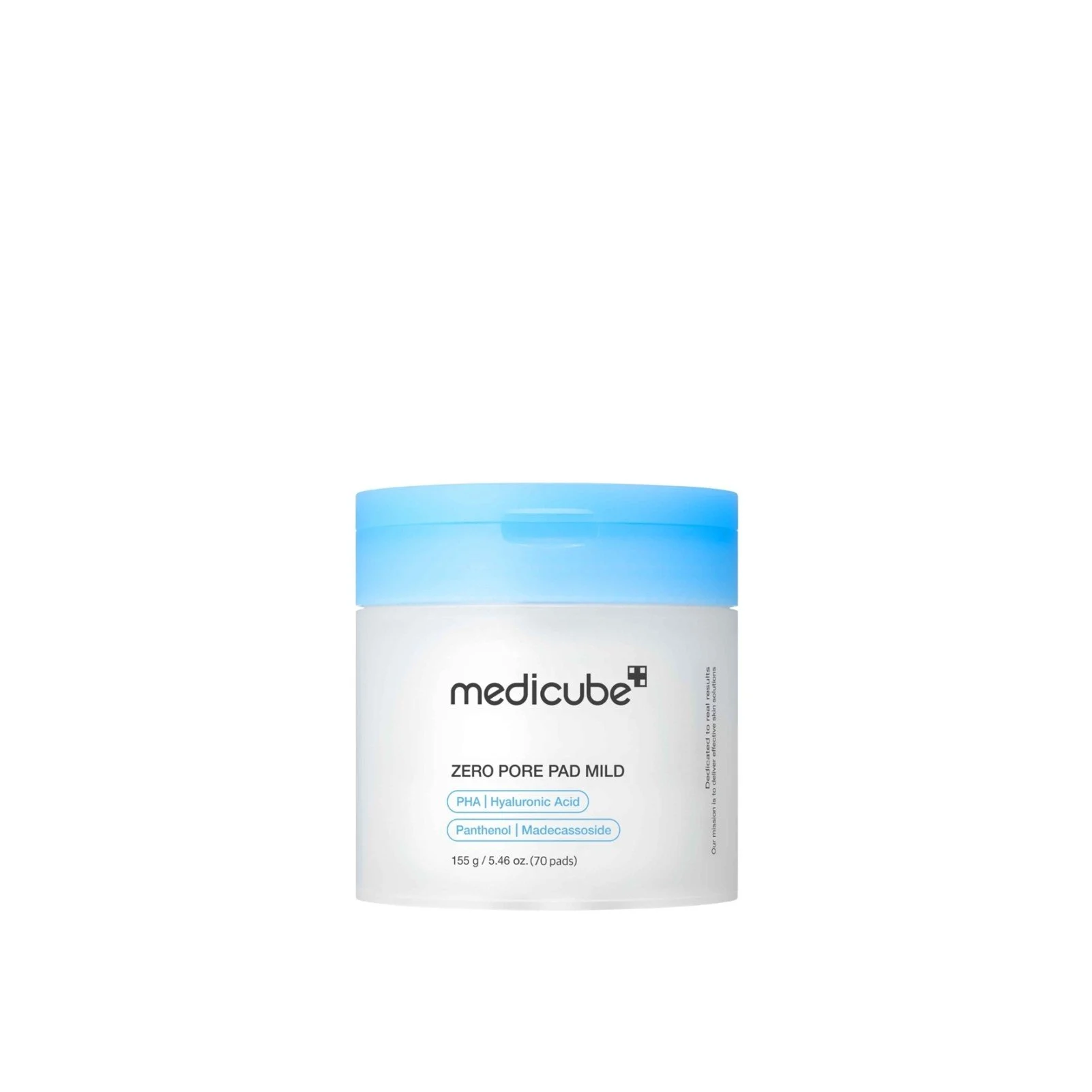
Medicube
Zero Pore Pad Mild
face toner pads
Medicube
face toner pads
Added Last edited
Fit by skin type
General, ingredient-based — not your personalized match.

See how this fits your skin
Take the skin test and I'll show you how suitable this product is for you.
Take the skin testMedicube Zero Pore Pad Mild gently exfoliates, hydrates, and helps refine the look of pores for a smoother, clearer complexion. Designed for sensitive and easily irritated skin, these daily toner pads combine mild exfoliating care with soothing and hydrating ingredients to help remove dead skin cells, excess oil, and impurities without stripping the skin. The formula helps improve skin texture, maintain moisture levels, and leave skin feeling balanced, refreshed, and comfortable after each use. With calming botanical extracts and multiple forms of hyaluronic acid, the pads support a healthy-looking complexion while helping skin appear softer, smoother, and more refined over time. Recommended for: Sensitive skin, enlarged pores, uneven texture, and those looking for gentle daily exfoliation and hydration.
Zero Pore Pad Mild is a watery-light toner pads from Medicube, a brand based in Korea. The formula is built mainly around hydration. The ingredient list runs to 39 ingredients, each broken down in full below.
By its ingredient list the formula reads as very light — essentially a water-and-humectant base with little emollient weight. With almost no emollient load it should absorb quickly and finish close to matte. Hydration is handled by Propanediol, Methylpropanediol and Butylene Glycol, humectants that pull water into the upper layers of skin rather than sealing it there.
Hydration: High. Ingredients that pull and hold water in the upper layers of skin, and here that comes from Propanediol, Methylpropanediol, Butylene Glycol and Panthenol.
Soothing: Moderate. Ingredients aimed at visible redness and reactivity, and here that comes from Panthenol, Madecassoside, Centella Asiatica Extract and Centella Asiatica Leaf Extract.
On richness alone it suits Combination (oily) and Oily skin best, and is the least natural fit for Dry and Combination (dry) skin. Nothing in the list is flagged as a common irritant, which is a reasonable starting point for reactive skin — though a patch test is still the only way to know.
The formula contributes little or nothing on antioxidant protection, oil control and firmness signalling. That is not a fault — most products are not meant to do everything — but if one of those is your priority, this is not the product that will address it.
Reading the full list, the formula is fragrance-free, essential-oil-free, no drying alcohol, paraben-free, silicone-free and microplastic-free. Those claims come from the ingredient list itself, not from the packaging.
It can be used morning and evening. In a routine it goes after cleansing, before serums. Apply to slightly damp skin so the humectants have water to hold on to.
This summary is generated from the product's ingredient list. It is not a review, it is not the brand's own marketing claims, and it does not replace advice from a dermatologist.
Drawn purely from the ingredient list
Scored on how rich or light the formula reads from its INCI order.
No ingredient in this formula carries a common-irritant flag, making it a reasonable option for reactive skin. A patch test is still recommended, as individual skin reactivity varies.
Based on the curated benefits documented for this product's ingredients.
Attracts and locks in moisture to keep skin plump and dewy
Boosts collagen and cell turnover to reduce fine lines and wrinkles
Calms redness, irritation, and inflammation for sensitive skin
Brightens and balances complexion for a more uniform appearance
None of the ingredients in this formula are associated with these benefits. This is not unusual, as most products are designed to target a limited number of concerns.
The actives, UV filters and benefit-carrying ingredients in this formula, in the order they are listed.
2nd on the list, which puts it at an estimated 5–20% of the formula.
1,3-dihydroxypropane
3rd on the list, which puts it at an estimated 5–20% of the formula.
2-Methyl-1,3-propanediol
5th on the list, which puts it at an estimated 2–10% of the formula.
Poly(oxy-1,2-ethanediyl)], .alpha.,.alpha.',.alpha.''-1,2,3-propanetriyltris[.omega.-hydroxy-
6th on the list, which puts it at an estimated 2–10% of the formula.
Butane-1,3-diol (CAS No. 107-88-0/ EC No. 203-529-7) (R)-(-)-butane-1,3-diol” (CAS No. 6290-03-5/ EC No. 228-532-0)
8th on the list, which puts it at an estimated 1–5% of the formula.
Invert sugar; the product of hydrolysis of sucrose. It consists mainly of glucose and fructose
9th on the list, which puts it at an estimated 1–5% of the formula.
D-Glucono-1,5-lactone
10th on the list, which puts it at an estimated 1–5% of the formula.
Butanamide, 2,4-dihydroxy-N-(3-hydroxypropyl)-3,3-dimethyl-, (2R)-; dl-Panthenol
11th on the list, below the 1% line — present at under 1%, which for most ingredients is the level they work at.
1,2-Propanediol, 3-(2-ethylhexyloxy)
14th on the list, below the 1% line — present at under 1%, which for most ingredients is the level they work at.
O-6-Deoxy-α-L-mannopyranosyl-(1→4)-O-β-D-glucopyranosyl-(1→6)-β-D-glucopyranosyl (2α,3β,4α,6β)-2,3,6,23-tetrahydroxyurs-12-en-28-oate
19th on the list, below the 1% line — present at under 1%, which for most ingredients is the level they work at.
Houttuynia Cordata Extract is an extract of the herb, Houttuynia cordata, Saururaceae
20th on the list, below the 1% line — present at under 1%, which for most ingredients is the level they work at.
Centella Asiatica Extract is the extract of the whole plant Hydrocotyl, Centella asiatica L., Apiaceae
23rd on the list, below the 1% line — present at under 1%, which for most ingredients is the level they work at.
1,2-Dihydroxypentane
Each axis is scored from the ingredients present and how high up the list they sit.
Ingredients that pull and hold water in the upper layers of skin
Lipids and repair signals that support skin barrier integrity
Ingredients that mop up free radicals from UV and pollution
Ingredients that moderate sebum or absorb shine
Ingredients that act on uneven tone and post-inflammatory marks
Ingredients aimed at visible redness and reactivity
Retinoids, acids and enzymes that speed surface turnover
Peptides and growth factors that signal for collagen support
"Active" here means an ingredient carrying a recorded active type or a recognised UV filter.
Solvents, emollients, texture agents and preservatives — the formula that carries the actives.
Read from the full ingredient list. A brand's own claim may differ.
Judged by the same curated rules our routine checker uses. It reads the ingredients, not the label.
Best kept to separate routines — one in the morning, one at night, or on alternate days.
Can be layered, but the combination raises the irritation risk. Go slowly.
Can be layered, but the combination raises the irritation risk. Go slowly.
Can be layered, but the combination raises the irritation risk. Go slowly.
This product is the "Toning" step.
Flags to check, not verdicts. None of this is medical advice — if you are pregnant, breastfeeding or treating a skin condition, ask a doctor.
Most ingredients do more than one job, so these counts add up to more than the 39 ingredients on the label.
Botanical material, usually for antioxidants or scent
Draws water into the upper layers of skin
Changes how skin behaves rather than how it feels
Dissolves and carries everything else
Forms a film that slows water loss
Sets the thickness, spread and stability of the formula
Neutralises free radicals from UV and pollution
Calms visible redness and irritation
Softens and smooths by filling gaps between skin cells
Binds trace metals that would otherwise spoil the formula
Keeps the product free of microbial growth
Sets the acidity the formula needs to work
Lifts oil and dirt, or holds oil and water together
Absorbs or scatters ultraviolet light
Every ingredient on the label, in order, with what it does and roughly how much of it is likely to be there.
1st on the list, which puts it at an estimated 30–80% of the formula.
Water
2nd on the list, which puts it at an estimated 5–20% of the formula.
1,3-dihydroxypropane
3rd on the list, which puts it at an estimated 5–20% of the formula.
2-Methyl-1,3-propanediol
4th on the list, which puts it at an estimated 2–10% of the formula.
5th on the list, which puts it at an estimated 2–10% of the formula.
Poly(oxy-1,2-ethanediyl)], .alpha.,.alpha.',.alpha.''-1,2,3-propanetriyltris[.omega.-hydroxy-
6th on the list, which puts it at an estimated 2–10% of the formula.
Butane-1,3-diol (CAS No. 107-88-0/ EC No. 203-529-7) (R)-(-)-butane-1,3-diol” (CAS No. 6290-03-5/ EC No. 228-532-0)
7th on the list, which puts it at an estimated 1–5% of the formula.
1,3-Propanediol, 2-amino-2-(hydroxymethyl)-
8th on the list, which puts it at an estimated 1–5% of the formula.
Invert sugar; the product of hydrolysis of sucrose. It consists mainly of glucose and fructose
9th on the list, which puts it at an estimated 1–5% of the formula.
D-Glucono-1,5-lactone
10th on the list, which puts it at an estimated 1–5% of the formula.
Butanamide, 2,4-dihydroxy-N-(3-hydroxypropyl)-3,3-dimethyl-, (2R)-; dl-Panthenol
11th on the list, below the 1% line — present at under 1%, which for most ingredients is the level they work at.
1,2-Propanediol, 3-(2-ethylhexyloxy)
12th on the list, below the 1% line — present at under 1%, which for most ingredients is the level they work at.
Disodium dihydrogen ethylenediaminetetraacetate
13th on the list, below the 1% line — present at under 1%, which for most ingredients is the level they work at.
Pyrus Communis Fruit Extract is an extract of the fruit of the Pear, Pyrus communis L., Rosaceae
14th on the list, below the 1% line — present at under 1%, which for most ingredients is the level they work at.
O-6-Deoxy-α-L-mannopyranosyl-(1→4)-O-β-D-glucopyranosyl-(1→6)-β-D-glucopyranosyl (2α,3β,4α,6β)-2,3,6,23-tetrahydroxyurs-12-en-28-oate
15th on the list, below the 1% line — present at under 1%, which for most ingredients is the level they work at.
Rosa Damascena Flower water is an aqueous solution of the steam of the distillate obtained from the flowers of the Damask Rose, Rosa damascena, Rosaceae
16th on the list, below the 1% line — present at under 1%, which for most ingredients is the level they work at.
Iris Florentina Root Extract is an extract of the roots of the Orris, Iris florentina L., Iridaceae
17th on the list, below the 1% line — present at under 1%, which for most ingredients is the level they work at.
Cucumis Melo Fruit Extract is an extract of the fruit of the Honey Melon, Cucumis melo L., Cucurbitaceae
18th on the list, below the 1% line — present at under 1%, which for most ingredients is the level they work at.
Salvia Hispanica Seed Extract is an extract of the seeds of the Spanish Sage, Salvia hispanica L., Lamiaceae
19th on the list, below the 1% line — present at under 1%, which for most ingredients is the level they work at.
Houttuynia Cordata Extract is an extract of the herb, Houttuynia cordata, Saururaceae
20th on the list, below the 1% line — present at under 1%, which for most ingredients is the level they work at.
Centella Asiatica Extract is the extract of the whole plant Hydrocotyl, Centella asiatica L., Apiaceae
21st on the list, below the 1% line — present at under 1%, which for most ingredients is the level they work at.
Hedera Helix Leaf/Stem Extract is an extract of the leaves and stems of the Ivy, Hedera helix L., Araliaceae
22nd on the list, below the 1% line — present at under 1%, which for most ingredients is the level they work at.
Cynanchum Atratum Extract is the extract of the whole plant Cynanchum atratum, Apocynaceae.
23rd on the list, below the 1% line — present at under 1%, which for most ingredients is the level they work at.
1,2-Dihydroxypentane
24th on the list, below the 1% line — present at under 1%, which for most ingredients is the level they work at.
Centella Asiatica Leaf Extract is an extract of the leaves of the Hydrocotyl, Centella asiatica L., Apiaceae
25th on the list, below the 1% line — present at under 1%, which for most ingredients is the level they work at.
Ulmus Davidiana Root Extract is an extract of the root bark of the Elm, Ulmus davidiana, Ulmaceae
26th on the list, below the 1% line — present at under 1%, which for most ingredients is the level they work at.
Pueraria Lobata Root Extract is an extract of the roots of Pueraria lobata, Fabacea
27th on the list, below the 1% line — present at under 1%, which for most ingredients is the level they work at.
Pinus Palustris Leaf Extract is an extract of the needles of the Swamp Pine, Pinus palustris, Pinaceae
28th on the list, below the 1% line — present at under 1%, which for most ingredients is the level they work at.
Oenothera Biennis Flower Extract is an extract of the flowers of the Evening Primrose, Oenothera biennis, Onagraceae
29th on the list, below the 1% line — present at under 1%, which for most ingredients is the level they work at.
Hyaluronic acid, sodium, salt
30th on the list, below the 1% line — present at under 1%, which for most ingredients is the level they work at.
Vitis Vinifera Extract is an extract of the fruit of the Grape, Vitis Vinifera L., Vitaceae
31st on the list, below the 1% line — present at under 1%, which for most ingredients is the level they work at.
Diospyros Kaki Fruit Extract is an extract of the fruit of the Kaki, Diospyros kaki L., Ebenaceae
32nd on the list, below the 1% line — present at under 1%, which for most ingredients is the level they work at.
Castanea Crenata Shell Extract is an extract of the shell of the chestnut, Castanea crenata, Fagaceae
33rd on the list, below the 1% line — present at under 1%, which for most ingredients is the level they work at.
Camellia Sinensis Leaf Extract is an extract of the leaves of the Tea, Camellia sinensis, Theaceae
34th on the list, below the 1% line — present at under 1%, which for most ingredients is the level they work at.
Hyaluronic acid
35th on the list, below the 1% line — present at under 1%, which for most ingredients is the level they work at.
Hyaluronic acid, sodium salt, polymer with 1,1'-sulfonylbis[ethene]
36th on the list, below the 1% line — present at under 1%, which for most ingredients is the level they work at.
Hydrolyzed Sodium Hyaluronate is the hydrolysate of Sodium Hyaluronate derived by acid, enzyme or other method of hydrolysis
37th on the list, below the 1% line — present at under 1%, which for most ingredients is the level they work at.
Hydrolyzed Hyaluronic Acid is the hydrolysate of Hyaluronic Acid derived by acid, enzyme or other method of hydrolysis
38th on the list, below the 1% line — present at under 1%, which for most ingredients is the level they work at.
Sodium Acetylhyaluronate
39th on the list, below the 1% line — present at under 1%, which for most ingredients is the level they work at.
Hyaluronic acid, 2-hydroxy-3-(N,N,N-trimethylammonio)propyl chloride derivatives
Products in the same category that share this formula's distinguishing ingredients.
Anua
Shares 12 key ingredients with Zero Pore Pad Mild: Butylene Glycol, Propanediol, Methylpropanediol, Panthenol, Ethylhexylglycerin
Anua
Shares 12 key ingredients with Zero Pore Pad Mild: Butylene Glycol, Propanediol, Methylpropanediol, Panthenol, Ethylhexylglycerin
d'Alba
Shares 12 key ingredients with Zero Pore Pad Mild: Butylene Glycol, Propanediol, Centella Asiatica Extract, Madecassoside, Ethylhexylglycerin
SKIN1004
Shares 11 key ingredients with Zero Pore Pad Mild: Butylene Glycol, Centella Asiatica Extract, Sodium Hyaluronate, Gluconolactone, Panthenol
SKIN1004
Shares 11 key ingredients with Zero Pore Pad Mild: Butylene Glycol, Panthenol, Centella Asiatica Extract, Ethylhexylglycerin, Pentylene Glycol
beplain
Shares 11 key ingredients with Zero Pore Pad Mild: Butylene Glycol, Propanediol, Methylpropanediol, Ethylhexylglycerin, Gluconolactone
AQUA, PROPANEDIOL, METHYLPROPANEDIOL, 1,2-HEXANEDIOL, GLYCERETH-26, BUTYLENE GLYCOL, TROMETHAMINE, SACCHARIDE HYDROLYSATE, GLUCONOLACTONE, PANTHENOL, ETHYLHEXYLGLYCERIN, DISODIUM EDTA, PYRUS COMMUNIS FRUIT EXTRACT, MADECASSOSIDE, ROSA DAMASCENA FLOWER WATER, IRIS FLORENTINA ROOT EXTRACT, CUCUMIS MELO FRUIT EXTRACT, SALVIA HISPANICA SEED EXTRACT, HOUTTUYNIA CORDATA EXTRACT, CENTELLA ASIATICA EXTRACT, HEDERA HELIX LEAF/STEM EXTRACT, CYNANCHUM ATRATUM EXTRACT, PENTYLENE GLYCOL, CENTELLA ASIATICA LEAF EXTRACT, ULMUS DAVIDIANA ROOT EXTRACT, PUERARIA LOBATA ROOT EXTRACT, PINUS PALUSTRIS LEAF EXTRACT, OENOTHERA BIENNIS FLOWER EXTRACT, SODIUM HYALURONATE, VITIS VINIFERA FRUIT EXTRACT, DIOSPYROS KAKI FRUIT EXTRACT, CASTANEA CRENATA SHELL EXTRACT, CAMELLIA SINENSIS LEAF EXTRACT, HYALURONIC ACID, SODIUM HYALURONATE CROSSPOLYMER, HYDROLYZED SODIUM HYALURONATE, HYDROLYZED HYALURONIC ACID, SODIUM ACETYLATED HYALURONATE, HYDROXYPROPYLTRIMONIUM HYALURONATE.
GLUCONOLACTONE, PANTHENOL, SODIUM HYALURONATE, HYALURONIC ACID, SODIUM HYALURONATE CROSSPOLYMER, HYDROLYZED HYALURONIC ACID, SODIUM ACETYLATED HYALURONATE.
After cleansing, use the included tweezers to pick up a pad. Gently wipe the pad across the face along the skin texture to refine and hydrate. Use the opposite side of the pad to swipe across face once more. Pat any remaining essence into the skin until fully absorbed.
Judged on how rich the formula reads from its ingredient list, it suits Combination (oily), Oily skin best. It is the least natural fit for Dry, Combination (dry) skin.
No ingredient in this formula carries a common-irritant flag, making it a reasonable option for reactive skin. A patch test is still recommended, as individual skin reactivity varies.
No ingredient in this formula is a recognised food source for malassezia, the yeast behind fungal acne.
Nothing in this formula is on the standard pregnancy-caution list. That is not medical clearance — check anything you use daily with your doctor or midwife.
Yes. Reading the full ingredient list, this formula is fragrance-free.
No. Reading the full ingredient list, this formula is no drying alcohol.
Yes. Reading the full ingredient list, this formula is silicone-free.
No. Reading the full ingredient list, this formula is essential-oil-free.
Yes. Reading the full ingredient list, this formula is paraben-free.
It layers well with Vitamin C (L-ascorbic acid), Benzoyl peroxide, Azelaic acid, Copper peptides, Bakuchiol, Niacinamide. Take more care combining it with Retinoids (retinol, retinal), AHAs (glycolic, lactic), BHA (salicylic acid), PHAs (gluconolactone) — use them in separate routines or on alternate days.
Use it morning and evening, after cleansing, before serums.
It lists 39 ingredients, of which 7 are recorded as actives.
Medicube, a brand based in Korea.
We can't find the internet
Attempting to reconnect
Something went wrong!
Attempting to reconnect