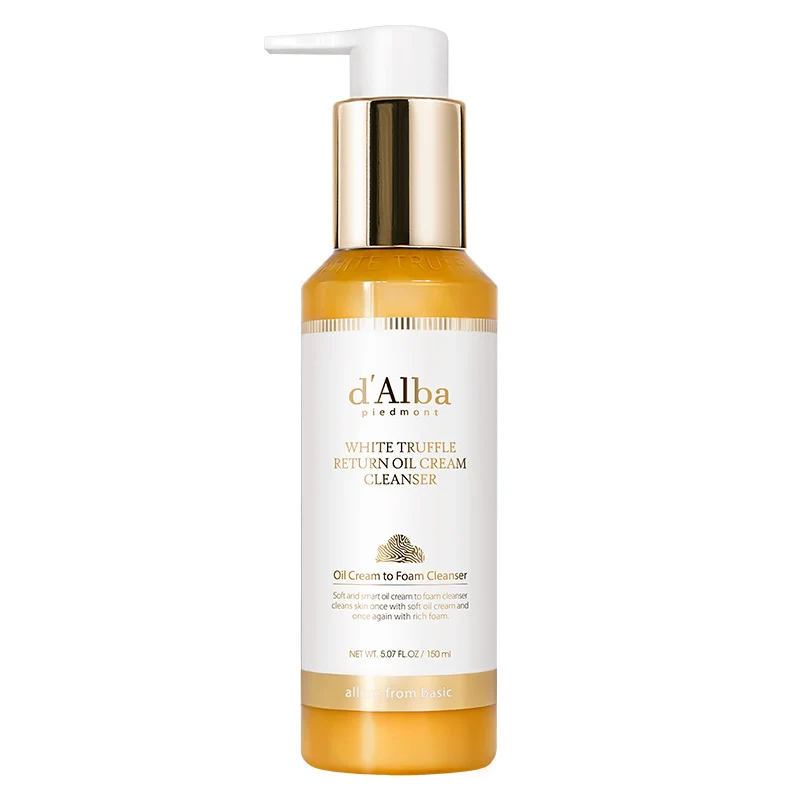
-
Estimated level
- 10–40%
-
Confidence
- Moderate — INCI order above the 1% line
-
Roles
-
Humectant, Occlusive, Texture agent, Solvent
1st on the list, which puts it at an estimated 10–40% of the formula.
Glycerine ;Glycerol (INN); Glycerol (RIFM); Glycerolum (EP); Glycyl Alcohol; 1,2,3-Propanetriol; 1,2,3-Trihydroxypropane
Hydration
Anti-Aging
6 scientific references
- Journal of Pharmaceutical Investigation, March 2021, pages 223-231
- International Journal of Toxicology, November/December 2019, Volume 38, Supplement 3, pages 6S-22S
- International Journal of Cosmetic Science, August 2016, ePublication
- British Journal of Dermatology, July 2008, pages 23-34
- Journal of Cosmetic Dermatology, June 2007, pages 75-82
- Proceedings of the National Academy of Sciences, June 2003, pages 7, 360-7, 365
-
Estimated level
- 5–20%
-
Confidence
- Moderate — INCI order above the 1% line
-
Roles
-
Solvent
2nd on the list, which puts it at an estimated 5–20% of the formula.
Water
-
Estimated level
- 5–20%
-
Confidence
- Moderate — INCI order above the 1% line
-
Roles
-
Surfactant
3rd on the list, which puts it at an estimated 5–20% of the formula.
Fatty acids, coco, 2-sulfoethyl esters, sodium salts
-
Estimated level
- 2–10%
-
Confidence
- Moderate — INCI order above the 1% line
-
Roles
-
Texture agent, Solvent
4th on the list, which puts it at an estimated 2–10% of the formula.
1,3-dihydroxypropane
Hydration
4 scientific references
- PubChem Compound Summary, April 2021, ePublication
- SpecialChem, Accessed April 2021, ePublication
- Cosmetic Ingredient Review, June 2018, pages 1-73
- Cosmetics & Toiletries, May 2013, pages 81-86
-
Estimated level
- 2–10%
-
Confidence
- Moderate — INCI order above the 1% line
-
Roles
-
Surfactant
5th on the list, which puts it at an estimated 2–10% of the formula.
Potassum salt of coconut acid
-
Estimated level
- 2–10%
-
Confidence
- Moderate — INCI order above the 1% line
-
Roles
-
Humectant, Texture agent, Solvent
6th on the list, which puts it at an estimated 2–10% of the formula.
Butane-1,3-diol (CAS No. 107-88-0/ EC No. 203-529-7)
(R)-(-)-butane-1,3-diol” (CAS No. 6290-03-5/ EC No. 228-532-0)
Hydration
5 scientific references
- CosmeticsInfoorg, Accessed March 2021, ePublication
- US Food and Drug Administration Code of Federal Regulations</em>, Accessed March 2021, ePublication
- International Journal of Toxicology, May 2011, pages 5S-16S
- Skin Research and Technology, November 2007, pages 417-24
- Journal of the American College of Toxicology, September 1985, pages 223-248
-
Estimated level
- 1–5%
-
Confidence
- Moderate — INCI order above the 1% line
-
Roles
-
Surfactant
7th on the list, which puts it at an estimated 1–5% of the formula.
-
Estimated level
- 1–5%
-
Confidence
- Moderate — INCI order above the 1% line
-
Roles
-
Occlusive, Texture agent
8th on the list, which puts it at an estimated 1–5% of the formula.
2-propenoic acid, 2-methyl-, polymer with ethyl 2-propenoate and methyl 2-methyl-2-propenoate
Hydration
Synthetic polymer
3 scientific references
- CosmeticsInfoorg, Accessed October 2021, ePublication
- Cosmetic Ingredient Review, January 2019, pages 1-42
- Swiss Society of Chemists, September 2015, ePublication
-
Estimated level
- 1–5%
-
Confidence
- Moderate — INCI order above the 1% line
-
Roles
-
Surfactant, Solvent
9th on the list, which puts it at an estimated 1–5% of the formula.
Disodium N-2-(N-(2-carboxymethoxyethyl)-N-carboxymethylamino)ethylcocamide
-
Estimated level
- under 1%
-
Confidence
- Moderate — listed below the 1% line
-
Roles
-
Solvent
10th on the list, below the 1% line — present at under 1%, which for most ingredients is the level they work at.
-
Estimated level
- under 1%
-
Confidence
- Moderate — listed below the 1% line
-
Roles
-
Surfactant
11th on the list, below the 1% line — present at under 1%, which for most ingredients is the level they work at.
D-Glucopyranose, oligomers, decyl octyl glycosides
-
Estimated level
- under 1%
-
Confidence
- Moderate — listed below the 1% line
-
Roles
-
Fragrance / colour
12th on the list, below the 1% line — present at under 1%, which for most ingredients is the level they work at.
Parfum is a term for ingredient labelling used to identify that a product contains a material or a combination of materials normally added to a cosmetic to produce or to mask a particular odour. According to Article 19 of the Cosmetics Regulation, 'Perfume and aromatic compositions and their raw materials shall be referred to by the terms ‘parfum’ or ‘aroma’. '
-
Estimated level
- under 1%
-
Confidence
- Moderate — listed below the 1% line
-
Roles
-
Texture agent
13th on the list, below the 1% line — present at under 1%, which for most ingredients is the level they work at.
Sodium chloride
-
Estimated level
- under 1%
-
Confidence
- Moderate — listed below the 1% line
-
Roles
-
Emollient, Surfactant
14th on the list, below the 1% line — present at under 1%, which for most ingredients is the level they work at.
Stearic acid, monoester with glycerol
Hydration
3 scientific references
- Cosmeticsinfoorg, Accessed November 2021, ePublication
- Drugs in Context, April 2018, pages 1-14
- International Journal of Toxicology, May 2007, pages 1–30
-
Estimated level
- under 1%
-
Confidence
- Moderate — listed below the 1% line
-
Roles
-
Texture agent, Solvent, Preservative
15th on the list, below the 1% line — present at under 1%, which for most ingredients is the level they work at.
Ethanol
Hydration
Alcohol
-
Estimated level
- under 1%
-
Confidence
- Moderate — listed below the 1% line
-
Roles
-
Antioxidant
16th on the list, below the 1% line — present at under 1%, which for most ingredients is the level they work at.
Ethanone, 1-(4-hydroxyphenyl)-,p-Hydroxyacetophenone
Anti-Aging
Hydration
4 scientific references
- Journal of Oleo Science, February 2019, pages 183-191
- Applied Environmental Microbiology, June 2018, ePublication
- Journal of Biosciences, May-June 2004, pages 345-353
- Scientific Reports, April 2021, pages 1–7
-
Estimated level
- under 1%
-
Confidence
- Moderate — listed below the 1% line
17th on the list, below the 1% line — present at under 1%, which for most ingredients is the level they work at.
1,2-Propanediol, 3-(2-ethylhexyloxy)
Hydration
5 scientific references
- PLoS One, October 2016, ePublication
- Contact Dermatitis, May 2016, pages 281-288
- International Journal of Toxicology, September 2013, pages 5S-21S
- Personal Care, 2008, pages 1-4
- Cosmetic Science Technology, 2006, pages 1-11
-
Estimated level
- under 1%
-
Confidence
- Moderate — listed below the 1% line
-
Roles
-
Solvent
18th on the list, below the 1% line — present at under 1%, which for most ingredients is the level they work at.
Butanedioic acid, bis(2-ethoxyethyl) ester
-
Estimated level
- under 1%
-
Confidence
- Moderate — listed below the 1% line
19th on the list, below the 1% line — present at under 1%, which for most ingredients is the level they work at.
1,2-Decanediol
Hydration
-
Estimated level
- under 1%
-
Confidence
- Moderate — listed below the 1% line
-
Roles
-
Plant extract
20th on the list, below the 1% line — present at under 1%, which for most ingredients is the level they work at.
Phellodendron Amurense Bark Extract is an extract of bark of the Phellodendron, Phellodendron amurense, Rutaceae
-
Estimated level
- under 1%
-
Confidence
- Moderate — listed below the 1% line
-
Roles
-
Surfactant, Solvent
21st on the list, below the 1% line — present at under 1%, which for most ingredients is the level they work at.
2-Methylpentane-2,4-diol
-
Estimated level
- under 1%
-
Confidence
- Moderate — listed below the 1% line
-
Roles
-
Chelator
22nd on the list, below the 1% line — present at under 1%, which for most ingredients is the level they work at.
1,2-Ethanediamine, N,N,N',N'-tetrakis(carboxymethyl)-
-
Estimated level
- under 1%
-
Confidence
- Moderate — listed below the 1% line
-
Roles
-
Plant extract
23rd on the list, below the 1% line — present at under 1%, which for most ingredients is the level they work at.
Ulmus Davidiana Root Extract is an extract of the root bark of the Elm, Ulmus davidiana, Ulmaceae
Anti-Aging
Hydration
Soothing
-
Estimated level
- under 1%
-
Confidence
- Moderate — listed below the 1% line
-
Roles
-
Surfactant
24th on the list, below the 1% line — present at under 1%, which for most ingredients is the level they work at.
Lecithins, hydrogenated
Hydration
4 scientific references
- International Journal of Toxicology, September 2020, pages 5S-25S
- Nanocosmetics, June 2019, pages 95–140
- Current Drug Delivery, 2016, pages 111–120
- Pharmaceutical Research, February 2013, pages 538–55
-
Estimated level
- under 1%
-
Confidence
- Moderate — listed below the 1% line
-
Roles
-
Plant extract
25th on the list, below the 1% line — present at under 1%, which for most ingredients is the level they work at.
Oenothera Biennis Flower Extract is an extract of the flowers of the Evening Primrose, Oenothera biennis, Onagraceae
-
Estimated level
- under 1%
-
Confidence
- Moderate — listed below the 1% line
-
Roles
-
Humectant, Plant extract
26th on the list, below the 1% line — present at under 1%, which for most ingredients is the level they work at.
Pueraria Lobata Root Extract is an extract of the roots of Pueraria lobata, Fabacea
Anti-Aging
Evens Skin Tone
-
Estimated level
- under 1%
-
Confidence
- Moderate — listed below the 1% line
-
Roles
-
Plant extract
27th on the list, below the 1% line — present at under 1%, which for most ingredients is the level they work at.
Pinus Palustris Leaf Extract is an extract of the needles of the Swamp Pine, Pinus palustris, Pinaceae
-
Estimated level
- under 1%
-
Confidence
- Moderate — listed below the 1% line
-
Roles
-
Plant extract
28th on the list, below the 1% line — present at under 1%, which for most ingredients is the level they work at.
Tuber Magnatum Extract is an extract of the Mushroom, Tuber magnatum
-
Estimated level
- under 1%
-
Confidence
- Moderate — listed below the 1% line
-
Roles
-
Humectant, Plant extract
29th on the list, below the 1% line — present at under 1%, which for most ingredients is the level they work at.
Ficus Carica Fruit Extract is an extract of the fruit of the Fig, Ficus carica L., Moraceae
-
Estimated level
- under 1%
-
Confidence
- Moderate — listed below the 1% line
-
Roles
-
Soothing, Surfactant, Plant extract
30th on the list, below the 1% line — present at under 1%, which for most ingredients is the level they work at.
Centella Asiatica Extract is the extract of the whole plant Hydrocotyl, Centella asiatica L., Apiaceae
Soothing
Anti-Aging
6 scientific references
- Phytomedicine, April 2018, pages 110–119
- Clinical, Cosmetic, and Investigational Dermatology, August 2017, pages 311–315
- Indian Journal of Pharmaceutical Sciences, Jan-Feb 2016, pages 27–33
- Postepy Dermatologii I, February 2013, pages 46–49
- Indian Journal of Pharmaceutical Sciences, 2010, pages 546–556
- Scientific Reports, June 2021, ePublication
-
Estimated level
- under 1%
-
Confidence
- Moderate — listed below the 1% line
-
Roles
-
Antioxidant
31st on the list, below the 1% line — present at under 1%, which for most ingredients is the level they work at.
3,4-Dihydro-2,5,7,8-tetramethyl-2-(4,8,12-trimethyltridecyl)-2H-benzopyran-6-ol; .alpha.-tocopherol; Vitamin E
Anti-Aging
Evens Skin Tone
Soothing
4 scientific references
- Journal or Agricultural and Food Chemistry, June 2010, pages 7013-7020
- Journal of Investigative Dermatology, November 2001, pages 1212-1217
- Canadian Family Physician, July 2006, pages 855-856
- Dermatologic Surgery, April 1999, pages 311-315
-
Estimated level
- under 1%
-
Confidence
- Moderate — listed below the 1% line
32nd on the list, below the 1% line — present at under 1%, which for most ingredients is the level they work at.
Cyanocobalamin; Vitamine B12
Anti-Aging
8 scientific references
- 5 Super Anti-Aging Antioxidants Your Skin Needs
- How to Keep Your Neck & Chest Looking Young
- Acne & Aging Skin
- How to Diminish Uneven Skin Tone and Get Your Glow Back
- What Are Peptides and What Do They Do for Skin?
- The Truth About Firming Creams
- Top 5 Reasons to Add Antioxidants to Your Skin Care Routine
- Anti-Aging Superstars
-
Estimated level
- under 1%
-
Confidence
- Moderate — listed below the 1% line
-
Roles
-
Plant extract
33rd on the list, below the 1% line — present at under 1%, which for most ingredients is the level they work at.
Amaranthus Caudatus Seed Extract is an extract of the seeds of Amaranthus caudatus L., Amaranthaceae
Anti-Aging
Hydration
-
Estimated level
- under 1%
-
Confidence
- Moderate — listed below the 1% line
-
Roles
-
Active
34th on the list, below the 1% line — present at under 1%, which for most ingredients is the level they work at.
Ceramide NP,1,3,4-Octadecanetriol, 2-Octadecanamide,Stearoyl-C18-Phytosphingosine,Stearoyl-4-Hydroxysphinganine
Hydration
Anti-Aging
11 scientific references
- International Journal of Toxicology, 2020, pages 5S-25S
- International Journal of Molecular Sciences, August 2019, pages 1-15
- Skin Pharmacology and Physiology, 2016, pages 135-147
- Biochimica et Biophysica Acta, October 2014, pages 2473-2483
- Journal of the American Academy of Dermatology, July 2014, pages 177-184
- Journal of Lipid Research, July 2008, pages 1, 466-1, 476
- Journal of Lipid Research, September 2007, pages 1936-1943
- American Journal of Clinical Dermatology, 2003, pages 107-129
- Contact Dermatitis, June 2002, pages 331-338
- Journal of Investigative Dermatology, November 2001, pages 1, 126-1, 136
- Skin Pharmacology and Applied Skin Physiology, September-October 2001, pages 261-271
-
Estimated level
- under 1%
-
Confidence
- Moderate — listed below the 1% line
-
Roles
-
Plant extract
35th on the list, below the 1% line — present at under 1%, which for most ingredients is the level they work at.
Betula Platyphylla Japonica Juice is the sap from the tree, Betula platyphylla japonica, Betulaceae
-
Estimated level
- under 1%
-
Confidence
- Moderate — listed below the 1% line
-
Roles
-
Plant extract
36th on the list, below the 1% line — present at under 1%, which for most ingredients is the level they work at.
Calendula Officinalis Flower Extract is an extract obrained from the flowers of the Calendula, Calendula officinalis L., Compositae
Anti-Aging
Soothing
-
Estimated level
- under 1%
-
Confidence
- Moderate — listed below the 1% line
37th on the list, below the 1% line — present at under 1%, which for most ingredients is the level they work at.
Olea Europaea Fruit Oil is the fixed oil obtained from the ripe fruit of the Olive, Olea europaea L., Oleaceae. It consists primarily of the glycerides of the fatty acids linoleic, oleic and palmitic
Hydration
Anti-Aging
-
Estimated level
- under 1%
-
Confidence
- Moderate — listed below the 1% line
-
Roles
-
Exfoliant, Texture agent
38th on the list, below the 1% line — present at under 1%, which for most ingredients is the level they work at.
Clay mineral having an intermediate composition between montmorillonite and muscovite
Oil Control
-
Estimated level
- under 1%
-
Confidence
- Moderate — listed below the 1% line
-
Roles
-
Emollient
39th on the list, below the 1% line — present at under 1%, which for most ingredients is the level they work at.
Camellia Japonica Seed Oil is the fixed oil expressed from the seeds of the Camellia, Camellia japonica L., Theaceae
-
Estimated level
- under 1%
-
Confidence
- Moderate — listed below the 1% line
40th on the list, below the 1% line — present at under 1%, which for most ingredients is the level they work at.
Persea Gratissima Oil is the fixed oil obtained by pressing the dehydrated sliced flesh of the avocado pear, Persea gratissima, Lauraceae. It consists principally of the glycerides of fatty acids
Hydration
Anti-Aging
8 scientific references
- Supercharged Hydration
- How Hyaluronic Acid Benefits Skin
- What is Dehydrated Skin & How to Choose the Best Products
- What Your Moisturizer Must Contain
- Moisturizer Myths You Should Stop Believing Now
- The Benefits of Glycerin in Skin Care
- The Best Face Oils for Skin
- How Facial Oils Help Skin
-
Estimated level
- under 1%
-
Confidence
- Moderate — listed below the 1% line
-
Roles
-
Emollient
41st on the list, below the 1% line — present at under 1%, which for most ingredients is the level they work at.
Macadamia Ternifolia Seed Oil is the fixed oil obtained from the nuts of the Bushnut, Macadamia ternifolia, Proteaceae. It consists primarily of the glycerides of the fatty acids
-
Estimated level
- under 1%
-
Confidence
- Moderate — listed below the 1% line
-
Roles
-
Occlusive
42nd on the list, below the 1% line — present at under 1%, which for most ingredients is the level they work at.
Hippophae Rhamnoides Fruit Oil is the oil expressed from the fruit of the Sea Buckthorn, Hippophae rhamnoides L., Elaeagnaceae
-
Estimated level
- under 1%
-
Confidence
- Moderate — listed below the 1% line
-
Roles
-
Emollient
43rd on the list, below the 1% line — present at under 1%, which for most ingredients is the level they work at.
Glycine Soja Oil is the oil obtained from the soybean, Glycine soja, Leguminosae, by extraction or expression. It consists esentially of triglycerides of oleic, linoleic and saturated acids
Anti-Aging
Hydration
8 scientific references
- Phytotherapy Research, March 2020, pages 435-437
- AAPS PharmSciTech, October 2018, pages 3, 029-3, 039
- The Journal of Clinical and Aesthetic Dermatology, February 2018, pages 28-37
- International Journal of Molecular Sciences, December 2017, ePublication
- Molecules, Volume 22, September 2017, ePublication
- Journal of Drugs in Dermatology, September 2013, pages s123-s127
- Journal of Medicinal Food, January 2012, pages 89-95
- International Journal of Dermatology, April 2011, pages 470-477
-
Estimated level
- under 1%
-
Confidence
- Moderate — listed below the 1% line
-
Roles
-
Emollient
44th on the list, below the 1% line — present at under 1%, which for most ingredients is the level they work at.
Helianthus Annuus Seed Oil is the oil expressed from the seeds of the Sunflower, Helianthus annuus L., Compositae
Anti-Aging
Hydration
4 scientific references
- Pediatric Dermatology, August 2018, ePublication; and January-February 2013, pages 42-50
- Chemicke Zvesti, May 2018, pages 2, 607-2, 615
- International Journal of Molecular Sciences, December 2017, ePublication
- Dermatology, October 2014, pages 230-239
-
Estimated level
- under 1%
-
Confidence
- Moderate — listed below the 1% line
-
Roles
-
Emollient
45th on the list, below the 1% line — present at under 1%, which for most ingredients is the level they work at.
Oenothera Biennis Oil is the fixed oil derived from the seeds of the Evening Primrose, Oenothera biennis, Onagraceae
Hydration
Anti-Aging
Soothing
2 scientific references
- Journal of Pharmaceutical Sciences, January 2016, pages 188-193
- Annals of Dermatology, December 2014, pages 706-712
-
Estimated level
- under 1%
-
Confidence
- Moderate — listed below the 1% line
-
Roles
-
Humectant
46th on the list, below the 1% line — present at under 1%, which for most ingredients is the level they work at.
Collagens. A fibrous protein comprising one third of the total protein in mammalian organisms. It is a polypeptide containing three peptide chains and rich in proline and hydroxyproline
-
Estimated level
- under 1%
-
Confidence
- Moderate — listed below the 1% line
47th on the list, below the 1% line — present at under 1%, which for most ingredients is the level they work at.
1,3,4-Octadecanetriol, 2-amino-, (2S, 3S, 4R)-
Anti-Aging
Hydration
6 scientific references
- Journal of Dermatological Science, January 2020, Volume 97, Issue 1, pages 2-8
- Archives of Dermatological Research, December 2017, Volume 309, Issue 10, pages 795-803
- Biochimica et Biophysica Acta: Biomembranes, May 2017, Volume 1859, Issue 5, pages 824-834
- International Journal of Cosmetic Science, June 2007, Volume 29, Issue 3, pages 181-190
- Molecular Medicine, January-March 2006, pages 17-24
- Journal of Investigative Dermatology, October 2003, issue 5, pages 1135–1137
-
Estimated level
- under 1%
-
Confidence
- Moderate — listed below the 1% line
-
Roles
-
Plant extract, Preservative
48th on the list, below the 1% line — present at under 1%, which for most ingredients is the level they work at.
Leuconostoc/Radish Root Ferment Filtrate is a filtrate of the product obtained by the fermentation of Raphanus sativus roots by the microorganism, Leuconostoc
-
Estimated level
- under 1%
-
Confidence
- Moderate — listed below the 1% line
-
Roles
-
Humectant
49th on the list, below the 1% line — present at under 1%, which for most ingredients is the level they work at.
D-mannose
Hydration
-
Estimated level
- under 1%
-
Confidence
- Moderate — listed below the 1% line
-
Roles
-
Humectant
50th on the list, below the 1% line — present at under 1%, which for most ingredients is the level they work at.
Glucose
Hydration
4 scientific references
- International Journal of Molecular Sciences, March 2020, pages 1–13
- Foods, March 2019, pages 1–27
- Nature Medicine, May 2018, pages 617–627
- Clinical Chemistry and Laboratory Medicine, September 2003, pages 1, 224–1, 228
-
Estimated level
- under 1%
-
Confidence
- Moderate — listed below the 1% line
-
Roles
-
Plant extract
51st on the list, below the 1% line — present at under 1%, which for most ingredients is the level they work at.
Collagen Extract is an oil-soluble extract of Collagen
Not yet matched to our database
These are printed on the label but have not been linked to an ingredient record yet, so they are excluded from the analysis above.
Onsen-sui