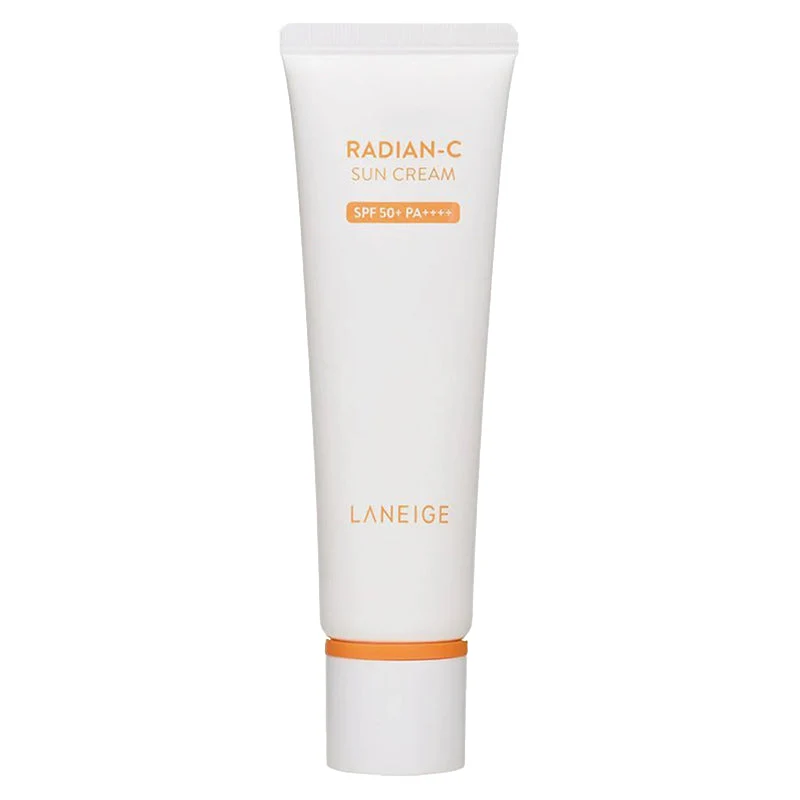
-
Estimated level
- 30–80%
-
Confidence
- Moderate — INCI order above the 1% line
-
Roles
-
Solvent
1st on the list, which puts it at an estimated 30–80% of the formula.
Aqua (EU),Deionized Water,Distilled Water,Micromatrix Fractile AN,Onsen-Sui (JPN),Purified Water
Hydration
3 scientific references
- Skin Research and Technology, May 2015, pages 131-136
- Skin Pharmacology and Applied Skin Physiology, November-December 1999, pages 344-351
- Journal of Cosmetic Science, September-October 1993, pages 249-262
-
Estimated level
- 5–20%
-
Confidence
- Moderate — INCI order above the 1% line
-
Roles
-
Humectant, Texture agent, Solvent
2nd on the list, which puts it at an estimated 5–20% of the formula.
Butane-1,3-diol (CAS No. 107-88-0/ EC No. 203-529-7)
(R)-(-)-butane-1,3-diol” (CAS No. 6290-03-5/ EC No. 228-532-0)
Hydration
5 scientific references
- CosmeticsInfoorg, Accessed March 2021, ePublication
- US Food and Drug Administration Code of Federal Regulations</em>, Accessed March 2021, ePublication
- International Journal of Toxicology, May 2011, pages 5S-16S
- Skin Research and Technology, November 2007, pages 417-24
- Journal of the American College of Toxicology, September 1985, pages 223-248
-
Estimated level
- 5–10%
-
Confidence
- High — bounded by a regulatory limit
-
Roles
-
UV filter
3rd on the list. Regulation caps it at 10%, so it is present at roughly 5–10%.
Benzoic Acid, 2-[4-(Diethylamino)-2-Hydroxybenzoyl]-, Hexyl Ester
Anti-Aging
-
Estimated level
- 2–7.34%
-
Confidence
- High — bounded by a regulatory limit
-
Roles
-
UV filter
4th on the list. Regulation caps it at 7.34%, so it is present at roughly 2–7.34%.
Benzoic acid, 2-hydroxy-, 3,3,5-trimethylcyclohexyl ester
Anti-Aging
6 scientific references
- Physical Chemistry Chemical Physics, July 2020, pages 15, 509–15, 519
- Frontiers in Medicine, September 2019, ePublication
- Journal of Cosmetic Dermatology, April 2019, pages 246–252
- Photochemical & Photobiological Sciences, April 2019, pages 1, 556–1, 564
- Journal of Clinical Aesthetic Dermatology, 2013, pages 16-26
- Journal of the American Academy of Dermatology, 2013, page 867
-
Estimated level
- 2–5%
-
Confidence
- High — bounded by a regulatory limit
-
Roles
-
UV filter
5th on the list. Regulation caps it at 5%, so it is present at roughly 2–5%.
2-Ethylhexyl salicylate
Anti-Aging
7 scientific references
- JAMA, January 2020, ePublication
- Cosmetic Ingredient Review, June 2019, pages 1-60
- Photochemical & Photobiological Sciences, June 2019, pages 1, 556–1, 564
- Catalysts, November 2017, ePublication
- Journal of the American Academy of Dermatology, June 2005, pages 937–956
- Skin Pharmacology and Applied Physiology, January-February 2003, pages 28–35
- International Journal of Toxicology, 2003, pages 1–108
-
Estimated level
- 2–10%
-
Confidence
- Moderate — INCI order above the 1% line
-
Roles
-
Emollient, Preservative
6th on the list, which puts it at an estimated 2–10% of the formula.
Benzoic acid, C12-15 alkyl esters
Hydration
3 scientific references
- The University of Toledo, May 2020, ePublication
- Scientific Journal of the Faculty of Medicine in Nis, December 2013, pages 193-200
- International Journal of Toxicology, November-December 2012, pages 342-372
-
Estimated level
- 1–5%
-
Confidence
- Moderate — INCI order above the 1% line
-
Roles
-
Emollient, Solvent
7th on the list, which puts it at an estimated 1–5% of the formula.
Diisopropyl sebacate
Hydration
8 scientific references
- Supercharged Hydration
- How Hyaluronic Acid Benefits Skin
- What is Dehydrated Skin & How to Choose the Best Products
- What Your Moisturizer Must Contain
- Moisturizer Myths You Should Stop Believing Now
- The Benefits of Glycerin in Skin Care
- The Best Face Oils for Skin
- How Facial Oils Help Skin
-
Estimated level
- 1–5%
-
Confidence
- Moderate — INCI order above the 1% line
-
Roles
-
Emollient, Surfactant, Texture agent
8th on the list, which puts it at an estimated 1–5% of the formula.
Alcohols, C16-18
Hydration
4 scientific references
- CosmeticsInfoorg, Accessed March 2021, ePublication
- FDA Cosmetic Labeling Claims, August 2020, ePublication
- Journal of the Society of Cosmetic Scientists of Korea, June 2009, pages 103-110
- Journal of the American College of Toxicology, 1988, pages 359-413
-
Estimated level
- 1–5%
-
Confidence
- Moderate — INCI order above the 1% line
-
Roles
-
Exfoliant, Texture agent
9th on the list, which puts it at an estimated 1–5% of the formula.
Silicon dioxide
Oil Control
6 scientific references
- Advances in Colloid and Interface Science, July 2021, page 10, 2437
- Cosmetic Ingredient Review, October 2019, pages 1-34
- Nanomedicine, August 2019, pages 2, 243-2, 267
- Biological and Pharmaceutical Bulletin, 2016, pages 1, 201-1, 205
- European Journal of Pharmaceutics and Biopharmaceutics, January 2015, pages 116-125
- Cosmetics & Toiletries, April 2015, pages 36-45
-
Estimated level
- 1–5%
-
Confidence
- Moderate — INCI order above the 1% line
-
Roles
-
Emollient
10th on the list, which puts it at an estimated 1–5% of the formula.
Glycerides, wheat germ-oil mono-, di- and tri-
Hydration
Anti-Aging
8 scientific references
- Supercharged Hydration
- How Hyaluronic Acid Benefits Skin
- What is Dehydrated Skin & How to Choose the Best Products
- What Your Moisturizer Must Contain
- Moisturizer Myths You Should Stop Believing Now
- The Benefits of Glycerin in Skin Care
- The Best Face Oils for Skin
- How Facial Oils Help Skin
-
Estimated level
- 1–3%
-
Confidence
- Moderate — INCI order above the 1% line
-
Roles
-
Surfactant
11th on the list, which puts it at an estimated 1–3% of the formula.
1-hexadecanol, phosphate, potassium salt
-
Estimated level
- 1–3%
-
Confidence
- Moderate — INCI order above the 1% line
-
Roles
-
UV filter, Texture agent
12th on the list, which puts it at an estimated 1–3% of the formula.
Titanium dioxide (CI 77891)
Anti-Aging
10 scientific references
- Journal of Cosmetic Dermatology, February 2021, pages 532-537
- Frontiers in Bioengineering and Biotechnology, June 2020
- Journal of Nanoparticle Research, March 2020
- Journal of the European Academy of Dermatology and Venereology, November 2019, pages 34-46
- Photodermatology, Photoimmunology and Photomedicine, November 2019, pages 442-446
- Journal of Cosmetic Science, September 2019, pages 223-234
- Materials, July 2019, pages 1-24
- Photodermatology, Photoimmunology, and Photomedicine, April 2011, pages 58-67
- Skin Therapy Letter, July-August 2008, pages 5-7
- Environmental and Health Perspectives, July 2008, pages 893
-
Estimated level
- 1–3%
-
Confidence
- Moderate — INCI order above the 1% line
-
Roles
-
UV filter
13th on the list, which puts it at an estimated 1–3% of the formula.
3,3'-(1,4-Phenylenedimethylene)bis[7,7-dimethyl-2-oxo-bicyclo[2.2.1]heptane-1-methanesulfonic acid]
Anti-Aging
8 scientific references
- 5 Super Anti-Aging Antioxidants Your Skin Needs
- How to Keep Your Neck & Chest Looking Young
- Acne & Aging Skin
- How to Diminish Uneven Skin Tone and Get Your Glow Back
- What Are Peptides and What Do They Do for Skin?
- The Truth About Firming Creams
- Top 5 Reasons to Add Antioxidants to Your Skin Care Routine
- Anti-Aging Superstars
-
Estimated level
- 1–3%
-
Confidence
- Moderate — INCI order above the 1% line
14th on the list, which puts it at an estimated 1–3% of the formula.
1,1,5,5,5-Hexamethyl-3-phenyl-3-[(trimethylsilyl)oxy]trisiloxane
Hydration
Silicone
5 scientific references
- International Journal of Toxicology, 2006, pages 1-89
- https://onlinepersonalcarecouncilorg/ctfa-static/online/lists/cir-pdfs/PRNS513pdf
- Journal of Cosmetic Science, June 2003, pages 335-351
- Silicone Surfactants, 1999, page 190
- International Journal of Toxicology, 1986, pages 353-371
-
Estimated level
- 1–3%
-
Confidence
- Moderate — INCI order above the 1% line
-
Roles
-
UV filter
15th on the list, which puts it at an estimated 1–3% of the formula.
2,2'-[6-(4-Methoxyphenyl)-1,3,5-triazine-2,4-diyl]bis[5-[(2-ethylhexyl)oxy]-phenol]
Anti-Aging
-
Estimated level
- 1–3%
-
Confidence
- Moderate — INCI order above the 1% line
-
Roles
-
Emollient, Occlusive, Solvent
16th on the list, which puts it at an estimated 1–3% of the formula.
Dibutyl adipate
Hydration
-
Estimated level
- under 1%
-
Confidence
- Moderate — listed below the 1% line
-
Roles
-
Solvent
17th on the list, below the 1% line — present at under 1%, which for most ingredients is the level they work at.
-
Estimated level
- under 1%
-
Confidence
- Moderate — listed below the 1% line
-
Roles
-
pH adjuster
18th on the list, below the 1% line — present at under 1%, which for most ingredients is the level they work at.
1,3-Propanediol, 2-amino-2-(hydroxymethyl)-
-
Estimated level
- under 1%
-
Confidence
- Moderate — listed below the 1% line
-
Roles
-
Active
19th on the list, below the 1% line — present at under 1%, which for most ingredients is the level they work at.
Butanamide, 2,4-dihydroxy-N-(3-hydroxypropyl)-3,3-dimethyl-, (2R)-; dl-Panthenol
Hydration
Soothing
7 scientific references
- The Linus Pauling Institute, Oregon State University, Accessed April 2021, ePublication
- International Journal of Cosmetic Science, December 2019, pages 534-547
- Journal of Cosmetic Dermatology, January 2019, pages 346-354
- Cosmetic Ingredient Review, March 2018, pages 1-51
- The Journal of Dermatological Treatment, August 2017, pages 173-180
- Journal of Cosmetic Science, August 2011, pages 361-370
- American Journal of Clinical Dermatology, Volume 3, 2002, pages 427-433
-
Estimated level
- under 1%
-
Confidence
- Moderate — listed below the 1% line
-
Roles
-
Solvent, Fragrance / colour
20th on the list, below the 1% line — present at under 1%, which for most ingredients is the level they work at.
1-Methyl-4-Isopropenylcyclohexene; dipentene
Allergen
-
Estimated level
- under 1%
-
Confidence
- Moderate — listed below the 1% line
-
Roles
-
Texture agent
21st on the list, below the 1% line — present at under 1%, which for most ingredients is the level they work at.
Polyacrylate Crosspolymer-6 is a copolymer of ammonium acryloyldimethyltaurate, dimethylacrylamide, lauryl methacrylate and laureth-4 methacrylate, crosslinked with trimethylolpropane triacrylate
Synthetic polymer
-
Estimated level
- under 1%
-
Confidence
- Moderate — listed below the 1% line
-
Roles
-
Texture agent
22nd on the list, below the 1% line — present at under 1%, which for most ingredients is the level they work at.
Dihydroxyaluminium stearate
-
Estimated level
- under 1%
-
Confidence
- Moderate — listed below the 1% line
-
Roles
-
Occlusive
23rd on the list, below the 1% line — present at under 1%, which for most ingredients is the level they work at.
2-Propenoic acid, 2-methyl-, methyl ester, homopolymer
Microplastic
-
Estimated level
- under 1%
-
Confidence
- Moderate — listed below the 1% line
-
Roles
-
Surfactant
24th on the list, below the 1% line — present at under 1%, which for most ingredients is the level they work at.
12-Hydroxyoctadecanoic acid, homopolymer
-
Estimated level
- under 1%
-
Confidence
- Moderate — listed below the 1% line
-
Roles
-
Fragrance / colour
25th on the list, below the 1% line — present at under 1%, which for most ingredients is the level they work at.
Parfum is a term for ingredient labelling used to identify that a product contains a material or a combination of materials normally added to a cosmetic to produce or to mask a particular odour. According to Article 19 of the Cosmetics Regulation, 'Perfume and aromatic compositions and their raw materials shall be referred to by the terms ‘parfum’ or ‘aroma’. '
-
Estimated level
- under 1%
-
Confidence
- Moderate — listed below the 1% line
26th on the list, below the 1% line — present at under 1%, which for most ingredients is the level they work at.
Lanthanum chloride, anhydrous
-
Estimated level
- under 1%
-
Confidence
- Moderate — listed below the 1% line
-
Roles
-
Emollient
27th on the list, below the 1% line — present at under 1%, which for most ingredients is the level they work at.
Octane-1,2-diol
-
Estimated level
- under 1%
-
Confidence
- Moderate — listed below the 1% line
-
Roles
-
Solvent
28th on the list, below the 1% line — present at under 1%, which for most ingredients is the level they work at.
Ethane, 1,1'-oxybis
-
Estimated level
- under 1%
-
Confidence
- Moderate — listed below the 1% line
-
Roles
-
Emollient, Surfactant
29th on the list, below the 1% line — present at under 1%, which for most ingredients is the level they work at.
Octanoic acid, monoester with glycerol
Hydration
-
Estimated level
- under 1%
-
Confidence
- Moderate — listed below the 1% line
-
Roles
-
Occlusive, Antioxidant
30th on the list, below the 1% line — present at under 1%, which for most ingredients is the level they work at.
Thymol Trimethoxycinnamate
-
Estimated level
- under 1%
-
Confidence
- Moderate — listed below the 1% line
-
Roles
-
Emollient, Surfactant
31st on the list, below the 1% line — present at under 1%, which for most ingredients is the level they work at.
Stearic acid, monoester with glycerol
Hydration
3 scientific references
- Cosmeticsinfoorg, Accessed November 2021, ePublication
- Drugs in Context, April 2018, pages 1-14
- International Journal of Toxicology, May 2007, pages 1–30
-
Estimated level
- under 1%
-
Confidence
- Moderate — listed below the 1% line
-
Roles
-
Exfoliant, Texture agent
32nd on the list, below the 1% line — present at under 1%, which for most ingredients is the level they work at.
Aluminium oxide
Oil Control
3 scientific references
- International Journal of Toxicology, November 2016, pages 16S-33S
- Journal of Nanoscience and Nanotechnology, February 2015, pages 1, 636-1, 646
- https://wwwaccessdatafdagov/scripts/cdrh/cfdocs/cfcfr/CFRSearchcfm?fr=731010&SearchTerm=alumina%C2%A0
-
Estimated level
- under 1%
-
Confidence
- Moderate — listed below the 1% line
-
Roles
-
Surfactant
33rd on the list, below the 1% line — present at under 1%, which for most ingredients is the level they work at.
Lecithins, hydrogenated
Hydration
4 scientific references
- International Journal of Toxicology, September 2020, pages 5S-25S
- Nanocosmetics, June 2019, pages 95–140
- Current Drug Delivery, 2016, pages 111–120
- Pharmaceutical Research, February 2013, pages 538–55
-
Estimated level
- under 1%
-
Confidence
- Moderate — listed below the 1% line
-
Roles
-
Texture agent, Chelator
34th on the list, below the 1% line — present at under 1%, which for most ingredients is the level they work at.
Disodium dihydrogen ethylenediaminetetraacetate
-
Estimated level
- under 1%
-
Confidence
- Moderate — listed below the 1% line
-
Roles
-
Emollient, Surfactant, Texture agent
35th on the list, below the 1% line — present at under 1%, which for most ingredients is the level they work at.
Stearic acid
Hydration
4 scientific references
- Cosmetic Ingredient Review, May 2019, pages 1-61
- International Journal of Cosmetic Science, August 2008, page 310
- Therapeutics for the Clinician, May 2005, pages 317-324
- Journal of Cosmetic Science, December 2003, pages 559-568
-
Estimated level
- under 1%
-
Confidence
- Moderate — listed below the 1% line
-
Roles
-
Emollient, Texture agent
36th on the list, below the 1% line — present at under 1%, which for most ingredients is the level they work at.
Alcohols, C12-15
-
Estimated level
- under 1%
-
Confidence
- Moderate — listed below the 1% line
-
Roles
-
Surfactant
37th on the list, below the 1% line — present at under 1%, which for most ingredients is the level they work at.
1,2,3-Propanetriol, homopolymer, octadecanoates (1:2) (2 mol glycerol average molar ratio)
-
Estimated level
- under 1%
-
Confidence
- Moderate — listed below the 1% line
-
Roles
-
Emollient, Surfactant
38th on the list, below the 1% line — present at under 1%, which for most ingredients is the level they work at.
Hexadecanoic acid
-
Estimated level
- under 1%
-
Confidence
- Moderate — listed below the 1% line
-
Roles
-
Fragrance / colour
39th on the list, below the 1% line — present at under 1%, which for most ingredients is the level they work at.
3,7-Dimethyl octa-1,6-diene-3-ol
Allergen
-
Estimated level
- under 1%
-
Confidence
- Moderate — listed below the 1% line
-
Roles
-
Active
40th on the list, below the 1% line — present at under 1%, which for most ingredients is the level they work at.
Ceramide NP,1,3,4-Octadecanetriol, 2-Octadecanamide,Stearoyl-C18-Phytosphingosine,Stearoyl-4-Hydroxysphinganine
Hydration
Anti-Aging
11 scientific references
- International Journal of Toxicology, 2020, pages 5S-25S
- International Journal of Molecular Sciences, August 2019, pages 1-15
- Skin Pharmacology and Physiology, 2016, pages 135-147
- Biochimica et Biophysica Acta, October 2014, pages 2473-2483
- Journal of the American Academy of Dermatology, July 2014, pages 177-184
- Journal of Lipid Research, July 2008, pages 1, 466-1, 476
- Journal of Lipid Research, September 2007, pages 1936-1943
- American Journal of Clinical Dermatology, 2003, pages 107-129
- Contact Dermatitis, June 2002, pages 331-338
- Journal of Investigative Dermatology, November 2001, pages 1, 126-1, 136
- Skin Pharmacology and Applied Skin Physiology, September-October 2001, pages 261-271
-
Estimated level
- under 1%
-
Confidence
- Moderate — listed below the 1% line
-
Roles
-
Fragrance / colour
41st on the list, below the 1% line — present at under 1%, which for most ingredients is the level they work at.
2,6-Octadienal, 3,7-dimethyl-; 3,7-Dimethyl-2,6-octadienal
Allergen
-
Estimated level
- under 1%
-
Confidence
- Moderate — listed below the 1% line
-
Roles
-
Solvent
42nd on the list, below the 1% line — present at under 1%, which for most ingredients is the level they work at.
2-Methylpropan-2-ol
Alcohol
-
Estimated level
- under 1%
-
Confidence
- Moderate — listed below the 1% line
-
Roles
-
Fragrance / colour
43rd on the list, below the 1% line — present at under 1%, which for most ingredients is the level they work at.
2,6-Octadien-1-ol, 3,7-dimethyl-, (2E)-
Allergen
-
Estimated level
- under 1%
-
Confidence
- Moderate — listed below the 1% line
-
Roles
-
Surfactant
44th on the list, below the 1% line — present at under 1%, which for most ingredients is the level they work at.
Tetradecanoic acid
-
Estimated level
- under 1%
-
Confidence
- Moderate — listed below the 1% line
-
Roles
-
Surfactant
45th on the list, below the 1% line — present at under 1%, which for most ingredients is the level they work at.
Dodecanoic acid
Hydration
Soothing
5 scientific references
- Dermatologic Therapy, July 2020, pages 1-4
- IOP Conference Series: Earth and Environmental Science, June 2020, pages 1-6
- Biomaterials, October 2009, pages 6, 035-6, 040
- Journal of the American college of Toxicology, 1987, pages 1-81
- Tenside Surfactants Detergents, December 1976, pages 313-316