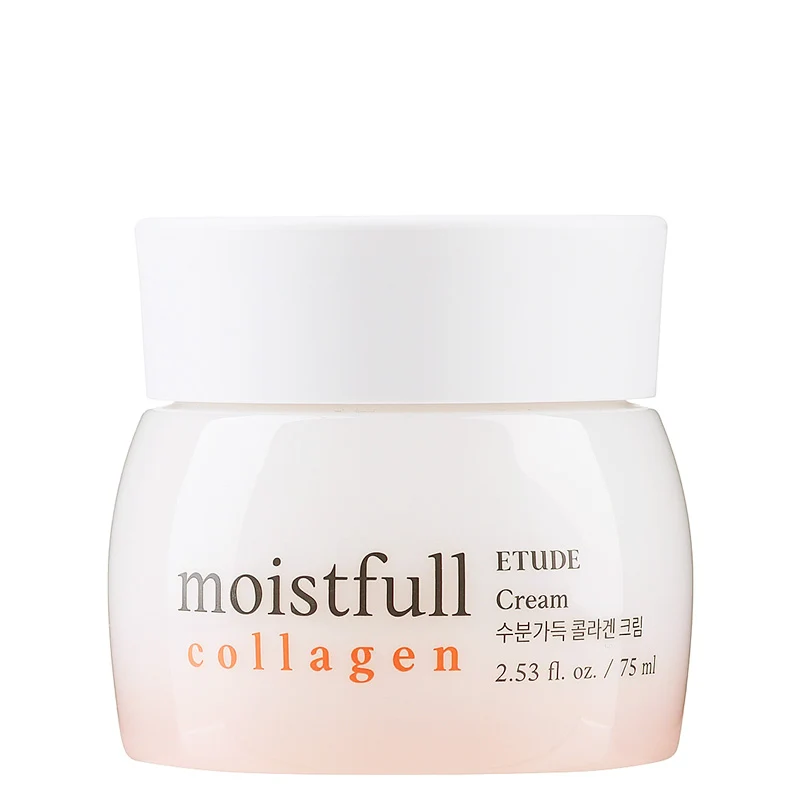
-
Estimated level
- 10–40%
-
Confidence
- Moderate — INCI order above the 1% line
-
Roles
-
Humectant, Emollient, Occlusive
1st on the list, which puts it at an estimated 10–40% of the formula.
Collagens, hydrolyzates. Substance obtained by acidic, alkaline, or enzymatic hydrolysis of hoofs and horns composed primarily of amino acids, peptides, and proteins. It may contain impurities consisting chiefly of carbohydrates and lipids along with smaller quantities of miscellaneous organic substances of biological origin.
Hydration
-
Estimated level
- 5–20%
-
Confidence
- Moderate — INCI order above the 1% line
-
Roles
-
Texture agent, Solvent
2nd on the list, which puts it at an estimated 5–20% of the formula.
1,3-dihydroxypropane
Hydration
4 scientific references
- PubChem Compound Summary, April 2021, ePublication
- SpecialChem, Accessed April 2021, ePublication
- Cosmetic Ingredient Review, June 2018, pages 1-73
- Cosmetics & Toiletries, May 2013, pages 81-86
-
Estimated level
- 5–20%
-
Confidence
- Moderate — INCI order above the 1% line
-
Roles
-
Humectant, Occlusive, Texture agent, Solvent
3rd on the list, which puts it at an estimated 5–20% of the formula.
Glycerine ;Glycerol (INN); Glycerol (RIFM); Glycerolum (EP); Glycyl Alcohol; 1,2,3-Propanetriol; 1,2,3-Trihydroxypropane
Hydration
Anti-Aging
6 scientific references
- Journal of Pharmaceutical Investigation, March 2021, pages 223-231
- International Journal of Toxicology, November/December 2019, Volume 38, Supplement 3, pages 6S-22S
- International Journal of Cosmetic Science, August 2016, ePublication
- British Journal of Dermatology, July 2008, pages 23-34
- Journal of Cosmetic Dermatology, June 2007, pages 75-82
- Proceedings of the National Academy of Sciences, June 2003, pages 7, 360-7, 365
-
Estimated level
- 2–10%
-
Confidence
- Moderate — INCI order above the 1% line
-
Roles
-
Solvent
4th on the list, which puts it at an estimated 2–10% of the formula.
1,1,1,3,5,5,5-Heptamethyl-3-(trimethylsilyloxy)trisiloxane
Hydration
Silicone
8 scientific references
- Supercharged Hydration
- How Hyaluronic Acid Benefits Skin
- What is Dehydrated Skin & How to Choose the Best Products
- What Your Moisturizer Must Contain
- Moisturizer Myths You Should Stop Believing Now
- The Benefits of Glycerin in Skin Care
- The Best Face Oils for Skin
- How Facial Oils Help Skin
-
Estimated level
- 2–10%
-
Confidence
- Moderate — INCI order above the 1% line
-
Roles
-
Humectant, Texture agent, Solvent
5th on the list, which puts it at an estimated 2–10% of the formula.
Butane-1,3-diol (CAS No. 107-88-0/ EC No. 203-529-7)
(R)-(-)-butane-1,3-diol” (CAS No. 6290-03-5/ EC No. 228-532-0)
Hydration
5 scientific references
- CosmeticsInfoorg, Accessed March 2021, ePublication
- US Food and Drug Administration Code of Federal Regulations</em>, Accessed March 2021, ePublication
- International Journal of Toxicology, May 2011, pages 5S-16S
- Skin Research and Technology, November 2007, pages 417-24
- Journal of the American College of Toxicology, September 1985, pages 223-248
-
Estimated level
- 2–10%
-
Confidence
- Moderate — INCI order above the 1% line
-
Roles
-
Solvent
6th on the list, which puts it at an estimated 2–10% of the formula.
Aqua (EU),Deionized Water,Distilled Water,Micromatrix Fractile AN,Onsen-Sui (JPN),Purified Water
Hydration
3 scientific references
- Skin Research and Technology, May 2015, pages 131-136
- Skin Pharmacology and Applied Skin Physiology, November-December 1999, pages 344-351
- Journal of Cosmetic Science, September-October 1993, pages 249-262
-
Estimated level
- 1–5%
-
Confidence
- Moderate — INCI order above the 1% line
-
Roles
-
Emollient, Texture agent
7th on the list, which puts it at an estimated 1–5% of the formula.
2,2-bis[[(2-Ethyl-1-oxohexyl)oxy]methyl]propane-1,3-diyl bis(2-ethylhexanoate)
Hydration
-
Estimated level
- 1–5%
-
Confidence
- Moderate — INCI order above the 1% line
-
Roles
-
Texture agent
8th on the list, which puts it at an estimated 1–5% of the formula.
2-Propenoic acid, 2-methyl-, homopolymer, ester with 1,2,3-propanetriol
Synthetic polymer
-
Estimated level
- under 1%
-
Confidence
- Moderate — listed below the 1% line
-
Roles
-
Solvent
9th on the list, below the 1% line — present at under 1%, which for most ingredients is the level they work at.
-
Estimated level
- under 1%
-
Confidence
- Moderate — listed below the 1% line
-
Roles
-
Humectant, Texture agent
10th on the list, below the 1% line — present at under 1%, which for most ingredients is the level they work at.
Methanaminium, 1-carboxy-N,N,N-trimethyl-, hydroxide, inner salt
Hydration
5 scientific references
- International Journal of Toxicology, 2018, pages 28S-46S
- Food Science and Biotechnology, October 2017, pages 1391-1397
- The Journal of Chemical Physics, June 2015, ePublication
- The American Journal of Clinical Nutrition, September 2004, pages 539-549
- Skin Research and Technology, February 2003, pages 50-58
-
Estimated level
- under 1%
-
Confidence
- Moderate — listed below the 1% line
-
Roles
-
Emollient, Texture agent
11th on the list, below the 1% line — present at under 1%, which for most ingredients is the level they work at.
C6-14-alkenes, homopolymers, hydrogenated
-
Estimated level
- under 1%
-
Confidence
- Moderate — listed below the 1% line
-
Roles
-
Emollient, Solvent
12th on the list, below the 1% line — present at under 1%, which for most ingredients is the level they work at.
Dioctyl ether
Hydration
2 scientific references
- SpecialChem, Accessed January 2022, ePublication
- Personal Care Council, December 2021, ePublication
-
Estimated level
- under 1%
-
Confidence
- Moderate — listed below the 1% line
-
Roles
-
Texture agent
13th on the list, below the 1% line — present at under 1%, which for most ingredients is the level they work at.
Ammonium Acryloyldimethyltaurate/VP Copolymer is a copolymer of ammonium acryloyldimethyltaurate and vinylpyrrolidone monomers
Hydration
-
Estimated level
- under 1%
-
Confidence
- Moderate — listed below the 1% line
-
Roles
-
Texture agent
14th on the list, below the 1% line — present at under 1%, which for most ingredients is the level they work at.
C14-22 Alcohols is a mixture of synthetic fatty alcohols with 14 to 22 carbons in the alkyl chain
-
Estimated level
- under 1%
-
Confidence
- Moderate — listed below the 1% line
-
Roles
-
Emollient, Surfactant
15th on the list, below the 1% line — present at under 1%, which for most ingredients is the level they work at.
1,2,3-Propanetricarboxylic acid, 2-hydroxy-, ester with 1,2,3-propanetriol monooctadecanoate
Hydration
-
Estimated level
- under 1%
-
Confidence
- Moderate — listed below the 1% line
-
Roles
-
Texture agent
16th on the list, below the 1% line — present at under 1%, which for most ingredients is the level they work at.
Hydroxyethyl Acrylate/Sodium Acryloyldimethyl Taurate Copolymer is a copolymer of sodium hydroxyethyl acrylate and acryloyldimethyl taurate monomers
Synthetic polymer
-
Estimated level
- under 1%
-
Confidence
- Moderate — listed below the 1% line
-
Roles
-
Emollient, Texture agent
17th on the list, below the 1% line — present at under 1%, which for most ingredients is the level they work at.
Icosan-1-ol
Hydration
4 scientific references
- International Journal of Toxicology, September 2015, pages 5S-69S
- Percutaneous Penetration Enhancers Chemical Methods in Penetration Enhancement Springer, Berlin, Heidelberg, 2015, pages 231-250
- Alkyl Polyglucosides: From Natural-Origin Surfactants to Prospective Delivery Systems, 2014, pages 135-161
- Journal of Thermal Analysis and Calorimetry, March 2013, pages 2, 045-2, 057
-
Estimated level
- under 1%
-
Confidence
- Moderate — listed below the 1% line
-
Roles
-
Emollient, Surfactant, Texture agent
18th on the list, below the 1% line — present at under 1%, which for most ingredients is the level they work at.
Stearic acid
Hydration
4 scientific references
- Cosmetic Ingredient Review, May 2019, pages 1-61
- International Journal of Cosmetic Science, August 2008, page 310
- Therapeutics for the Clinician, May 2005, pages 317-324
- Journal of Cosmetic Science, December 2003, pages 559-568
-
Estimated level
- under 1%
-
Confidence
- Moderate — listed below the 1% line
-
Roles
-
Emollient, Surfactant
19th on the list, below the 1% line — present at under 1%, which for most ingredients is the level they work at.
Stearic acid, monoester with glycerol
Hydration
3 scientific references
- Cosmeticsinfoorg, Accessed November 2021, ePublication
- Drugs in Context, April 2018, pages 1-14
- International Journal of Toxicology, May 2007, pages 1–30
-
Estimated level
- under 1%
-
Confidence
- Moderate — listed below the 1% line
20th on the list, below the 1% line — present at under 1%, which for most ingredients is the level they work at.
-
Estimated level
- under 1%
-
Confidence
- Moderate — listed below the 1% line
-
Roles
-
Emollient, Surfactant
21st on the list, below the 1% line — present at under 1%, which for most ingredients is the level they work at.
Hexadecanoic acid
-
Estimated level
- under 1%
-
Confidence
- Moderate — listed below the 1% line
-
Roles
-
Exfoliant, Texture agent
22nd on the list, below the 1% line — present at under 1%, which for most ingredients is the level they work at.
Silicon dioxide
Oil Control
6 scientific references
- Advances in Colloid and Interface Science, July 2021, page 10, 2437
- Cosmetic Ingredient Review, October 2019, pages 1-34
- Nanomedicine, August 2019, pages 2, 243-2, 267
- Biological and Pharmaceutical Bulletin, 2016, pages 1, 201-1, 205
- European Journal of Pharmaceutics and Biopharmaceutics, January 2015, pages 116-125
- Cosmetics & Toiletries, April 2015, pages 36-45
-
Estimated level
- under 1%
-
Confidence
- Moderate — listed below the 1% line
-
Roles
-
Emollient, Texture agent
23rd on the list, below the 1% line — present at under 1%, which for most ingredients is the level they work at.
Docosan-1-ol
Hydration
5 scientific references
- International Journal of Cosmetic Science, April 2017, pages 206-216
- International Journal of Toxicology, May 2014, pages 77-142
- Expert Opinion on Pharmacotherapy, March 2010, Volume 11, pages 853-860
- Journal of the American College of Toxicology, 1988, pages 1-55
- CosmeticsInfoorg, ePublication
-
Estimated level
- under 1%
-
Confidence
- Moderate — listed below the 1% line
-
Roles
-
Fragrance / colour
24th on the list, below the 1% line — present at under 1%, which for most ingredients is the level they work at.
Parfum is a term for ingredient labelling used to identify that a product contains a material or a combination of materials normally added to a cosmetic to produce or to mask a particular odour. According to Article 19 of the Cosmetics Regulation, 'Perfume and aromatic compositions and their raw materials shall be referred to by the terms ‘parfum’ or ‘aroma’. '
-
Estimated level
- under 1%
-
Confidence
- Moderate — listed below the 1% line
-
Roles
-
Surfactant
25th on the list, below the 1% line — present at under 1%, which for most ingredients is the level they work at.
C12-20 Alkyl Glucoside is the product obtained by the condensation of C12-20 alcohols with glucose
-
Estimated level
- under 1%
-
Confidence
- Moderate — listed below the 1% line
-
Roles
-
Emollient, Surfactant
26th on the list, below the 1% line — present at under 1%, which for most ingredients is the level they work at.
Octanoic acid, monoester with glycerol
Hydration
-
Estimated level
- under 1%
-
Confidence
- Moderate — listed below the 1% line
-
Roles
-
Surfactant
27th on the list, below the 1% line — present at under 1%, which for most ingredients is the level they work at.
D-glucose, 1-eicosanol ether
-
Estimated level
- under 1%
-
Confidence
- Moderate — listed below the 1% line
-
Roles
-
Texture agent, Chelator
28th on the list, below the 1% line — present at under 1%, which for most ingredients is the level they work at.
Disodium dihydrogen ethylenediaminetetraacetate
-
Estimated level
- under 1%
-
Confidence
- Moderate — listed below the 1% line
29th on the list, below the 1% line — present at under 1%, which for most ingredients is the level they work at.
1,2-Propanediol, 3-(2-ethylhexyloxy)
Hydration
5 scientific references
- PLoS One, October 2016, ePublication
- Contact Dermatitis, May 2016, pages 281-288
- International Journal of Toxicology, September 2013, pages 5S-21S
- Personal Care, 2008, pages 1-4
- Cosmetic Science Technology, 2006, pages 1-11
-
Estimated level
- under 1%
-
Confidence
- Moderate — listed below the 1% line
-
Roles
-
Surfactant
30th on the list, below the 1% line — present at under 1%, which for most ingredients is the level they work at.
Sorbitan, isooctadecanoate
-
Estimated level
- under 1%
-
Confidence
- Moderate — listed below the 1% line
31st on the list, below the 1% line — present at under 1%, which for most ingredients is the level they work at.
Trans-1-(1-Oxohexadecyl)-4-[(1-oxohexadecyl)oxy]-L-proline
Hydration
Anti-Aging
-
Estimated level
- under 1%
-
Confidence
- Moderate — listed below the 1% line
-
Roles
-
Texture agent
32nd on the list, below the 1% line — present at under 1%, which for most ingredients is the level they work at.
Dextrin
Oil Control
8 scientific references
- Oil-Absorbing Ingredients
- Help for Oily Skin
- Salicylic Acid for Skin
- How BHA Exfoliants Work
- Which BHA Exfoliant is Right for Me?
- Niacinamide Benefits: What Does Niacinamide Do for Skin?
- The Best Toners for Oily Skin
- The Best Moisturizers for Oily, Acne-Prone Skin
-
Estimated level
- under 1%
-
Confidence
- Moderate — listed below the 1% line
-
Roles
-
Plant extract
33rd on the list, below the 1% line — present at under 1%, which for most ingredients is the level they work at.
Carthamus Tinctorius Flower Extract is an extract of the flowers of the Safflower, Carthamus tinctorius L., Compositae
-
Estimated level
- under 1%
-
Confidence
- Moderate — listed below the 1% line
-
Roles
-
Surfactant
34th on the list, below the 1% line — present at under 1%, which for most ingredients is the level they work at.
Tetradecanoic acid
-
Estimated level
- under 1%
-
Confidence
- Moderate — listed below the 1% line
35th on the list, below the 1% line — present at under 1%, which for most ingredients is the level they work at.
Hydrolyzed Lupine Protein is the hydrolysate of lupine protein derived by acid, enzyme or other method of hydrolysis
-
Estimated level
- under 1%
-
Confidence
- Moderate — listed below the 1% line
-
Roles
-
Surfactant
36th on the list, below the 1% line — present at under 1%, which for most ingredients is the level they work at.
Dodecanoic acid
Hydration
Soothing
5 scientific references
- Dermatologic Therapy, July 2020, pages 1-4
- IOP Conference Series: Earth and Environmental Science, June 2020, pages 1-6
- Biomaterials, October 2009, pages 6, 035-6, 040
- Journal of the American college of Toxicology, 1987, pages 1-81
- Tenside Surfactants Detergents, December 1976, pages 313-316
-
Estimated level
- under 1%
-
Confidence
- Moderate — listed below the 1% line
-
Roles
-
Texture agent
37th on the list, below the 1% line — present at under 1%, which for most ingredients is the level they work at.
Iron Powder is the element consisting of powdered metallic iron
-
Estimated level
- under 1%
-
Confidence
- Moderate — listed below the 1% line
-
Roles
-
Antioxidant
38th on the list, below the 1% line — present at under 1%, which for most ingredients is the level they work at.
3,4-Dihydro-2,5,7,8-tetramethyl-2-(4,8,12-trimethyltridecyl)-2H-benzopyran-6-ol; .alpha.-tocopherol; Vitamin E
Anti-Aging
Evens Skin Tone
Soothing
4 scientific references
- Journal or Agricultural and Food Chemistry, June 2010, pages 7013-7020
- Journal of Investigative Dermatology, November 2001, pages 1212-1217
- Canadian Family Physician, July 2006, pages 855-856
- Dermatologic Surgery, April 1999, pages 311-315
-
Estimated level
- under 1%
-
Confidence
- Moderate — listed below the 1% line
-
Roles
-
Emollient
39th on the list, below the 1% line — present at under 1%, which for most ingredients is the level they work at.
Glycine Soja Oil is the oil obtained from the soybean, Glycine soja, Leguminosae, by extraction or expression. It consists esentially of triglycerides of oleic, linoleic and saturated acids
Anti-Aging
Hydration
8 scientific references
- Phytotherapy Research, March 2020, pages 435-437
- AAPS PharmSciTech, October 2018, pages 3, 029-3, 039
- The Journal of Clinical and Aesthetic Dermatology, February 2018, pages 28-37
- International Journal of Molecular Sciences, December 2017, ePublication
- Molecules, Volume 22, September 2017, ePublication
- Journal of Drugs in Dermatology, September 2013, pages s123-s127
- Journal of Medicinal Food, January 2012, pages 89-95
- International Journal of Dermatology, April 2011, pages 470-477