-
Estimated level
- 30–80%
-
Confidence
- Moderate — INCI order above the 1% line
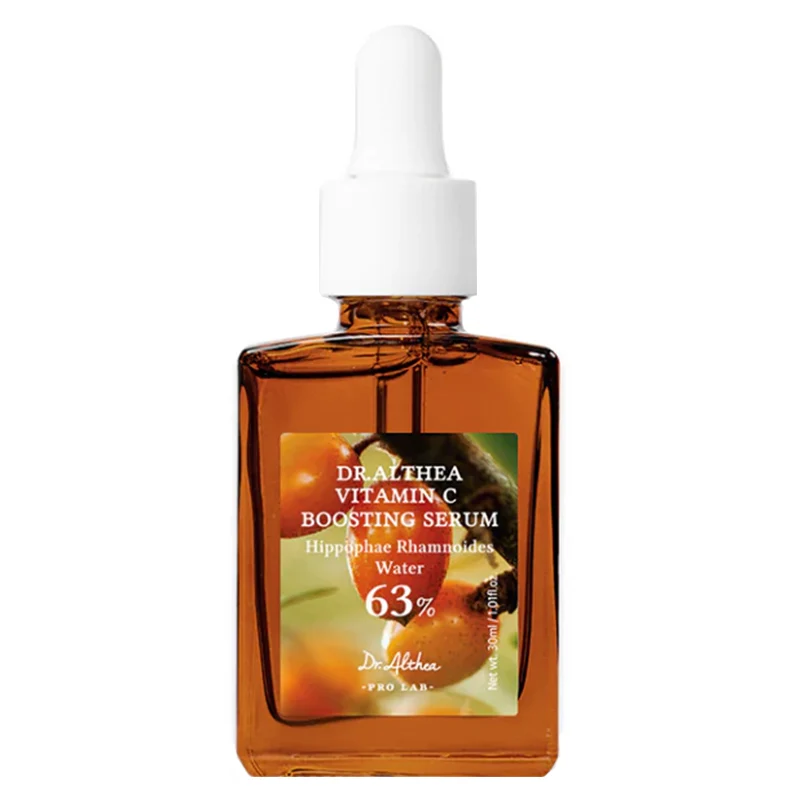
1st on the list, which puts it at an estimated 30–80% of the formula.
Hippophae Rhamnoides Water is the aqueous solution of the steam distillates obtained from the whole plant of the Sea Buckthorn, Hippophae rhmanoides L, Elagnaceae
-
Estimated level
- 5–20%
-
Confidence
- Moderate — INCI order above the 1% line
-
Roles
-
Plant extract
2nd on the list, which puts it at an estimated 5–20% of the formula.
Centella Asiatica Leaf Water is an aqueous solution of the steam distillate obtained from the leaves of Hydrocotyl, Centella asiatica L., Apiaceae
-
Estimated level
- 5–20%
-
Confidence
- Moderate — INCI order above the 1% line
-
Roles
-
Active
3rd on the list, which puts it at an estimated 5–20% of the formula.
Niacinamide (vitamin B3) is a gentle skincare active that repairs the skin barrier, calms redness, controls oil and evens tone at 2–5%. Official IUPAC name: **3-Pyridinecarboxamide**
Soothing
Anti-Aging
Pore Minimizer
15 scientific references
- International Journal of Dermatology, February 2021, pages 166-173
- Biomolecules & Therapeutics, July 2019, pages 562-569
- Experimental Dermatology, February 2019, pages 15-22
- Dermatologic Therapy, September 2017, ePublication
- Journal of Investigative Dermatology, May 2017, page S116
- International Journal of Pharmaceutics, March 2017, pages 158-162
- Facial Plastic Surgery Clinics of North America, May 2016, pages 145-152
- Clinical, Cosmetic, and Investigational Dermatology, July 2015, pages 405-412
- Skin Pharmacology and Physiology, June 2014, pages 311-315
- International Journal of Pharmacy, January 2013, pages 192-201
- Dermatoendrocrinology, July 2012, pages 308-319
- International Journal of Toxicology, September 2005, pages 1-31
- Dermatologic Surgery, July 2005, pages 860-865
- International Journal of Cosmetic Science, October 2004, pages 231-238
- Journal of Cosmetic Dermatology, April 2004, pages 88-93
-
Estimated level
- 2–10%
-
Confidence
- Moderate — INCI order above the 1% line
-
Roles
-
Humectant, Texture agent, Solvent
4th on the list, which puts it at an estimated 2–10% of the formula.
Butane-1,3-diol (CAS No. 107-88-0/ EC No. 203-529-7)
(R)-(-)-butane-1,3-diol” (CAS No. 6290-03-5/ EC No. 228-532-0)
Hydration
5 scientific references
- CosmeticsInfoorg, Accessed March 2021, ePublication
- US Food and Drug Administration Code of Federal Regulations</em>, Accessed March 2021, ePublication
- International Journal of Toxicology, May 2011, pages 5S-16S
- Skin Research and Technology, November 2007, pages 417-24
- Journal of the American College of Toxicology, September 1985, pages 223-248
-
Estimated level
- under 1%
-
Confidence
- Moderate — listed below the 1% line
-
Roles
-
Solvent
5th on the list, below the 1% line — present at under 1%, which for most ingredients is the level they work at.
-
Estimated level
- under 1%
-
Confidence
- Moderate — listed below the 1% line
-
Roles
-
Texture agent, Solvent
6th on the list, below the 1% line — present at under 1%, which for most ingredients is the level they work at.
1,1'-Oxydipropan-2-ol; Oxydipropan-2-ol; Hydroxypropyloxypropanol
-
Estimated level
- under 1%
-
Confidence
- Moderate — listed below the 1% line
-
Roles
-
Solvent
7th on the list, below the 1% line — present at under 1%, which for most ingredients is the level they work at.
Aqua (EU),Deionized Water,Distilled Water,Micromatrix Fractile AN,Onsen-Sui (JPN),Purified Water
Hydration
3 scientific references
- Skin Research and Technology, May 2015, pages 131-136
- Skin Pharmacology and Applied Skin Physiology, November-December 1999, pages 344-351
- Journal of Cosmetic Science, September-October 1993, pages 249-262
-
Estimated level
- under 1%
-
Confidence
- Moderate — listed below the 1% line
-
Roles
-
Humectant
8th on the list, below the 1% line — present at under 1%, which for most ingredients is the level they work at.
Poly(oxy-1,2-ethanediyl), .alpha.-hydro-.omega.-hydroxy-, ether with methyl .beta.-d-glucopyranoside (4:1)
Hydration
2 scientific references
- International Journal of Toxicology, Supplement, November 2016, pages 12S–40S
- https://wwwlubrizolcom/Personal-Care/Products/Product-Finder/Products-Data/Glucam-E-20-humectant
-
Estimated level
- under 1%
-
Confidence
- Moderate — listed below the 1% line
-
Roles
-
Solvent
9th on the list, below the 1% line — present at under 1%, which for most ingredients is the level they work at.
2-Methyl-1,3-propanediol
Hydration
3 scientific references
- PubChem, Accessed April 2021, ePublication
- Cosmetic Ingredient Review, June 2018, pages 1-73
- Contact Dermatitis, September 2017, pages 159-162
-
Estimated level
- under 1%
-
Confidence
- Moderate — listed below the 1% line
-
Roles
-
Humectant, Texture agent
10th on the list, below the 1% line — present at under 1%, which for most ingredients is the level they work at.
Methanaminium, 1-carboxy-N,N,N-trimethyl-, hydroxide, inner salt
Hydration
5 scientific references
- International Journal of Toxicology, 2018, pages 28S-46S
- Food Science and Biotechnology, October 2017, pages 1391-1397
- The Journal of Chemical Physics, June 2015, ePublication
- The American Journal of Clinical Nutrition, September 2004, pages 539-549
- Skin Research and Technology, February 2003, pages 50-58
-
Estimated level
- under 1%
-
Confidence
- Moderate — listed below the 1% line
11th on the list, below the 1% line — present at under 1%, which for most ingredients is the level they work at.
Cyclohexanecarboxylic acid, 4-(aminomethyl)-, trans-
Dark Spot Fading
Evens Skin Tone
Anti-Aging
8 scientific references
- Journal of Cosmetic Dermatology, February 2021, pages 561-565
- International Journal of Medical Sciences, March 2020, pages 903-911
- Journal of Cosmetic Dermatology, April 2019, pages 563-567
- Journal of Cutaneous and Aesthetic Surgery, January-March 2019, pages 63-67; and July-August 2013, pages 139-143
- BioMed Research International, November 2018, ePublication
- Dermatologic Surgery, June 2018, pages 814-825
- Dermatology and Therapy, September 2017, pages 417-424
- Journal of Research in Medical Sciences, August 2014, pages 753-757
-
Estimated level
- under 1%
-
Confidence
- Moderate — listed below the 1% line
-
Roles
-
Humectant, Occlusive, Texture agent, Solvent
12th on the list, below the 1% line — present at under 1%, which for most ingredients is the level they work at.
Glycerine ;Glycerol (INN); Glycerol (RIFM); Glycerolum (EP); Glycyl Alcohol; 1,2,3-Propanetriol; 1,2,3-Trihydroxypropane
Hydration
Anti-Aging
6 scientific references
- Journal of Pharmaceutical Investigation, March 2021, pages 223-231
- International Journal of Toxicology, November/December 2019, Volume 38, Supplement 3, pages 6S-22S
- International Journal of Cosmetic Science, August 2016, ePublication
- British Journal of Dermatology, July 2008, pages 23-34
- Journal of Cosmetic Dermatology, June 2007, pages 75-82
- Proceedings of the National Academy of Sciences, June 2003, pages 7, 360-7, 365
-
Estimated level
- under 1%
-
Confidence
- Moderate — listed below the 1% line
-
Roles
-
Solvent
13th on the list, below the 1% line — present at under 1%, which for most ingredients is the level they work at.
1,2-Dihydroxypentane
Hydration
4 scientific references
- https://thedermreviewcom/pentylene-glycol/
- Regulatory Toxicology and Pharmacology, July 2017, pages 106-111
- Prospector, June 2015, ePublication
- International Journal of Toxicology, October 2012, pages 147S-168S
-
Estimated level
- under 1%
-
Confidence
- Moderate — listed below the 1% line
-
Roles
-
Texture agent, Solvent
14th on the list, below the 1% line — present at under 1%, which for most ingredients is the level they work at.
1,3-dihydroxypropane
Hydration
4 scientific references
- PubChem Compound Summary, April 2021, ePublication
- SpecialChem, Accessed April 2021, ePublication
- Cosmetic Ingredient Review, June 2018, pages 1-73
- Cosmetics & Toiletries, May 2013, pages 81-86
-
Estimated level
- under 1%
-
Confidence
- Moderate — listed below the 1% line
-
Roles
-
Humectant
15th on the list, below the 1% line — present at under 1%, which for most ingredients is the level they work at.
Urea, (2-Hydroxyethyl)-
-
Estimated level
- under 1%
-
Confidence
- Moderate — listed below the 1% line
-
Roles
-
Occlusive, Plant extract
16th on the list, below the 1% line — present at under 1%, which for most ingredients is the level they work at.
Laminaria Japonica Extract is an extract of the Japan Kelp/Seaweed, Laminaria japonica, Laminariaceae
-
Estimated level
- under 1%
-
Confidence
- Moderate — listed below the 1% line
-
Roles
-
Plant extract
17th on the list, below the 1% line — present at under 1%, which for most ingredients is the level they work at.
Eclipta Prostrata Leaf Extract is an extract of the leaves of Eclipta prostrata L., Compositae
-
Estimated level
- under 1%
-
Confidence
- Moderate — listed below the 1% line
-
Roles
-
Humectant, Plant extract
18th on the list, below the 1% line — present at under 1%, which for most ingredients is the level they work at.
Ficus Carica Fruit Extract is an extract of the fruit of the Fig, Ficus carica L., Moraceae
-
Estimated level
- under 1%
-
Confidence
- Moderate — listed below the 1% line
-
Roles
-
Soothing, Surfactant, Plant extract
19th on the list, below the 1% line — present at under 1%, which for most ingredients is the level they work at.
Centella Asiatica Extract is the extract of the whole plant Hydrocotyl, Centella asiatica L., Apiaceae
Soothing
Anti-Aging
6 scientific references
- Phytomedicine, April 2018, pages 110–119
- Clinical, Cosmetic, and Investigational Dermatology, August 2017, pages 311–315
- Indian Journal of Pharmaceutical Sciences, Jan-Feb 2016, pages 27–33
- Postepy Dermatologii I, February 2013, pages 46–49
- Indian Journal of Pharmaceutical Sciences, 2010, pages 546–556
- Scientific Reports, June 2021, ePublication
-
Estimated level
- under 1%
-
Confidence
- Moderate — listed below the 1% line
-
Roles
-
Surfactant
20th on the list, below the 1% line — present at under 1%, which for most ingredients is the level they work at.
Lecithins, hydrogenated
Hydration
4 scientific references
- International Journal of Toxicology, September 2020, pages 5S-25S
- Nanocosmetics, June 2019, pages 95–140
- Current Drug Delivery, 2016, pages 111–120
- Pharmaceutical Research, February 2013, pages 538–55
-
Estimated level
- under 1%
-
Confidence
- Moderate — listed below the 1% line
-
Roles
-
Humectant, Active
21st on the list, below the 1% line — present at under 1%, which for most ingredients is the level they work at.
Hyaluronic acid, sodium, salt
Hydration
Anti-Aging
Soothing
5 scientific references
- Der Hautarzt; Zeitschrift fur Dermatologie, Venerologie, und Verwandte Gebiete, December 2017, pages 987-993
- Journal of Cosmetic Dermatology, July 2014, pages 277-287
- Journal of Clinical and Aesthetic Dermatology, October 2012, pages 20-23
- DermatoEndocrinology, July-December 2012, pages 253-258
- Journal of Drugs in Dermatology, September 2011, pages 990-1000
-
Estimated level
- under 1%
-
Confidence
- Moderate — listed below the 1% line
-
Roles
-
Texture agent
22nd on the list, below the 1% line — present at under 1%, which for most ingredients is the level they work at.
2-Propenoic acid, polymer with 2,2-bis(hydroxymethyl)propane-1,3-diol 2-propenyl ether
Synthetic polymer
-
Estimated level
- under 1%
-
Confidence
- Moderate — listed below the 1% line
-
Roles
-
Active
23rd on the list, below the 1% line — present at under 1%, which for most ingredients is the level they work at.
3-O-Ethyl Ascorbic Acid is the organic compound.
Anti-Aging
Evens Skin Tone
Dark Spot Fading
5 scientific references
- Free Radical Biology and Medicine, September 2021, pages 151–169
- Life, May 2021, pages 1–13
- International Journal of Pharmaceutics, December 2019, pages 1–9
- Journal of Cosmetic Science, July-August 2018, pages 233–243
- AAPS PharmSciTech, June 2016, pages 767–777
-
Estimated level
- under 1%
-
Confidence
- Moderate — listed below the 1% line
-
Roles
-
Surfactant
24th on the list, below the 1% line — present at under 1%, which for most ingredients is the level they work at.
Poly(oxy-1,2-ethanediyl), .alpha.-carboxymethyl-.omega.-hydroxy-, C12-14-isoalkyl ethers, sodium salts (7 mol EO average molar ratio)
-
Estimated level
- under 1%
-
Confidence
- Moderate — listed below the 1% line
-
Roles
-
Surfactant, Texture agent
25th on the list, below the 1% line — present at under 1%, which for most ingredients is the level they work at.
Xanthan gum
-
Estimated level
- under 1%
-
Confidence
- Moderate — listed below the 1% line
-
Roles
-
pH adjuster
26th on the list, below the 1% line — present at under 1%, which for most ingredients is the level they work at.
1,3-Propanediol, 2-amino-2-(hydroxymethyl)-
-
Estimated level
- under 1%
-
Confidence
- Moderate — listed below the 1% line
-
Roles
-
Active
27th on the list, below the 1% line — present at under 1%, which for most ingredients is the level they work at.
Butanamide, 2,4-dihydroxy-N-(3-hydroxypropyl)-3,3-dimethyl-, (2R)-; dl-Panthenol
Hydration
Soothing
7 scientific references
- The Linus Pauling Institute, Oregon State University, Accessed April 2021, ePublication
- International Journal of Cosmetic Science, December 2019, pages 534-547
- Journal of Cosmetic Dermatology, January 2019, pages 346-354
- Cosmetic Ingredient Review, March 2018, pages 1-51
- The Journal of Dermatological Treatment, August 2017, pages 173-180
- Journal of Cosmetic Science, August 2011, pages 361-370
- American Journal of Clinical Dermatology, Volume 3, 2002, pages 427-433
-
Estimated level
- under 1%
-
Confidence
- Moderate — listed below the 1% line
28th on the list, below the 1% line — present at under 1%, which for most ingredients is the level they work at.
1,2-Propanediol, 3-(2-ethylhexyloxy)
Hydration
5 scientific references
- PLoS One, October 2016, ePublication
- Contact Dermatitis, May 2016, pages 281-288
- International Journal of Toxicology, September 2013, pages 5S-21S
- Personal Care, 2008, pages 1-4
- Cosmetic Science Technology, 2006, pages 1-11
-
Estimated level
- under 1%
-
Confidence
- Moderate — listed below the 1% line
29th on the list, below the 1% line — present at under 1%, which for most ingredients is the level they work at.
6-Amino-9-beta-D-ribofuranosyl-9H-purine
Soothing
8 scientific references
- PubChem, Accessed May 2021, ePublication
- Cosmetic Ingredient Review, September 2020, pages 1-38
- Experimental Dermatology, August 2014, pages 553-554
- Journal of Investigative Dermatology, August 2011, pages 526-546
- International Journal of Cosmetic Science, December 2006, pages 447-451
- British Journal of Pharmacology, October 2008, issue 4, pages 475-486
- PloS One, May 2008 (ePublication)
- >International Journal of Cosmetic Science, August 2006, pages 447-451
-
Estimated level
- under 1%
-
Confidence
- Moderate — listed below the 1% line
-
Roles
-
Texture agent, Chelator
30th on the list, below the 1% line — present at under 1%, which for most ingredients is the level they work at.
Disodium dihydrogen ethylenediaminetetraacetate
-
Estimated level
- under 1%
-
Confidence
- Moderate — listed below the 1% line
-
Roles
-
Humectant
31st on the list, below the 1% line — present at under 1%, which for most ingredients is the level they work at.
Fructooligosaccharides are oligosaccharides produced enzymatically from sugar beets and consist chiefly of kestose, nystose and fructosyl nystose
Hydration
-
Estimated level
- under 1%
-
Confidence
- Moderate — listed below the 1% line
32nd on the list, below the 1% line — present at under 1%, which for most ingredients is the level they work at.
beta-Glucan is a polysaccharide consisting of b(1-3) linked glucose chains carrying b(1-6) linked glucose sidechains
Soothing
Hydration
6 scientific references
- Journal of Cosmetic Dermatology, December 2018, pages 1, 101-1, 107
- International Journal of Molecular Sciences, September 2017, pages 1-48
- Phytotherapy Research, February 2014, pages 159-166
- Cosmetic Ingredient Review, October 2012, pages 1-52
- Journal of Drugs in Dermatology, February 2007, pages 167-170
- International Journal of Cosmetic Science, October 2005, page 292
-
Estimated level
- under 1%
-
Confidence
- Moderate — listed below the 1% line
-
Roles
-
Active, Antioxidant, pH adjuster
33rd on the list, below the 1% line — present at under 1%, which for most ingredients is the level they work at.
Ascorbic acid
Anti-Aging
Dark Spot Fading
Evens Skin Tone
12 scientific references
- Drug Delivery, February 2021, pages 445-453
- Journal of Cosmetic Dermatology, December 2020, pages 3, 262-3, 269
- Journal of Oral and Maxillofacial Pathology, May-August 2020, pages 374-382
- Journal of Cosmetic Dermatology, March 2020, pages 671-676
- Journal of Clinical and Aesthetic Dermatology, July 2017 pages 14-17
- Journal of Drugs in Dermatology, July 2016, pages 863-867
- Clinical, Cosmetic, and Investigational Dermatology, September 2015, pages 463-470
- Indian Dermatology Online Journal, April-June 2013, pages 143-146
- AAPS PharmSciTech, July 2011, pages 917-923
- Journal of Drugs in Dermatology, July 2008, Supplement, pages s2-s6
- International Journal of Toxicology, Supplement 2, March 2005, pages 51-111
- Skin Pharmacology and Physiology, July-August 2004, pages 200-206
-
Estimated level
- under 1%
-
Confidence
- Moderate — listed below the 1% line
-
Roles
-
Humectant, Active
34th on the list, below the 1% line — present at under 1%, which for most ingredients is the level they work at.
Hydrolyzed Hyaluronic Acid is the hydrolysate of Hyaluronic Acid derived by acid, enzyme or other method of hydrolysis
Hydration
-
Estimated level
- under 1%
-
Confidence
- Moderate — listed below the 1% line
-
Roles
-
Active
35th on the list, below the 1% line — present at under 1%, which for most ingredients is the level they work at.
Ceramide NP,1,3,4-Octadecanetriol, 2-Octadecanamide,Stearoyl-C18-Phytosphingosine,Stearoyl-4-Hydroxysphinganine
Hydration
Anti-Aging
11 scientific references
- International Journal of Toxicology, 2020, pages 5S-25S
- International Journal of Molecular Sciences, August 2019, pages 1-15
- Skin Pharmacology and Physiology, 2016, pages 135-147
- Biochimica et Biophysica Acta, October 2014, pages 2473-2483
- Journal of the American Academy of Dermatology, July 2014, pages 177-184
- Journal of Lipid Research, July 2008, pages 1, 466-1, 476
- Journal of Lipid Research, September 2007, pages 1936-1943
- American Journal of Clinical Dermatology, 2003, pages 107-129
- Contact Dermatitis, June 2002, pages 331-338
- Journal of Investigative Dermatology, November 2001, pages 1, 126-1, 136
- Skin Pharmacology and Applied Skin Physiology, September-October 2001, pages 261-271
-
Estimated level
- under 1%
-
Confidence
- Moderate — listed below the 1% line
-
Roles
-
Antioxidant
36th on the list, below the 1% line — present at under 1%, which for most ingredients is the level they work at.
4-Hydroxyphenyl-alpha-D-glucopyranoside
Anti-Aging
Dark Spot Fading
Evens Skin Tone
-
Estimated level
- under 1%
-
Confidence
- Moderate — listed below the 1% line
-
Roles
-
Antioxidant
37th on the list, below the 1% line — present at under 1%, which for most ingredients is the level they work at.
3,4-Dihydro-2,5,7,8-tetramethyl-2-(4,8,12-trimethyltridecyl)-2H-benzopyran-6-ol; .alpha.-tocopherol; Vitamin E
Anti-Aging
Evens Skin Tone
Soothing
4 scientific references
- Journal or Agricultural and Food Chemistry, June 2010, pages 7013-7020
- Journal of Investigative Dermatology, November 2001, pages 1212-1217
- Canadian Family Physician, July 2006, pages 855-856
- Dermatologic Surgery, April 1999, pages 311-315
-
Estimated level
- under 1%
-
Confidence
- Moderate — listed below the 1% line
38th on the list, below the 1% line — present at under 1%, which for most ingredients is the level they work at.
Bifida Ferment Lysate is a lysate of the product obtained by the fermentation of Bifida
Hydration
Soothing
-
Estimated level
- under 1%
-
Confidence
- Moderate — listed below the 1% line
-
Roles
-
Soothing
39th on the list, below the 1% line — present at under 1%, which for most ingredients is the level they work at.
(R*,R*)-.alpha.,4-dimethyl-.alpha.-(4-methyl-3-pentenyl)cyclohex-3-ene-1-methanol;
3-Cyclohexene-1-methanol, alpha,4-dimethyl-alpha-(4-methyl-3-pentenyl)-, (theta,theta)-(+/-)-;
3-Cyclohexene-1-methanol, alpha,4-dimethyl-alpha-(4-methyl-3-pentenyl)-, (S-(theta,theta))- (levomenol)
Soothing
Anti-Aging
6 scientific references
- CosmeticsInfoorg, Accessed May 2021, ePublication
- International Journal of Cosmetic Science, August 2019, pages 299-303
- International Journal of Toxicology, September 2017, pages 24S-25S
- Cutis, November 2015, pages 337-342
- Current Pharmaceutical Biotechnology, 2014, pages 173-181
- Food and Chemical Toxicology, October 2011, pages 2580-2585
-
Estimated level
- under 1%
-
Confidence
- Moderate — listed below the 1% line
-
Roles
-
Antioxidant
40th on the list, below the 1% line — present at under 1%, which for most ingredients is the level they work at.
2,5-Cyclohexadiene-1,4-dione, 2-(3,7,11,15,19,23,27,31,35,39-decamethyl-2,6,10,14,18,22,26,30,34,38-tetracontadecaenyl)-5,6-dimethoxy-3-methyl-, (all-E)-
Anti-Aging
Soothing
6 scientific references
- Free Radical Biology and Medicine, March 2021, pages 282-288
- Biofactors, November-December 2015, pages 383-390; 2008, pages 245-255; and 2005, pages 179-185
- Journal of Cosmetic Dermatology, March 2006, issue 1, pages 30-38
- Journal of Investigative Dermatology, 2005, issue 4, pages 12-13
- Journal of Dermatological Science, August 2001, Supplement, pages 1-4
- https://wwwcir-safetyorg/sites/default/files/Ubiquinonepdf
-
Estimated level
- under 1%
-
Confidence
- Moderate — listed below the 1% line
-
Roles
-
Antioxidant
41st on the list, below the 1% line — present at under 1%, which for most ingredients is the level they work at.
2,5-Cyclohexadiene-1,4-dione, 2-(10-hydroxydecyl)-5,6-dimethoxy-3-methyl-
-
Estimated level
- under 1%
-
Confidence
- Moderate — listed below the 1% line
-
Roles
-
Humectant, Active
42nd on the list, below the 1% line — present at under 1%, which for most ingredients is the level they work at.
Sodium Acetylhyaluronate
Hydration
Anti-Aging