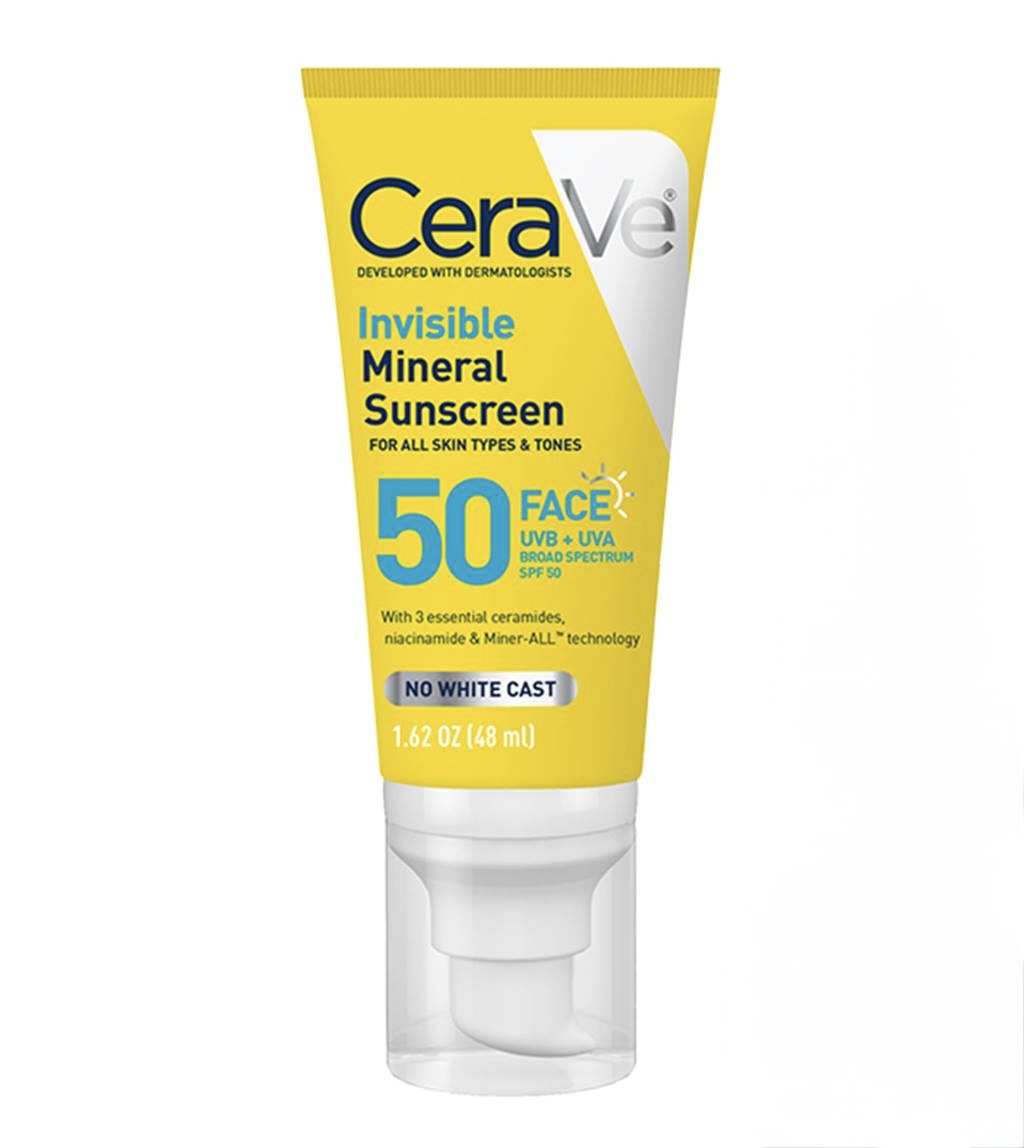
-
Estimated level
- 10–25%
-
Confidence
- High — bounded by a regulatory limit
-
Roles
-
UV filter, Texture agent
1st on the list. Regulation caps it at 25%, so it is present at roughly 10–25%.
Titanium dioxide (CI 77891)
Anti-Aging
10 scientific references
- Journal of Cosmetic Dermatology, February 2021, pages 532-537
- Frontiers in Bioengineering and Biotechnology, June 2020
- Journal of Nanoparticle Research, March 2020
- Journal of the European Academy of Dermatology and Venereology, November 2019, pages 34-46
- Photodermatology, Photoimmunology and Photomedicine, November 2019, pages 442-446
- Journal of Cosmetic Science, September 2019, pages 223-234
- Materials, July 2019, pages 1-24
- Photodermatology, Photoimmunology, and Photomedicine, April 2011, pages 58-67
- Skin Therapy Letter, July-August 2008, pages 5-7
- Environmental and Health Perspectives, July 2008, pages 893
-
Estimated level
- 5–20%
-
Confidence
- Moderate — INCI order above the 1% line
-
Roles
-
UV filter, Occlusive, Texture agent, Preservative
2nd on the list, which puts it at an estimated 5–20% of the formula.
Zinc oxide (CI 77947)
Anti-Aging
Soothing
Oil Control
9 scientific references
- Journal of Investigative Dermatology, February 2019, pages 277-278
- Nanomaterials, March 2017, pages 27-31
- Particle and Fibre Toxicology, August 2016, page 44
- International Journal of Cosmetic Science, June 2014, pages 273-283
- Indian Journal of Dermatology, September-October 2012, pages 335-342
- Archives of Toxicology, July 2012, pages 1063-1075
- Photodermatology, Photoimmunology, & Photomedicine, April 2011, pages 58-67
- American Journal of Clinical Dermatology, December 2010, pages 413-421
- https://cosmeticsinfoorg/ingredient/zinc-oxide-0?gclid=CjwKCAjw3_KIBhA2EiwAaAAlipF1YpJBfZrmUbDnK6jm68_2f-GfsdZ770fVI15BFzZJtiFcCJjAWxoC3SkQAvD_BwE
-
Estimated level
- 5–20%
-
Confidence
- Moderate — INCI order above the 1% line
-
Roles
-
Solvent
3rd on the list, which puts it at an estimated 5–20% of the formula.
Aqua (EU),Deionized Water,Distilled Water,Micromatrix Fractile AN,Onsen-Sui (JPN),Purified Water
Hydration
3 scientific references
- Skin Research and Technology, May 2015, pages 131-136
- Skin Pharmacology and Applied Skin Physiology, November-December 1999, pages 344-351
- Journal of Cosmetic Science, September-October 1993, pages 249-262
-
Estimated level
- 2–10%
-
Confidence
- Moderate — INCI order above the 1% line
-
Roles
-
Solvent
4th on the list, which puts it at an estimated 2–10% of the formula.
C15-C19 Alkane is a mixture of alkanes with 15 to 19 carbon atoms in the alkyl chain.
Hydration
2 scientific references
- Molecules, November 2020, pages 1–18
- Oilseeds & Fats, Crops and Lipids, September-October 2018, pages 1–12
-
Estimated level
- 2–10%
-
Confidence
- Moderate — INCI order above the 1% line
-
Roles
-
Humectant, Occlusive, Texture agent, Solvent
5th on the list, which puts it at an estimated 2–10% of the formula.
Glycerine ;Glycerol (INN); Glycerol (RIFM); Glycerolum (EP); Glycyl Alcohol; 1,2,3-Propanetriol; 1,2,3-Trihydroxypropane
Hydration
Anti-Aging
6 scientific references
- Journal of Pharmaceutical Investigation, March 2021, pages 223-231
- International Journal of Toxicology, November/December 2019, Volume 38, Supplement 3, pages 6S-22S
- International Journal of Cosmetic Science, August 2016, ePublication
- British Journal of Dermatology, July 2008, pages 23-34
- Journal of Cosmetic Dermatology, June 2007, pages 75-82
- Proceedings of the National Academy of Sciences, June 2003, pages 7, 360-7, 365
-
Estimated level
- 2–10%
-
Confidence
- Moderate — INCI order above the 1% line
-
Roles
-
Emollient
6th on the list, which puts it at an estimated 2–10% of the formula.
Carbonic Acid, Dicaprylyl Ester
Hydration
5 scientific references
- OCL, April 2018, pages 1-10
- Journal of Surfactants and Detergents, July 2017, pages 1, 337–1, 349
- Cosmetic Ingredient Review, December 2016, pages 1-50
- https://wwwcir-safetyorg/sites/default/files/dialkyl%20carbonatespdf
- https://wwwulprospectorcom/en/na/PersonalCare/Detail/75/204256/Cetiol-CC
-
Estimated level
- 1–5%
-
Confidence
- Moderate — INCI order above the 1% line
-
Roles
-
Active
7th on the list, which puts it at an estimated 1–5% of the formula.
Niacinamide (vitamin B3) is a gentle skincare active that repairs the skin barrier, calms redness, controls oil and evens tone at 2–5%. Official IUPAC name: **3-Pyridinecarboxamide**
Soothing
Anti-Aging
Pore Minimizer
15 scientific references
- International Journal of Dermatology, February 2021, pages 166-173
- Biomolecules & Therapeutics, July 2019, pages 562-569
- Experimental Dermatology, February 2019, pages 15-22
- Dermatologic Therapy, September 2017, ePublication
- Journal of Investigative Dermatology, May 2017, page S116
- International Journal of Pharmaceutics, March 2017, pages 158-162
- Facial Plastic Surgery Clinics of North America, May 2016, pages 145-152
- Clinical, Cosmetic, and Investigational Dermatology, July 2015, pages 405-412
- Skin Pharmacology and Physiology, June 2014, pages 311-315
- International Journal of Pharmacy, January 2013, pages 192-201
- Dermatoendrocrinology, July 2012, pages 308-319
- International Journal of Toxicology, September 2005, pages 1-31
- Dermatologic Surgery, July 2005, pages 860-865
- International Journal of Cosmetic Science, October 2004, pages 231-238
- Journal of Cosmetic Dermatology, April 2004, pages 88-93
-
Estimated level
- 1–5%
-
Confidence
- Moderate — INCI order above the 1% line
-
Roles
-
Texture agent, Solvent
8th on the list, which puts it at an estimated 1–5% of the formula.
1,3-dihydroxypropane
Hydration
4 scientific references
- PubChem Compound Summary, April 2021, ePublication
- SpecialChem, Accessed April 2021, ePublication
- Cosmetic Ingredient Review, June 2018, pages 1-73
- Cosmetics & Toiletries, May 2013, pages 81-86
-
Estimated level
- 1–5%
-
Confidence
- Moderate — INCI order above the 1% line
-
Roles
-
Emollient
9th on the list, which puts it at an estimated 1–5% of the formula.
Isononanoic acid, C16-18-alkyl esters
-
Estimated level
- 1–5%
-
Confidence
- Moderate — INCI order above the 1% line
-
Roles
-
Surfactant
10th on the list, which puts it at an estimated 1–5% of the formula.
12-Hydroxyoctadecanoic acid, homopolymer
-
Estimated level
- 1–3%
-
Confidence
- Moderate — INCI order above the 1% line
-
Roles
-
Emollient, Occlusive
11th on the list, which puts it at an estimated 1–3% of the formula.
Dimethicone
Hydration
Silicone
7 scientific references
- FDA Code of Federal Regulations, April 2020, ePublication
- International Journal of Toxicology, May 2014, pages 65S-115S
- The Journal of Clinical and Aesthetic Dermatology, May 2014, pages 36-44
- Dermatologic Therapy, May 2012, pages 229-233
- Clinics in Dermatology, May-June 2012, pages 345-348
- International Journal of Cosmetic Science, January 2008, pages 19-33
- Skin Research and Technology, May 2000, pages 77-80
-
Estimated level
- 1–3%
-
Confidence
- Moderate — INCI order above the 1% line
12th on the list, which puts it at an estimated 1–3% of the formula.
2-Propenoic acid, 2-cyano-3-(4-methoxyphenyl)-3-phenyl-, 2-ethylhexyl ester
Anti-Aging
8 scientific references
- Photochemistry & Photobiology, July 2021, pages 700-709
- https://wwwdeepdyvecom/lp/wiley/effects-of-uv-filter-photostabilizers-in-the-photostability-and-suEycIoJOE?articleList=%2Fsearch%3Fquery%3Dethylhexyl%2Bmethoxycrylene%26articleFilter%3Drentable%257Cfree%257Crestricted
- PLoS ONE, April 2019, pages 1-11
- https://wwwdeepdyvecom/lp/public-library-of-science-plos-journal/application-of-spf-moisturisers-is-inferior-to-sunscreens-in-coverage-t1DU0jPEO2?articleList=%2Fsearch%3Fquery%3Dethylhexyl%2Bmethoxycrylene%26articleFilter%3Drentable%257Cfree%257Crestricted
- Cosmetics & Toiletries, August 2013, ePublication
- https://wwwcosmeticsandtoiletriescom/formulas-products/anti-aging-face/article/21835516/the-photostability-and-photostabilization-of-trans-resveratrol
- Photochemistry & Photobiology, May 2013, pages 523-528
- https://wwwdeepdyvecom/lp/wiley/photoexcited-singlet-and-triplet-states-of-a-uv-absorber-ethylhexyl-klQgm4lhiE?articleList=%2Fsearch%3Fquery%3Dethylhexyl%2Bmethoxycrylene%26articleFilter%3Drentable%257Cfree%257Crestricted
-
Estimated level
- 1–3%
-
Confidence
- Moderate — INCI order above the 1% line
-
Roles
-
Texture agent
13th on the list, which puts it at an estimated 1–3% of the formula.
Cellulose
-
Estimated level
- 1–3%
-
Confidence
- Moderate — INCI order above the 1% line
14th on the list, which puts it at an estimated 1–3% of the formula.
Propane-1,2,3-triyl 2-ethylhexanoate
Hydration
2 scientific references
- CosmeticsInfoorg, Accessed November 2021, ePublication
- Cosmetic Ingredient Review, February 2018, pages 1-40
-
Estimated level
- 1–3%
-
Confidence
- Moderate — INCI order above the 1% line
-
Roles
-
Emollient, Solvent
15th on the list, which puts it at an estimated 1–3% of the formula.
Isohexadecane is a branched chain aliphatic hydrocarbon with 16 carbons.
-
Estimated level
- 1–3%
-
Confidence
- Moderate — INCI order above the 1% line
-
Roles
-
Texture agent
16th on the list, which puts it at an estimated 1–3% of the formula.
Silane, triethoxyoctyl-
-
Estimated level
- 1–3%
-
Confidence
- Moderate — INCI order above the 1% line
-
Roles
-
Surfactant
17th on the list, which puts it at an estimated 1–3% of the formula.
Poly(oxy-1,2-ethanediyl), .alpha.-octadecyl-.omega.-hydroxy
-
Estimated level
- 1–3%
-
Confidence
- Moderate — INCI order above the 1% line
-
Roles
-
Exfoliant, Texture agent
18th on the list, which puts it at an estimated 1–3% of the formula.
Silicon dioxide
Oil Control
6 scientific references
- Advances in Colloid and Interface Science, July 2021, page 10, 2437
- Cosmetic Ingredient Review, October 2019, pages 1-34
- Nanomedicine, August 2019, pages 2, 243-2, 267
- Biological and Pharmaceutical Bulletin, 2016, pages 1, 201-1, 205
- European Journal of Pharmaceutics and Biopharmaceutics, January 2015, pages 116-125
- Cosmetics & Toiletries, April 2015, pages 36-45
-
Estimated level
- 1–3%
-
Confidence
- Moderate — INCI order above the 1% line
-
Roles
-
Surfactant
19th on the list, which puts it at an estimated 1–3% of the formula.
Poly(oxy-1,2-ethanediyl), .alpha.-octadecyl-.omega.-hydroxy
-
Estimated level
- 1–3%
-
Confidence
- Moderate — INCI order above the 1% line
-
Roles
-
Active
20th on the list, which puts it at an estimated 1–3% of the formula.
Ceramide NP,1,3,4-Octadecanetriol, 2-Octadecanamide,Stearoyl-C18-Phytosphingosine,Stearoyl-4-Hydroxysphinganine
Hydration
Anti-Aging
11 scientific references
- International Journal of Toxicology, 2020, pages 5S-25S
- International Journal of Molecular Sciences, August 2019, pages 1-15
- Skin Pharmacology and Physiology, 2016, pages 135-147
- Biochimica et Biophysica Acta, October 2014, pages 2473-2483
- Journal of the American Academy of Dermatology, July 2014, pages 177-184
- Journal of Lipid Research, July 2008, pages 1, 466-1, 476
- Journal of Lipid Research, September 2007, pages 1936-1943
- American Journal of Clinical Dermatology, 2003, pages 107-129
- Contact Dermatitis, June 2002, pages 331-338
- Journal of Investigative Dermatology, November 2001, pages 1, 126-1, 136
- Skin Pharmacology and Applied Skin Physiology, September-October 2001, pages 261-271
-
Estimated level
- 1–3%
-
Confidence
- Moderate — INCI order above the 1% line
-
Roles
-
Active
21st on the list, which puts it at an estimated 1–3% of the formula.
1,3,4-Octadecanetriol, 2-(2-Hydroxy) Stearamide
Hydration
Anti-Aging
10 scientific references
- International Journal of Toxicology, 2020, pages 5S-25S
- International Journal of Molecular Sciences, August 2019, pages 1-15
- Biochimica et Biophysica Acta, October 2014, pages 2473-2483
- Journal of the American Academy of Dermatology, July 2014, pages 177-184
- Pharmaceutical Research, November 2012, pages 538-551
- Journal of Lipid Research, July 2008, pages 1, 466-1, 476
- Journal of Lipid Research, September 2007, pages 1936-1943
- American Journal of Clinical Dermatology, 2003, pages 107-129
- Journal of Investigative Dermatology, November 2001, pages 1, 126-1, 136
- Skin Pharmacology and Applied Skin Physiology, September-October 2001, pages 261-271
-
Estimated level
- 1–3%
-
Confidence
- Moderate — INCI order above the 1% line
-
Roles
-
Active
22nd on the list, which puts it at an estimated 1–3% of the formula.
Ceramide EOP,1,3,4-Octadecanetriol, 2-Stearoyloxyheptacosamide,Stearoyloxyheptacosanoyl-C18-Phytosphingosine,Stearoyloxyheptacosanoyl-4-Hydroxysphinganine
Hydration
Anti-Aging
9 scientific references
- International Journal of Toxicology, 2020, pages 5S-25S
- International Journal of Molecular Sciences, August 2019, pages 1-15
- Biochimica et Biophysica Acta, October 2014, pages 2473-2483
- Journal of the American Academy of Dermatology, July 2014, pages 177-184
- Journal of Lipid Research, July 2008, pages 1, 466-1, 476
- Journal of Lipid Research, September 2007, pages 1936-1943
- American Journal of Clinical Dermatology, 2003, pages 107-129
- Journal of Investigative Dermatology, November 2001, pages 1, 126-1, 136
- Skin Pharmacology and Applied Skin Physiology, September-October 2001, pages 261-271
-
Estimated level
- under 1%
-
Confidence
- Moderate — listed below the 1% line
-
Roles
-
Texture agent
23rd on the list, below the 1% line — present at under 1%, which for most ingredients is the level they work at.
2-Propenoic acid, polymer with 2,2-bis(hydroxymethyl)propane-1,3-diol 2-propenyl ether
Synthetic polymer
-
Estimated level
- under 1%
-
Confidence
- Moderate — listed below the 1% line
-
Roles
-
Emollient, Surfactant
24th on the list, below the 1% line — present at under 1%, which for most ingredients is the level they work at.
Stearic acid, monoester with glycerol
Hydration
3 scientific references
- Cosmeticsinfoorg, Accessed November 2021, ePublication
- Drugs in Context, April 2018, pages 1-14
- International Journal of Toxicology, May 2007, pages 1–30
-
Estimated level
- under 1%
-
Confidence
- Moderate — listed below the 1% line
-
Roles
-
Emollient, Surfactant, Texture agent
25th on the list, below the 1% line — present at under 1%, which for most ingredients is the level they work at.
Alcohols, C16-18
Hydration
4 scientific references
- CosmeticsInfoorg, Accessed March 2021, ePublication
- FDA Cosmetic Labeling Claims, August 2020, ePublication
- Journal of the Society of Cosmetic Scientists of Korea, June 2009, pages 103-110
- Journal of the American College of Toxicology, 1988, pages 359-413
-
Estimated level
- under 1%
-
Confidence
- Moderate — listed below the 1% line
-
Roles
-
Surfactant
26th on the list, below the 1% line — present at under 1%, which for most ingredients is the level they work at.
Docosyltrimethylammonium methyl sulphate
Hydration
-
Estimated level
- under 1%
-
Confidence
- Moderate — listed below the 1% line
27th on the list, below the 1% line — present at under 1%, which for most ingredients is the level they work at.
Triethyl citrate
Oil Control
-
Estimated level
- under 1%
-
Confidence
- Moderate — listed below the 1% line
-
Roles
-
Surfactant
28th on the list, below the 1% line — present at under 1%, which for most ingredients is the level they work at.
Sodium 2-(1-carboxylatoethoxy)-1-methyl-2-oxoethyl laurate
-
Estimated level
- under 1%
-
Confidence
- Moderate — listed below the 1% line
-
Roles
-
Emollient, Surfactant, Texture agent
29th on the list, below the 1% line — present at under 1%, which for most ingredients is the level they work at.
Cholest-5-en-3-ol (beta)-
Hydration
Anti-Aging
4 scientific references
- Frontiers in Bioengineering and Biotechnology, August 2015, pages 1-6
- Journal of Cosmetic Dermatology, July 2007, pages 239-242
- Journal of Structural Biology, June 2007, pages 386-400
- International Journal of Toxicology, 2006, pages 1-89
-
Estimated level
- under 1%
-
Confidence
- Moderate — listed below the 1% line
-
Roles
-
Texture agent
30th on the list, below the 1% line — present at under 1%, which for most ingredients is the level they work at.
Dihydroxyaluminium stearate
-
Estimated level
- under 1%
-
Confidence
- Moderate — listed below the 1% line
-
Roles
-
Exfoliant, Texture agent
31st on the list, below the 1% line — present at under 1%, which for most ingredients is the level they work at.
Aluminium oxide
Oil Control
3 scientific references
- International Journal of Toxicology, November 2016, pages 16S-33S
- Journal of Nanoscience and Nanotechnology, February 2015, pages 1, 636-1, 646
- https://wwwaccessdatafdagov/scripts/cdrh/cfdocs/cfcfr/CFRSearchcfm?fr=731010&SearchTerm=alumina%C2%A0
-
Estimated level
- under 1%
-
Confidence
- Moderate — listed below the 1% line
-
Roles
-
Preservative
32nd on the list, below the 1% line — present at under 1%, which for most ingredients is the level they work at.
1,2-Propanediol, 3-(4-chlorophenoxy)-
-
Estimated level
- under 1%
-
Confidence
- Moderate — listed below the 1% line
-
Roles
-
Antioxidant
33rd on the list, below the 1% line — present at under 1%, which for most ingredients is the level they work at.
3,4-Dihydro-2,5,7,8-tetramethyl-2-(4,8,12-trimethyltridecyl)-2H-benzopyran-6-ol; .alpha.-tocopherol; Vitamin E
Anti-Aging
Evens Skin Tone
Soothing
4 scientific references
- Journal or Agricultural and Food Chemistry, June 2010, pages 7013-7020
- Journal of Investigative Dermatology, November 2001, pages 1212-1217
- Canadian Family Physician, July 2006, pages 855-856
- Dermatologic Surgery, April 1999, pages 311-315
-
Estimated level
- under 1%
-
Confidence
- Moderate — listed below the 1% line
-
Roles
-
Antioxidant
34th on the list, below the 1% line — present at under 1%, which for most ingredients is the level they work at.
Ethanone, 1-(4-hydroxyphenyl)-,p-Hydroxyacetophenone
Anti-Aging
Hydration
4 scientific references
- Journal of Oleo Science, February 2019, pages 183-191
- Applied Environmental Microbiology, June 2018, ePublication
- Journal of Biosciences, May-June 2004, pages 345-353
- Scientific Reports, April 2021, pages 1–7
-
Estimated level
- under 1%
-
Confidence
- Moderate — listed below the 1% line
-
Roles
-
Emollient
35th on the list, below the 1% line — present at under 1%, which for most ingredients is the level they work at.
Octane-1,2-diol
-
Estimated level
- under 1%
-
Confidence
- Moderate — listed below the 1% line
36th on the list, below the 1% line — present at under 1%, which for most ingredients is the level they work at.
Decanoic acid, ester with 1,2,3-propanetriol octanoate;
Glycerides, mixed decanoyl and octanoyl
Hydration
5 scientific references
- International Journal of Toxicology, September 2020, pages 34-35
- Periodica Polytechnica Chemical Engineering, 2014, pages 43-48
- International Journal of Toxicology, January 2003, pages 4-5
- Food and Chemical Toxicology, January 2000, pages 79-98
- Journal of the Society of Cosmetic Chemists, August 1985, pages 303-311
-
Estimated level
- under 1%
-
Confidence
- Moderate — listed below the 1% line
-
Roles
-
Active, Chelator, pH adjuster
37th on the list, below the 1% line — present at under 1%, which for most ingredients is the level they work at.
2-Hydroxy-1,2,3-propanetricarboxylic acid
-
Estimated level
- under 1%
-
Confidence
- Moderate — listed below the 1% line
-
Roles
-
Occlusive
38th on the list, below the 1% line — present at under 1%, which for most ingredients is the level they work at.
Propanedioic Acid, [(4-Hydroxy-3,5-Dimethoxyphenyl)Methylene]-, Bis(2-Ethylhexyl) Ester
Anti-Aging
4 scientific references
- Cosmetics, May 2017, ePublication
- International Journal of Cosmetic Science, February 2017, pages 25-35
- Journal of Cosmetic Science, September-October 2013, pages 317-328
- Photochemistry and Photobiology, May-June 2006, Volume 82, Issue 3, pages 823-828
-
Estimated level
- under 1%
-
Confidence
- Moderate — listed below the 1% line
-
Roles
-
Active
39th on the list, below the 1% line — present at under 1%, which for most ingredients is the level they work at.
Butanamide, 2,4-dihydroxy-N-(3-hydroxypropyl)-3,3-dimethyl-, (2R)-; dl-Panthenol
Hydration
Soothing
7 scientific references
- The Linus Pauling Institute, Oregon State University, Accessed April 2021, ePublication
- International Journal of Cosmetic Science, December 2019, pages 534-547
- Journal of Cosmetic Dermatology, January 2019, pages 346-354
- Cosmetic Ingredient Review, March 2018, pages 1-51
- The Journal of Dermatological Treatment, August 2017, pages 173-180
- Journal of Cosmetic Science, August 2011, pages 361-370
- American Journal of Clinical Dermatology, Volume 3, 2002, pages 427-433
-
Estimated level
- under 1%
-
Confidence
- Moderate — listed below the 1% line
-
Roles
-
Surfactant, Texture agent
40th on the list, below the 1% line — present at under 1%, which for most ingredients is the level they work at.
Xanthan gum
-
Estimated level
- under 1%
-
Confidence
- Moderate — listed below the 1% line
41st on the list, below the 1% line — present at under 1%, which for most ingredients is the level they work at.
1,3,4-Octadecanetriol, 2-amino-, (2S, 3S, 4R)-
Anti-Aging
Hydration
6 scientific references
- Journal of Dermatological Science, January 2020, Volume 97, Issue 1, pages 2-8
- Archives of Dermatological Research, December 2017, Volume 309, Issue 10, pages 795-803
- Biochimica et Biophysica Acta: Biomembranes, May 2017, Volume 1859, Issue 5, pages 824-834
- International Journal of Cosmetic Science, June 2007, Volume 29, Issue 3, pages 181-190
- Molecular Medicine, January-March 2006, pages 17-24
- Journal of Investigative Dermatology, October 2003, issue 5, pages 1135–1137
-
Estimated level
- under 1%
-
Confidence
- Moderate — listed below the 1% line
-
Roles
-
Surfactant
42nd on the list, below the 1% line — present at under 1%, which for most ingredients is the level they work at.
Sorbitan, monododecanoate, poly(oxy-1,2-ethanediyl) derivs.
-
Estimated level
- under 1%
-
Confidence
- Moderate — listed below the 1% line
-
Roles
-
Occlusive, Texture agent
43rd on the list, below the 1% line — present at under 1%, which for most ingredients is the level they work at.
C10-30 alkyl propenoate, polymer with propenoic acid, butenoic acidand/or alkyl propenoates, product with propenyl sucrose ether or propenyl 2,2-dihydroxymethyl-1,3-propanediol
Synthetic polymer
-
Estimated level
- under 1%
-
Confidence
- Moderate — listed below the 1% line
-
Roles
-
Preservative, pH adjuster
44th on the list, below the 1% line — present at under 1%, which for most ingredients is the level they work at.
Benzoic acid