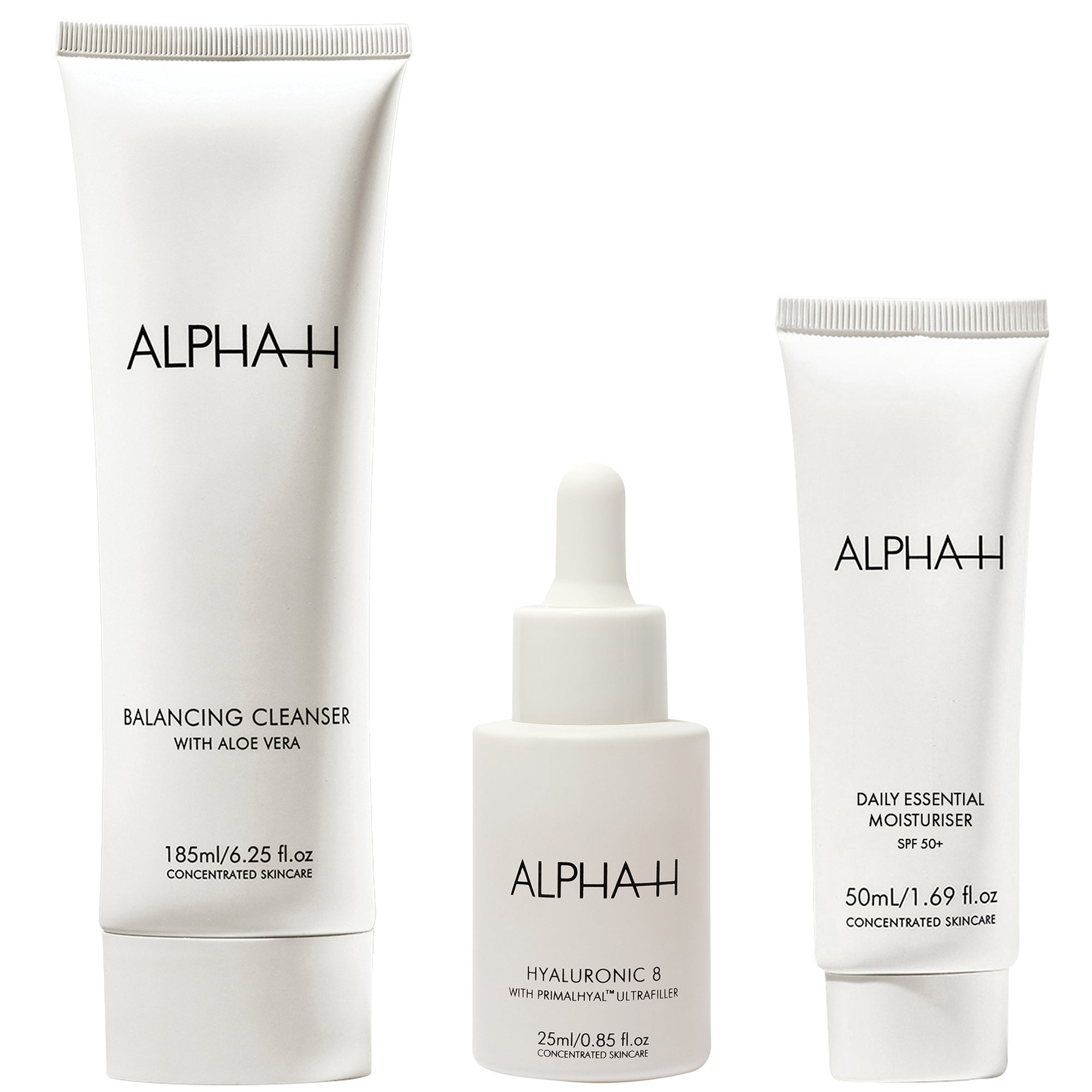
-
Estimated level
- 30–80%
-
Confidence
- Moderate — INCI order above the 1% line
-
Roles
-
Solvent
1st on the list, which puts it at an estimated 30–80% of the formula.
Water
-
Estimated level
- 5–20%
-
Confidence
- Moderate — INCI order above the 1% line
-
Roles
-
Emollient
2nd on the list, which puts it at an estimated 5–20% of the formula.
Hexadecanoic acid, 2-ethylhexyl ester; Octyl palmitate
Hydration
5 scientific references
- Dermatology Clinics and Research, August 2019, pages 239-271
- Clinical Medicine and Research, December 2017, pages 75-87
- International Journal of Toxicology, Volume 34, Issue 2, Supplement, September 2015, pages 5S-69S
- Molecules, February 2015, pages 2, 492-2, 509
- British Journal of Dermatology, October 2010, pages 695-703
-
Estimated level
- 5–20%
-
Confidence
- Moderate — INCI order above the 1% line
-
Roles
-
Humectant, Emollient, Plant extract
3rd on the list, which puts it at an estimated 5–20% of the formula.
Aloe Barbadensis Leaf Extract is an extract of the leaves of the aloe, Aloe barbadensis, Liliaceae
Soothing
Hydration
8 scientific references
- Cosmetics, November 2021, pages 1-24
- https://wwwmdpicom/2079-9284/8/4/106/htm
- World Academy of Science, Engineering and Technology, 2011, pages 610-612
- https://wwwdesertharvestcom/physicians/documents/Antifungal%20and%20Antioxidant%20Activitiespdf
- International Journal of Biological & Medical Research, 2011, pages 466-471
- https://citeseerxistpsuedu/viewdoc/download?doi=10113024710&rep=rep1&type=pdf ]
- International Journal of Toxicology, 2007, pages 1-50
- https://onlinepersonalcarecouncilorg/ctfa-static/online/lists/cir-pdfs/PRS274pdf
-
Estimated level
- 2–10%
-
Confidence
- Moderate — INCI order above the 1% line
-
Roles
-
Surfactant
4th on the list, which puts it at an estimated 2–10% of the formula.
Sorbitan stearate
-
Estimated level
- 2–10%
-
Confidence
- Moderate — INCI order above the 1% line
-
Roles
-
Emollient, Surfactant
5th on the list, which puts it at an estimated 2–10% of the formula.
Stearic acid, monoester with glycerol
Hydration
3 scientific references
- Cosmeticsinfoorg, Accessed November 2021, ePublication
- Drugs in Context, April 2018, pages 1-14
- International Journal of Toxicology, May 2007, pages 1–30
-
Estimated level
- 2–10%
-
Confidence
- Moderate — INCI order above the 1% line
-
Roles
-
Emollient, Preservative
6th on the list, which puts it at an estimated 2–10% of the formula.
Benzoic acid, C12-15 alkyl esters
Hydration
3 scientific references
- The University of Toledo, May 2020, ePublication
- Scientific Journal of the Faculty of Medicine in Nis, December 2013, pages 193-200
- International Journal of Toxicology, November-December 2012, pages 342-372
-
Estimated level
- 1–5%
-
Confidence
- Moderate — INCI order above the 1% line
-
Roles
-
Emollient, Surfactant, Texture agent
7th on the list, which puts it at an estimated 1–5% of the formula.
Hexadecan-1-ol
Hydration
3 scientific references
- International Journal of Cosmetic Science, December 2012, Issue 34, Volume 6, pages 567-74
- http://wwwcir-safetyorg/sites/default/files/115_buff3a_supplpdf
- https://pubchemncbinlmnihgov/compound/1-Hexadecanol
-
Estimated level
- 1–5%
-
Confidence
- Moderate — INCI order above the 1% line
-
Roles
-
Surfactant
8th on the list, which puts it at an estimated 1–5% of the formula.
D-Glucose homopolymer, dodecyl ether
-
Estimated level
- under 1%
-
Confidence
- Moderate — listed below the 1% line
-
Roles
-
Preservative
9th on the list, below the 1% line — present at under 1%, which for most ingredients is the level they work at.
2-Phenoxyethanol
-
Estimated level
- under 1%
-
Confidence
- Moderate — listed below the 1% line
-
Roles
-
Emollient
10th on the list, below the 1% line — present at under 1%, which for most ingredients is the level they work at.
Octane-1,2-diol
-
Estimated level
- under 1%
-
Confidence
- Moderate — listed below the 1% line
-
Roles
-
Antioxidant
11th on the list, below the 1% line — present at under 1%, which for most ingredients is the level they work at.
3,4-Dihydro-2,5,7,8-tetramethyl-2-(4,8,12-trimethyltridecyl)-2H-benzopyran-6-yl acetate
Anti-Aging
Soothing
8 scientific references
- 5 Super Anti-Aging Antioxidants Your Skin Needs
- How to Keep Your Neck & Chest Looking Young
- Acne & Aging Skin
- How to Diminish Uneven Skin Tone and Get Your Glow Back
- What Are Peptides and What Do They Do for Skin?
- The Truth About Firming Creams
- Top 5 Reasons to Add Antioxidants to Your Skin Care Routine
- Anti-Aging Superstars
-
Estimated level
- under 1%
-
Confidence
- Moderate — listed below the 1% line
-
Roles
-
Active, Chelator, pH adjuster
12th on the list, below the 1% line — present at under 1%, which for most ingredients is the level they work at.
2-Hydroxy-1,2,3-propanetricarboxylic acid
-
Estimated level
- under 1%
-
Confidence
- Moderate — listed below the 1% line
-
Roles
-
Humectant, Occlusive, Texture agent, Solvent
13th on the list, below the 1% line — present at under 1%, which for most ingredients is the level they work at.
Glycerine ;Glycerol (INN); Glycerol (RIFM); Glycerolum (EP); Glycyl Alcohol; 1,2,3-Propanetriol; 1,2,3-Trihydroxypropane
Hydration
Anti-Aging
6 scientific references
- Journal of Pharmaceutical Investigation, March 2021, pages 223-231
- International Journal of Toxicology, November/December 2019, Volume 38, Supplement 3, pages 6S-22S
- International Journal of Cosmetic Science, August 2016, ePublication
- British Journal of Dermatology, July 2008, pages 23-34
- Journal of Cosmetic Dermatology, June 2007, pages 75-82
- Proceedings of the National Academy of Sciences, June 2003, pages 7, 360-7, 365
-
Estimated level
- under 1%
-
Confidence
- Moderate — listed below the 1% line
-
Roles
-
Fragrance / colour
14th on the list, below the 1% line — present at under 1%, which for most ingredients is the level they work at.
Parfum is a term for ingredient labelling used to identify that a product contains a material or a combination of materials normally added to a cosmetic to produce or to mask a particular odour. According to Article 19 of the Cosmetics Regulation, 'Perfume and aromatic compositions and their raw materials shall be referred to by the terms ‘parfum’ or ‘aroma’. '
-
Estimated level
- under 1%
-
Confidence
- Moderate — listed below the 1% line
-
Roles
-
Humectant, Active
15th on the list, below the 1% line — present at under 1%, which for most ingredients is the level they work at.
Hyaluronic acid, sodium, salt
Hydration
Anti-Aging
Soothing
5 scientific references
- Der Hautarzt; Zeitschrift fur Dermatologie, Venerologie, und Verwandte Gebiete, December 2017, pages 987-993
- Journal of Cosmetic Dermatology, July 2014, pages 277-287
- Journal of Clinical and Aesthetic Dermatology, October 2012, pages 20-23
- DermatoEndocrinology, July-December 2012, pages 253-258
- Journal of Drugs in Dermatology, September 2011, pages 990-1000
-
Estimated level
- under 1%
-
Confidence
- Moderate — listed below the 1% line
-
Roles
-
Texture agent
16th on the list, below the 1% line — present at under 1%, which for most ingredients is the level they work at.
Polyacrylate Crosspolymer-6 is a copolymer of ammonium acryloyldimethyltaurate, dimethylacrylamide, lauryl methacrylate and laureth-4 methacrylate, crosslinked with trimethylolpropane triacrylate
Synthetic polymer
-
Estimated level
- under 1%
-
Confidence
- Moderate — listed below the 1% line
-
Roles
-
Humectant
17th on the list, below the 1% line — present at under 1%, which for most ingredients is the level they work at.
alpha-D-Glucopyranoside, alpha-D-glucopyranosyl
Hydration
7 scientific references
- Cosmetics, October 2019, pages 1-10
- Cell Death & Disease, July 2019, pages 1-16
- International Journal of Toxicology, 2019, pages 5S-38S
- Applied Microbiology and Biotechnology, February 2018, pages 2, 965-2, 976
- Journal of Applied Polymer Science, May 2017, pages 1-6
- Biomedical Reports, September 2014, pages 755-759
- Journal of Pharmaceutical Sciences, June 2011, pages 2, 020-2, 053
-
Estimated level
- under 1%
-
Confidence
- Moderate — listed below the 1% line
-
Roles
-
Humectant, pH adjuster
18th on the list, below the 1% line — present at under 1%, which for most ingredients is the level they work at.
Urea
Hydration
Smooths Bumpy Skin
Evens Skin Tone
-
Estimated level
- under 1%
-
Confidence
- Moderate — listed below the 1% line
-
Roles
-
Humectant, Texture agent, Solvent
19th on the list, below the 1% line — present at under 1%, which for most ingredients is the level they work at.
Butane-1,3-diol (CAS No. 107-88-0/ EC No. 203-529-7)
(R)-(-)-butane-1,3-diol” (CAS No. 6290-03-5/ EC No. 228-532-0)
Hydration
5 scientific references
- CosmeticsInfoorg, Accessed March 2021, ePublication
- US Food and Drug Administration Code of Federal Regulations</em>, Accessed March 2021, ePublication
- International Journal of Toxicology, May 2011, pages 5S-16S
- Skin Research and Technology, November 2007, pages 417-24
- Journal of the American College of Toxicology, September 1985, pages 223-248
-
Estimated level
- under 1%
-
Confidence
- Moderate — listed below the 1% line
-
Roles
-
Texture agent, Solvent
20th on the list, below the 1% line — present at under 1%, which for most ingredients is the level they work at.
1,3-dihydroxypropane
Hydration
4 scientific references
- PubChem Compound Summary, April 2021, ePublication
- SpecialChem, Accessed April 2021, ePublication
- Cosmetic Ingredient Review, June 2018, pages 1-73
- Cosmetics & Toiletries, May 2013, pages 81-86
-
Estimated level
- under 1%
-
Confidence
- Moderate — listed below the 1% line
-
Roles
-
Humectant, Active
21st on the list, below the 1% line — present at under 1%, which for most ingredients is the level they work at.
Sodium Acetylhyaluronate
Hydration
Anti-Aging
-
Estimated level
- under 1%
-
Confidence
- Moderate — listed below the 1% line
-
Roles
-
Emollient, Solvent
22nd on the list, below the 1% line — present at under 1%, which for most ingredients is the level they work at.
Diisopropyl adipate
Hydration
8 scientific references
- Supercharged Hydration
- How Hyaluronic Acid Benefits Skin
- What is Dehydrated Skin & How to Choose the Best Products
- What Your Moisturizer Must Contain
- Moisturizer Myths You Should Stop Believing Now
- The Benefits of Glycerin in Skin Care
- The Best Face Oils for Skin
- How Facial Oils Help Skin
-
Estimated level
- under 1%
-
Confidence
- Moderate — listed below the 1% line
-
Roles
-
Emollient, Surfactant
23rd on the list, below the 1% line — present at under 1%, which for most ingredients is the level they work at.
Lecithins. The complex combination of diglycerides of fatty acids linked to the choline ester of phosphoric acid
Hydration
5 scientific references
- Cosmetics, November 2020, pages 1-19
- International Journal of Toxicology, September 2020, pages 5S-25S
- Molecules, March 2020, pages 1-9
- Journal of the American Oil Chemists' Society, March 2014, pages 1, 093-1, 101
- Scientia Pharmaceutica, July 2013, pages 1, 151-1, 166
-
Estimated level
- under 1%
-
Confidence
- Moderate — listed below the 1% line
-
Roles
-
Texture agent, Chelator
24th on the list, below the 1% line — present at under 1%, which for most ingredients is the level they work at.
2-Propenoic acid, Polymer with 2-Methyl-1-[(1-Oxo-2-Propenyl)Amino]-1-Propanesulfonic Acid
Synthetic polymer
-
Estimated level
- under 1%
-
Confidence
- Moderate — listed below the 1% line
-
Roles
-
Antioxidant
25th on the list, below the 1% line — present at under 1%, which for most ingredients is the level they work at.
3,4-Dihydro-7-methoxy-2,2-dimethyl-2H-1-benzopyran-6-ol
Anti-Aging
Evens Skin Tone
-
Estimated level
- under 1%
-
Confidence
- Moderate — listed below the 1% line
-
Roles
-
Emollient, Surfactant
26th on the list, below the 1% line — present at under 1%, which for most ingredients is the level they work at.
Octanoic acid, monoester with glycerol
Hydration
-
Estimated level
- under 1%
-
Confidence
- Moderate — listed below the 1% line
-
Roles
-
Surfactant, Texture agent
27th on the list, below the 1% line — present at under 1%, which for most ingredients is the level they work at.
Xanthan gum
-
Estimated level
- under 1%
-
Confidence
- Moderate — listed below the 1% line
-
Roles
-
Solvent
28th on the list, below the 1% line — present at under 1%, which for most ingredients is the level they work at.
1,2-Dihydroxypentane
Hydration
4 scientific references
- https://thedermreviewcom/pentylene-glycol/
- Regulatory Toxicology and Pharmacology, July 2017, pages 106-111
- Prospector, June 2015, ePublication
- International Journal of Toxicology, October 2012, pages 147S-168S
-
Estimated level
- under 1%
-
Confidence
- Moderate — listed below the 1% line
29th on the list, below the 1% line — present at under 1%, which for most ingredients is the level they work at.
2-Amino-3-hydroxypropanoic acid
Hydration
Anti-Aging
4 scientific references
- Amino Acids in Nutrition and Health, August 2020, pages 187-199
- Current Medicinal Chemistry, December 2018, pages 5, 512-5, 527
- PLoS ONE, February 2018, ePublication
- International Journal of Cosmetic Science, August 2009, pages 327-345
-
Estimated level
- under 1%
-
Confidence
- Moderate — listed below the 1% line
-
Roles
-
Occlusive, Texture agent
30th on the list, below the 1% line — present at under 1%, which for most ingredients is the level they work at.
Carrageenan, sodium salt
-
Estimated level
- under 1%
-
Confidence
- Moderate — listed below the 1% line
-
Roles
-
Humectant
31st on the list, below the 1% line — present at under 1%, which for most ingredients is the level they work at.
Glucose
Hydration
4 scientific references
- International Journal of Molecular Sciences, March 2020, pages 1–13
- Foods, March 2019, pages 1–27
- Nature Medicine, May 2018, pages 617–627
- Clinical Chemistry and Laboratory Medicine, September 2003, pages 1, 224–1, 228
-
Estimated level
- under 1%
-
Confidence
- Moderate — listed below the 1% line
-
Roles
-
Emollient
32nd on the list, below the 1% line — present at under 1%, which for most ingredients is the level they work at.
Hydrolyzed Pea Protein is the hydrolysate of pea protein derived by acid, enzyme or other method of hydrolysis
Hydration
-
Estimated level
- under 1%
-
Confidence
- Moderate — listed below the 1% line
-
Roles
-
Texture agent
33rd on the list, below the 1% line — present at under 1%, which for most ingredients is the level they work at.
Sodium chloride
-
Estimated level
- under 1%
-
Confidence
- Moderate — listed below the 1% line
-
Roles
-
Texture agent
34th on the list, below the 1% line — present at under 1%, which for most ingredients is the level they work at.
Alginic acid, sodium salt
Anti-Aging
Hydration
Soothing
8 scientific references
- 5 Super Anti-Aging Antioxidants Your Skin Needs
- How to Keep Your Neck & Chest Looking Young
- Acne & Aging Skin
- How to Diminish Uneven Skin Tone and Get Your Glow Back
- What Are Peptides and What Do They Do for Skin?
- The Truth About Firming Creams
- Top 5 Reasons to Add Antioxidants to Your Skin Care Routine
- Anti-Aging Superstars
-
Estimated level
- under 1%
-
Confidence
- Moderate — listed below the 1% line
-
Roles
-
pH adjuster
35th on the list, below the 1% line — present at under 1%, which for most ingredients is the level they work at.
Disodium hydrogenorthophosphate
-
Estimated level
- under 1%
-
Confidence
- Moderate — listed below the 1% line
-
Roles
-
Occlusive
36th on the list, below the 1% line — present at under 1%, which for most ingredients is the level they work at.
2-Propenoic acid, homopolymer, esters with 1,2,3-propanetriol
Synthetic polymer
-
Estimated level
- under 1%
-
Confidence
- Moderate — listed below the 1% line
-
Roles
-
pH adjuster
37th on the list, below the 1% line — present at under 1%, which for most ingredients is the level they work at.
Potassium dihydrogenorthophosphate
-
Estimated level
- under 1%
-
Confidence
- Moderate — listed below the 1% line
-
Roles
-
Occlusive, Texture agent
38th on the list, below the 1% line — present at under 1%, which for most ingredients is the level they work at.
Pullulan is a polysaccharide produced from starch by cultivating the yeast, Aureobasidium pullulans
-
Estimated level
- under 1%
-
Confidence
- Moderate — listed below the 1% line
-
Roles
-
Plant extract
39th on the list, below the 1% line — present at under 1%, which for most ingredients is the level they work at.
Vaccinium Myrtillus Leaf Extract is the extract of the leaves of Vaccinium myrtillus, Ericaceae.
Anti-Aging
Soothing
6 scientific references
- Antioxidants, March 2021, pages 1-17
- International Journal of Food Sciences, August 2014, pages 594-601
- Journal of Photochemistry and Photobiology, March 2014, pages 27-35
- Pharmacognosy Research, July-September 2011, pages 173-177
- Herbal Medicine: Biomolecular and Clinical Aspects 2nd edition, 2011, chapter four
- Biofactors, January 2008, pages 249-266
-
Estimated level
- under 1%
-
Confidence
- Moderate — listed below the 1% line
-
Roles
-
pH adjuster
40th on the list, below the 1% line — present at under 1%, which for most ingredients is the level they work at.
Butanedioic acid, monosodium salt
-
Estimated level
- under 1%
-
Confidence
- Moderate — listed below the 1% line
-
Roles
-
UV filter
41st on the list, below the 1% line — present at under 1%, which for most ingredients is the level they work at.
Benzoic acid, 2-hydroxy-, 3,3,5-trimethylcyclohexyl ester
Anti-Aging
6 scientific references
- Physical Chemistry Chemical Physics, July 2020, pages 15, 509–15, 519
- Frontiers in Medicine, September 2019, ePublication
- Journal of Cosmetic Dermatology, April 2019, pages 246–252
- Photochemical & Photobiological Sciences, April 2019, pages 1, 556–1, 564
- Journal of Clinical Aesthetic Dermatology, 2013, pages 16-26
- Journal of the American Academy of Dermatology, 2013, page 867
-
Estimated level
- under 1%
-
Confidence
- Moderate — listed below the 1% line
-
Roles
-
UV filter
42nd on the list, below the 1% line — present at under 1%, which for most ingredients is the level they work at.
2-Cyano-3,3-Diphenyl Acrylic Acid 2-Ethylhexyl Ester
Anti-Aging
5 scientific references
- Journal of the European Academy of Dermatology and Venereology, Supplement 7, November 2019, pages 25–33
- Environment International, November 2019, ePublication
- Pharmaceutics, May 2017, pages 1–24
- Contact Dermatitis, January 2018, pages 224–225; April 2014, pages 193-204; and January 2003, pages 46-47
- Quimica Nova, July 2014, ePublication
-
Estimated level
- under 1%
-
Confidence
- Moderate — listed below the 1% line
-
Roles
-
Emollient, Solvent
43rd on the list, below the 1% line — present at under 1%, which for most ingredients is the level they work at.
Cyclomethicone is a generic name for a mixture of cyclic dimethyl polysiloxane compounds that conform to the formula, where n has a value between 4 and 6.
Hydration
Silicone
-
Estimated level
- under 1%
-
Confidence
- Moderate — listed below the 1% line
-
Roles
-
UV filter
44th on the list, below the 1% line — present at under 1%, which for most ingredients is the level they work at.
1-[4-(1,1-Dimethylethyl)phenyl]-3-(4-methoxyphenyl)propane-1,3-dione
Anti-Aging
6 scientific references
- Photochemical and Photobiological Sciences, February 2021, pages 189–244; and January 2019, pages 198–207
- JAMA, January 2020, pages 256–267
- Journal of Applied Pharmaceutical Science, December 2014, pages 35-43
- Household and Personal Care Today, March/April 2014, pages 4-8
- Journal of Photochemistry and Photobiology B: Biology, 2014, pages 36–40
- Indian Journal of Dermatology, September/October 2012, pages 335-342
-
Estimated level
- under 1%
-
Confidence
- Moderate — listed below the 1% line
-
Roles
-
UV filter
45th on the list, below the 1% line — present at under 1%, which for most ingredients is the level they work at.
2-Ethylhexyl salicylate
Anti-Aging
7 scientific references
- JAMA, January 2020, ePublication
- Cosmetic Ingredient Review, June 2019, pages 1-60
- Photochemical & Photobiological Sciences, June 2019, pages 1, 556–1, 564
- Catalysts, November 2017, ePublication
- Journal of the American Academy of Dermatology, June 2005, pages 937–956
- Skin Pharmacology and Applied Physiology, January-February 2003, pages 28–35
- International Journal of Toxicology, 2003, pages 1–108
-
Estimated level
- under 1%
-
Confidence
- Moderate — listed below the 1% line
-
Roles
-
Emollient, Texture agent
46th on the list, below the 1% line — present at under 1%, which for most ingredients is the level they work at.
Propanoic acid, 2,2-dimethyl-, isooctadecyl ester
Hydration
-
Estimated level
- under 1%
-
Confidence
- Moderate — listed below the 1% line
-
Roles
-
UV filter
47th on the list, below the 1% line — present at under 1%, which for most ingredients is the level they work at.
Benzoic acid, 4,4',4''-(1,3,5-triazine-2,4,6-triyltriimino)tris-,tris(2-ethylhexyl) ester; octyl triazone
Anti-Aging
-
Estimated level
- under 1%
-
Confidence
- Moderate — listed below the 1% line
-
Roles
-
Emollient, Solvent
48th on the list, below the 1% line — present at under 1%, which for most ingredients is the level they work at.
Dodecamethylcyclohexasiloxane
Hydration
2 scientific references
- Dow (supplier info), Accessed September 2021, ePublication
- International Journal of Toxicology, December 2011, pages 149S-227S
-
Estimated level
- under 1%
-
Confidence
- Moderate — listed below the 1% line
-
Roles
-
Surfactant
49th on the list, below the 1% line — present at under 1%, which for most ingredients is the level they work at.
C16-18 alcohols, ethoxylated (20 mol EO average molar ratio)
-
Estimated level
- under 1%
-
Confidence
- Moderate — listed below the 1% line
-
Roles
-
Emollient, Surfactant, Texture agent
50th on the list, below the 1% line — present at under 1%, which for most ingredients is the level they work at.
Alcohols, C16-18
Hydration
4 scientific references
- CosmeticsInfoorg, Accessed March 2021, ePublication
- FDA Cosmetic Labeling Claims, August 2020, ePublication
- Journal of the Society of Cosmetic Scientists of Korea, June 2009, pages 103-110
- Journal of the American College of Toxicology, 1988, pages 359-413
-
Estimated level
- under 1%
-
Confidence
- Moderate — listed below the 1% line
-
Roles
-
Surfactant
51st on the list, below the 1% line — present at under 1%, which for most ingredients is the level they work at.
Poly(oxy-1,2-ethanediyl), .alpha.-(1-oxooctadecyl)-.omega.-hydroxy- (40 mol EO average molar ratio)
-
Estimated level
- under 1%
-
Confidence
- Moderate — listed below the 1% line
-
Roles
-
Exfoliant, Texture agent
52nd on the list, below the 1% line — present at under 1%, which for most ingredients is the level they work at.
Silicon dioxide
Oil Control
6 scientific references
- Advances in Colloid and Interface Science, July 2021, page 10, 2437
- Cosmetic Ingredient Review, October 2019, pages 1-34
- Nanomedicine, August 2019, pages 2, 243-2, 267
- Biological and Pharmaceutical Bulletin, 2016, pages 1, 201-1, 205
- European Journal of Pharmaceutics and Biopharmaceutics, January 2015, pages 116-125
- Cosmetics & Toiletries, April 2015, pages 36-45
-
Estimated level
- under 1%
-
Confidence
- Moderate — listed below the 1% line
-
Roles
-
Surfactant, pH adjuster
53rd on the list, below the 1% line — present at under 1%, which for most ingredients is the level they work at.
2,2',2''-Nitrilotriethanol
-
Estimated level
- under 1%
-
Confidence
- Moderate — listed below the 1% line
-
Roles
-
Texture agent
54th on the list, below the 1% line — present at under 1%, which for most ingredients is the level they work at.
Ammonium Acryloyldimethyltaurate/VP Copolymer is a copolymer of ammonium acryloyldimethyltaurate and vinylpyrrolidone monomers
Hydration
-
Estimated level
- under 1%
-
Confidence
- Moderate — listed below the 1% line
-
Roles
-
Emollient
55th on the list, below the 1% line — present at under 1%, which for most ingredients is the level they work at.
Siloxanes and silicones, hexadecyl methyl, dimethyl
Hydration
Silicone
-
Estimated level
- under 1%
-
Confidence
- Moderate — listed below the 1% line
-
Roles
-
Chelator
56th on the list, below the 1% line — present at under 1%, which for most ingredients is the level they work at.
Octanamide, N-Hydroxy-
-
Estimated level
- under 1%
-
Confidence
- Moderate — listed below the 1% line
-
Roles
-
Texture agent, Chelator
57th on the list, below the 1% line — present at under 1%, which for most ingredients is the level they work at.
Disodium dihydrogen ethylenediaminetetraacetate
-
Estimated level
- under 1%
-
Confidence
- Moderate — listed below the 1% line
-
Roles
-
Active
58th on the list, below the 1% line — present at under 1%, which for most ingredients is the level they work at.
Butanamide, 2,4-dihydroxy-N-(3-hydroxypropyl)-3,3-dimethyl-, (2R)-; dl-Panthenol
Hydration
Soothing
7 scientific references
- The Linus Pauling Institute, Oregon State University, Accessed April 2021, ePublication
- International Journal of Cosmetic Science, December 2019, pages 534-547
- Journal of Cosmetic Dermatology, January 2019, pages 346-354
- Cosmetic Ingredient Review, March 2018, pages 1-51
- The Journal of Dermatological Treatment, August 2017, pages 173-180
- Journal of Cosmetic Science, August 2011, pages 361-370
- American Journal of Clinical Dermatology, Volume 3, 2002, pages 427-433
-
Estimated level
- under 1%
-
Confidence
- Moderate — listed below the 1% line
-
Roles
-
Antioxidant
59th on the list, below the 1% line — present at under 1%, which for most ingredients is the level they work at.
3,4-Dihydro-2,5,7,8-tetramethyl-2-(4,8,12-trimethyltridecyl)-2H-benzopyran-6-ol; .alpha.-tocopherol; Vitamin E
Anti-Aging
Evens Skin Tone
Soothing
4 scientific references
- Journal or Agricultural and Food Chemistry, June 2010, pages 7013-7020
- Journal of Investigative Dermatology, November 2001, pages 1212-1217
- Canadian Family Physician, July 2006, pages 855-856
- Dermatologic Surgery, April 1999, pages 311-315